



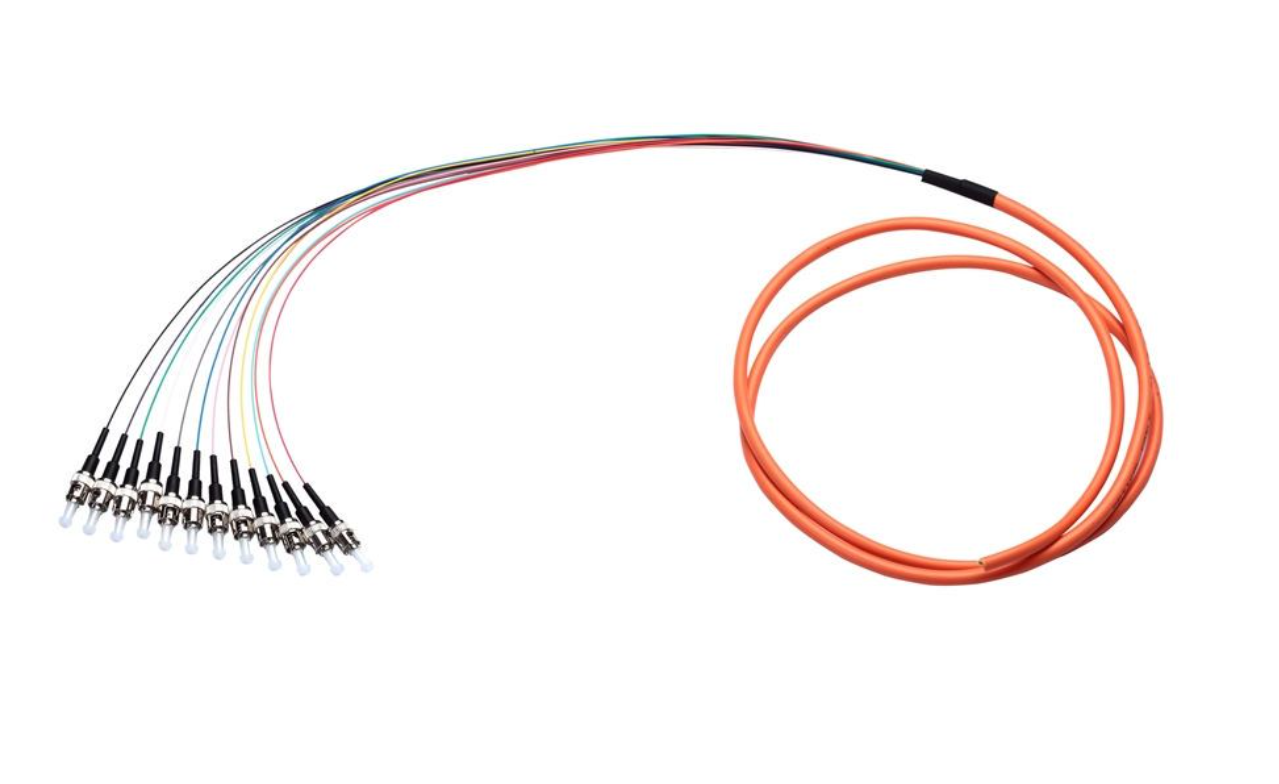
A fiber jumper is a short length of cable with a connector on each end. Technicians use it to link equipment to a panel or one device to another. Two choices describe almost every jumper: the connector style and the fiber count.
Anyone shopping for fiber jumpers will meet the letters LC, SC, and ST quickly. Each name refers to a connector family with its own size and latching method. Knowing the differences prevents mismatches at the equipment port.
Three Connector Families at a Glance
The Fiber Optic Association describes each of these in its connector identification guide. The key detail is the ferrule, the small cylinder that holds the fiber.
- ST uses a bayonet mount and a 2.5 mm ferrule, and it was long a popular multimode connector.
- SC is a snap-in connector with a 2.5 mm ferrule that the guide credits with excellent performance.
- LC is a small form factor connector with a 1.25 mm ferrule, half the size of the SC.
Because ST and SC share a ferrule size, hybrid adapters can mate them to each other. LC cannot mate directly with either, since its ferrule is smaller.
Simplex and Duplex Without the Jargon
A simplex jumper carries one fiber and has one connector on each end. A duplex jumper carries two fibers, usually joined side by side. One fiber sends light and the other receives it.
Most network gear uses a transmit and receive pair, so duplex is the common fit. Simplex shows up where one fiber does the whole job or where signals travel in a single direction.
The guide notes that SC also comes in a duplex form. It also shows a duplex design built around the LC ferrule.
Matching Jumper Ends to the Gear
A jumper has to suit the port it plugs into, so the ends do not always match. A hybrid jumper might have LC on one end and SC on the other. That lets compact equipment connect to older panels without extra adapters.
Before choosing a jumper, check these points against your hardware:
- The connector style on the equipment port and on the panel side.
- Whether the link needs one fiber or a transmit and receive pair.
- The fiber type already in the cable plant, single-mode or multimode.
- The length needed to reach the port with a gentle, unforced curve.
A Short Closing Note
Connector letters look cryptic, but they boil down to size, latch, and fiber count. Once those three are clear, reading a jumper description gets much easier.