






Pavers look great on installation day, but a driveway succeeds or fails based on what’s buried underneath. If you’re researching how to install driveway pavers that stay level for years, the real work happens before the first paver goes down. This guide covers each stage, from layout to sealing, and points out where projects tend to go wrong. For design ideas and material choices, take a look at our page on driveway pavers in Los Angeles.
How to Install Driveway Pavers: The Quick Overview
Short answer: mark the layout, excavate, compact the soil, build a gravel base, spread a leveled bedding layer, set the pavers, add edge restraints, and lock the joints with sand.
The base carries the load, so it deserves the most time. Most sinking, rutting, and shifting traces back to a base that was too thin or poorly compacted.
Plan Before You Dig
Call 811 (DigAlert in Southern California) a couple of working days ahead so utility lines get marked. Then check permit requirements with the city. Work on your private property and work on the apron or curb cut can fall under different rules, so confirm what applies to your address before a driveway install begins.
Also decide where water will go. Pavers are only the surface, so drainage has to be solved in the grading.
Step-by-Step Driveway Paver Installation
Here is how to install driveway pavers one stage at a time:
- Mark the layout. Use stakes and string to outline the driveway. Plan a slight slope away from the house and garage, often around a quarter inch per foot.
- Excavate. Remove grass, topsoil, and old paving. A driveway needs deeper excavation than a patio because vehicles add far more weight. The right depth depends on your soil, paver thickness, and expected loads.
- Compact the subgrade. Run a plate compactor over the exposed soil. On soft or clay-heavy ground, many installers add geotextile fabric before the gravel.
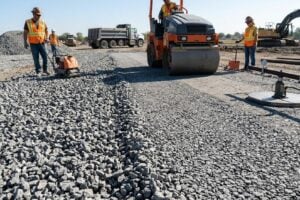
- Build the base. Spread crushed aggregate in thin layers and compact each one before adding the next. Check the slope as you go.
- Add the bedding layer. Screed roughly an inch of bedding sand over the base, then keep foot traffic off it.
- Lay the pavers. Start from a fixed edge, keep joints tight and consistent, and follow your pattern. Cut border pieces with a wet saw.
- Set edge restraints. Secure restraints along the perimeter so the pavers can’t spread under traffic.
- Compact and fill the joints. Run the compactor over the surface with a protective pad, sweep in polymeric sand, compact again, and clear the excess. Sealing afterward is optional but can make cleaning easier.
Los Angeles Factors That Change the Plan
Southern California conditions affect how to install driveway pavers here. Some neighborhoods sit on expansive clay that swells when wet and shrinks when dry, which can stress a thin base. Hillside lots need careful grading so runoff doesn’t undermine the edges.
Summer heat matters too, since lighter-colored pavers usually stay cooler underfoot than dark ones. Rain is infrequent, but when it arrives it can be heavy, so slope and drainage planning shouldn’t be skipped.
Mistakes That Cause Problems Later
A rushed driveway paver installation usually shows its flaws within a season or two. Watch for these:
- A base that’s too shallow or compacted in one thick layer
- Little or no slope for drainage
- Missing or poorly anchored edge restraints
- Laying over soft soil without addressing it first
DIY or Hire a Pro?
A small walkway is a reasonable DIY project. A driveway install is different, with more excavation, heavier equipment, and tighter tolerances. If you’re weighing how to install driveway pavers yourself, consider at least a professional consult on grading before you break ground. A contractor can also help with permit questions, which makes any driveway install smoother.
Next Step
After reading how to install driveway pavers step by step, you may decide the digging and compaction are better left to a crew. We can look at your property’s slope, soil, and layout and talk through realistic options.
You can learn more about our Paver Installation Services in Los Angeles or request an estimate. Before you call anyone, measure the area and note where water flows after rain. It makes the first conversation much more productive.
FAQ
How long does a driveway paver installation take?
It depends on size, access, weather, and how much excavation is needed. Many residential driveways take several days to a week or more. A contractor can give a realistic timeline after seeing the site.
Can pavers go over an existing concrete or asphalt driveway?
Sometimes, but it’s often not ideal. Cracks, uneven slopes, and drainage problems can carry through. Have the surface evaluated first.
Do I need a permit?
Paving on private property doesn’t always require one, but work on the curb cut or apron and some drainage changes may. Confirm with the city before starting.
What’s the most important step in how to install driveway pavers?
The base. Proper depth, thin compacted layers, and correct slope prevent most long-term problems.