





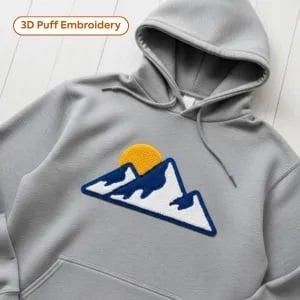
In the apparel industry, embroidery plays an important role in creating professional designs for clothing, accessories, and promotional products. Among the available embroidery techniques, 3D puff embroidery is widely used for its raised texture, dimensional appearance, and bold lettering.
Businesses seeking Premier 3D Puff Embroidery Digitizing USA can benefit from professionally prepared embroidery files that help transform digital artwork into detailed, textured designs. Quality digitizing involves more than converting an image into stitches.
It requires an understanding of stitch direction, density, fabric characteristics, embroidery foam, and machine settings. When these elements are planned correctly, the finished embroidery can achieve a clean appearance, consistent coverage, and durable results.
What Is 3D Puff Embroidery Digitizing?
3D puff embroidery digitizing is the process of converting artwork, logos, or lettering into a digital embroidery file designed to create a raised effect. During embroidery, specialized foam is placed beneath selected stitches. The thread covers the foam, creating a three dimensional appearance on the fabric.
Unlike flat embroidery, which follows the surface of the material, puff embroidery adds noticeable height and texture. This technique is commonly used for structured caps, baseball hats, snapbacks, sportswear, streetwear, and promotional headwear.
Successful results depend on careful digitizing. The design must contain suitable shapes, appropriate stitch coverage, and enough space between elements to accommodate the raised effect. These considerations help reduce exposed foam, uneven edges, and unnecessary thread breaks.
Essential Techniques for Quality 3D Puff Embroidery
The final appearance of puff embroidery depends heavily on the quality of the digitized file and the production setup.
Stitch density and coverage: Appropriate density helps cover the foam without creating excessive stiffness or unnecessary thread buildup.
Underlay and stitch direction: Correct stitch planning supports stability and helps maintain the intended shape of raised elements.
Pull compensation: Embroidery can cause fabric and stitches to shift during production. Suitable compensation helps preserve the intended dimensions of the design.
Foam selection: Foam thickness should match the design, material, and desired height. The correct selection helps create a balanced raised effect.
Sample testing: Stitching a sample before full production helps identify exposed foam, uneven edges, thread breaks, and other issues that may require adjustment.
Not every design is suitable for puff embroidery. Very small lettering, narrow shapes, and intricate details may be better produced using flat embroidery or a combination of techniques. An experienced digitizer can assess the artwork and recommend a practical approach.
How to Choose a 3D Puff Embroidery Digitizing Service in the USA
Selecting a digitizing service involves evaluating technical skills, communication, file compatibility, and production requirements. Reviewing relevant samples can help you understand the quality of the provider’s previous work.
Before submitting artwork, provide the intended design size, embroidery placement, fabric type, and machine file requirements. High resolution artwork or vector files can help the digitizer interpret the original design more accurately.
It is also useful to ask about revision policies, delivery expectations, and sample testing. Pricing should be considered alongside the complexity of the artwork and the level of technical support offered.
Clear communication at the beginning of a project can reduce unnecessary revisions and help ensure that the final file meets your production needs.
Frequently Asked Questions
What is the difference between 3D puff embroidery and flat embroidery?
Flat embroidery follows the fabric surface, whereas 3D puff embroidery uses foam beneath the stitching to create raised elements. Puff embroidery is generally suitable for bold lettering and simple shapes, while flat embroidery is often better for fine details.
Which file formats are used for 3D puff embroidery digitizing?
Common embroidery file formats include DST, PES, EXP, and JEF. The correct format depends on the embroidery machine and its software. Always confirm compatibility before production.
Can every logo be converted into 3D puff embroidery?
No. Logos with bold lettering and sufficiently wide shapes are often suitable for puff embroidery. Extremely small text and intricate details may lose clarity when stitched over foam. A digitizer can recommend adjustments or alternative stitching methods.
Why is sample testing important before production?
Sample testing allows potential problems, such as exposed foam, uneven lettering, poor coverage, and thread breaks, to be identified before producing a larger quantity. It also helps confirm that the design works with the intended fabric and machine settings.
Conclusion
Premier 3D Puff Embroidery Digitizing USA services support businesses that want to produce raised, textured embroidery for caps, apparel, and promotional products. Careful stitch planning, suitable foam selection, compatible file formats, and sample testing all contribute to dependable production quality.
By choosing a digitizing service with relevant technical experience and communicating your project requirements clearly, you can improve the accuracy and consistency of your embroidered designs.
Whether you are creating custom headwear, team merchandise, or branded clothing, professional 3D puff embroidery digitizing helps turn suitable artwork into a practical design ready for embroidery production.