




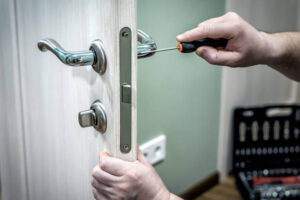
Advice here fits homeowners, renters with owner permission, landlords, and business owners dealing with a stubborn entry door. It does not replace the property owner’s approval or the manufacturer’s instructions for a specialty product. After enough lock calls, we’ve learned that the door often tells us what failed before the lock does.
Four quick distinctions can prevent an unnecessary change:
Rust-colored dust around the key opening can signal moisture damage inside the lock body.
A lock that fails only in damp weather may be reacting to swelling or corrosion.
A copied key that works only after wiggling can point to a worn key, not a failed lock.
Rental occupants need the property owner’s permission before changing permanent door hardware.
Understand What a Failing Lock Is Telling You
Lock replacement in New Braunfels, TX makes sense when a door lock’s internal movement has failed or its housing no longer holds parts securely. One sticky turn is not enough by itself. Trouble that returns after a careful adjustment points toward worn hardware, especially when the key, latch, and handle no longer work together.
Cracks in the lock case, a key that spins without moving the bolt, or a handle that no longer retracts the latch point to internal failure. A lock cylinder is the keyed portion that controls the lock, and a damaged cylinder does not become reliable because the key still fits. Our team sees small repairs fail when a worn cam or spring remains inside. Sometimes lock repair is sensible for a loose screw or replaceable latch; a broken housing deserves new hardware.
Repeated failure after a basic adjustment is a judgment call, and it belongs on any checklist of door lock warning signs. If the same fault returns within days, continued patching often costs more time than fitting sound hardware.
Check the Door Before Blaming the Lock
Door alignment is the relationship between the latch, the strike opening, and the door frame. A misaligned door makes a good lock feel defective because the bolt rubs or stops short. If the lock works freely with the door open but binds when closed, correct the fit before buying new hardware.
Check the closed-door fit without forcing the key or handle. Look for fresh scrape marks on the latch edge, hinge-side sag, or a strike opening that sits above the latch. In New Braunfels, TX, a house may have older wood framing beside newer replacement doors, so the lock and frame do not always share the same fit. A small seasonal shift can change contact, while a broken latch remains a hardware problem in every position. Our crew checks the frame first because replacing a lock cannot correct a door that is hanging low. The goal is to separate frame trouble from lock trouble before choosing a product.
Choose Repair, Rekeying, or a New Lock
Repair, rekeying, and replacement solve different problems. Repair preserves the existing lock when one accessible part is loose or worn. Rekeying changes which key works without changing the lock body. Replacement is the sound choice when the case, cylinder, or internal mechanism has failed.
A lock that still turns smoothly may only need a new key arrangement. An ANSI/BHMA grade describes tested lock performance, but a higher grade cannot correct a bent door or broken internal part. Ask any contractor you hire whether the quote separates a repair, rekey, and replacement, and listen for a good answer that names the failed part and the work included. Repeated failure after a basic adjustment is a judgment call, and it belongs on any checklist of door lock warning signs. If the same fault returns within days, continued patching often costs more time than fitting sound hardware.
Repair: Use it when the lock body is sound and one accessible component is the problem.
Replacement: Choose it when damage affects the case, cylinder, or mechanism that carries the bolt.
Prepare for lock replacement in New Braunfels, TX
Preparing for lock replacement in New Braunfels, TX starts with matching the new hardware to the door, not choosing a finish first. A replacement lock must suit the door’s thickness and existing bore pattern. Smart features add setup steps, so a smart lock needs a compatible phone, code plan, or key backup.
Before the appointment, note whether the door is wood, metal, or composite and whether the existing lock is a knob, lever, or deadbolt. Older doors sometimes have unusual hole spacing, while a fresh door installation may use a different backset, the distance from the edge to the lock center. A keypad model also needs a place to enter codes without blocking a storm door. Those details save a second visit, which is why the installer asks about the door before selecting a replacement.
Remove personal items near the doorway so the installer can work without moving furniture.
Keep existing keys, keypad instructions, and product packaging together for the appointment.
Plan access for the appointment, including a gate, rental notice, or alarm code.
Verify the New Deadbolt Before the Locksmith Leaves
Verification means the new lock works with the door open and closed, the latch seats fully, and the key or code operates without unusual force. A deadbolt should extend into the strike without scraping. The finished job also includes secure screws and a clean fit around the hardware.
Many people assume a new lock should feel stiff for security, but resistance usually signals rubbing, a mis-seated latch, or hardware under strain. A keyway is the shaped opening that accepts the key, and its smooth operation is one part of the check. A slightly high strike often shows up as a scrape on the bolt, not a problem inside the cylinder. We’d rather correct that fit than leave you with a new lock that binds by evening.
Keypad models need a code test from the outside and inside, plus a check that the mechanical key remains available. Battery contacts also need to sit firmly under the cover, since a loose cover can interrupt normal operation.
Questions Homeowners Ask About Door Lock Problems
Short answers to the questions that come up before changing, repairing, or testing a door lock.
How long does door lock replacement take?
Most straightforward door lock replacements take about 30 to 90 minutes when the new hardware matches the existing holes. Extra time comes from repairing damaged wood, correcting frame fit, or adapting an unusual door thickness.
Can I replace a door lock myself?
Yes, you can replace a basic lock if you can identify the door thickness, backset, and handing correctly. A mismatch at the latch edge can leave the handle reversed or prevent the bolt from reaching the frame.
Do I need to replace every lock when one fails?
No, one failed lock does not require every lock to be replaced. If several doors share a master key system, ask for a plan that preserves needed access while isolating the failed opening.
Is it safe to keep using a lock that sticks?
No, continued use is unsafe when the key needs force or the latch stays partly retracted. A sudden internal failure can leave the door unsecured or prevent normal exit through that opening.
What is the difference between changing a key and changing a lock?
Changing the key arrangement leaves the lock body in place, while changing the lock installs new hardware. The correct choice turns on internal condition, not simply how old the existing keys look.
How can I tell if the door frame is causing lock trouble?
Look for a widening gap near the top corner, a latch mark on only one side of the strike, or a door that must be lifted before closing. Those signs point toward frame movement.
What should I ask a locksmith before replacing a lock?
Ask which part failed, whether the existing door needs adjustment, and what hardware the replacement includes. A useful answer identifies the lock type, fitting work, and testing performed after installation.
What if the replacement lock does not fit the old holes?
A locksmith can select a compatible model or use a manufacturer-approved fitting solution when the old holes differ. Do not enlarge the door without checking edge clearance and the new latch position first.
Is it true that a heavier lock always means better security?
No, weight alone does not determine performance. A properly fitted lock with secure mounting and a straight frame works better than heavier hardware installed against a loose or warped door.
Should I change a lock after moving into a home?
Yes, changing a lock is sensible when you do not know who has copies of the old keys. Rekeying also handles that concern if the existing hardware is sound and still fits the door.
Get Help When the Lock Cannot Wait
Model details save time when old hardware has been painted over or the label is hidden. A note about who needs access after the change helps us discuss key control before the appointment. Have these details ready before you call:
A photo showing the lock face and the door edge.
The lock brand or model number, if visible.
Names of anyone who needs a working key or code.
For a troublesome door in New Braunfels, TX, Integrity Key Lock & Safe of Texas can look at the situation and explain whether lock repair or lock replacement makes sense. Call (830) 868-8608 to describe the symptoms and arrange the next step.
- "Business"
- "Inventor Resources"
- "Marketing"
- Abarta
- accountance
- ACTIVATE
- Adult 18+
- Affiliate Marketing
- AI photo editing
- Air Conditioner
- Algernon
- Alphaa
- Announces
- Annual
- Arden
- Ariana
- ArmourLite
- Artisans
- Assisted
- Automobile
- Avertising
- Avrupa
- Baby & Parenting
- Bajer
- Baronowski-Schneider
- Bathroom Remodeling
- Battery Recycling
- Behaviour-Led Learning
- Best Matrimonial Lawyer in Delhi
- BestGrowthStocks
- BetBrain
- Beyond
- BioHarvest
- Biologics
- Black
- Block
- Blog
- Blumaka
- Boardwalktech
- Boat Charter
- Books
- Brains
- Britt
- Brittany
- Brock
- Building
- Bulsara
- burger
- Business
- Business
- CaesarVerse
- Calypso
- car body repair Stockport
- Car driving School
- car inspection Dubai
- Car rental
- Cardenxe
- Career Growth
- Career Growth
- Castelnau
- CENTR
- Cesar
- Change
- charging station
- Civil aur Structural Engineering Services
- cleaning service
- Clever
- Clothing
- Cloud
- Cloud Hosting
- Coinscan
- Colife
- Commercial Roof Coating
- concrete contractors
- Concrete Lifting
- Connon
- Construction
- Consulting
- Consumer
- Copper
- Corporate Taining
- Corporate Training
- Coupons & Discounts
- crawl space insulation
- Crypto
- CryptoOG
- Curtains
- Custom Printed Papers
- Daniel
- Darshani
- Data Analysis
- Debris Removal
- Degree
- Dental Care
- Diamonds
- digital marketing
- Digital Marketion
- Dignity
- Direxion
- Display
- Ditch
- Door Installation
- Drainage Services
- driving instructor
- driving school
- Dubai to Spain Car Shipping
- E-Waste Recycling
- educaion
- education
- education
- Eileen
- Electric Scooters
- EmpowerHER
- Energy
- Engineering
- Entertainment
- Environmental Consulting
- Escort
- Escort
- Events
- Events Company
- Expands
- ExpressGene
- FairFigure
- Fashion
- FeganScott
- FemFounder
- Fence
- Fifth
- finance
- Financial
- Fishing
- Fitness
- Fiverr
- Fleks
- Florist
- FocusU Learning
- Foley
- Food
- food dogs
- Foods
- Forever
- FountainHead
- Foxhall
- Franchise
- Francisco
- Freedom
- Fresh
- Full Stack Development
- Furniture
- furniture
- Games
- Games
- Games
- Gardering
- Gate Builders
- Gathering
- General
- Glass Installation
- Global
- Golden
- GraphLinq
- Group
- Hailo
- hajj and umrah travel agency
- Health
- Healthcare Jobs
- Heat Exchanger
- Heater
- Heather
- Helen
- Hennessey
- Home & Kitchen
- Home and gardening
- Home Decoration
- home ev charging station
- Home Improvement
- Home Improvements
- Home Services
- Horse race
- Hot Tubs & Spa Accessories
- Hotel Furniture Supplier
- Humble
- HVAC
- Hydrogen
- Hygiene products manufacturer
- Industrial Cooling Solutions
- Industrial Cooling Systems
- Industrial Plastics and Machinery
- Initiative
- InspoThoughts
- Insulation
- Integrates
- interior lighting
- International Relocations UAE
- Internet
- Introduces
- Invest
- Investors
- iOS app development company in UAE
- IOS App Development Services
- iptv
- ISS Relocations
- Jewellery
- Jonah
- Jovial
- Kids & Baby Products
- Kitchen
- Kitchen Appliances
- Kodal
- Kseniia
- landscaping services
- Language
- Lawyer
- Leadership
- Leading
- Leather Jackets
- legal
- Liberty
- Life Style
- Lifestyle
- Lifestyle
- Lithium
- Local Seo
- Lovin’
- Lunnon
- Manufacturing
- MarketSmiths
- massage
- Mastery
- Mattenga
- Mattress
- Medical
- Medical & Health
- Medical Broker
- medical practice broker
- Medicus
- member portal software
- Mental Health
- Metals
- Michael
- Mindful
- Minted
- Mirela
- Mobile App Development Company in Abu Dhabi
- Mobile Repair
- Modern
- Mold Inspection
- Moments
- Monat
- Montage
- Moving From Dubai to Spain
- Moving Services
- Mozverse
- Multmetric
- Nanohydr
- Neinstein
- Netcompany
- Nevis
- Nicole
- Nikki
- Nutrition supplement
- Ocean
- Off-Roading & Overlanding
- Official
- Omnia
- Online Earning
- Online education
- online games
- online games
- Outboard Motor
- Outdoor Construction
- Pantheon
- Partnerships
- Payop
- Pegasus
- Peptides
- Peptides Suppliers
- Perceptage
- pet import rules
- Pet Relocation
- PetroSky
- Photo Studio
- Physical Therapy
- Physiotherapy
- Pioneer
- Podcast
- pool cleaning
- pool remodeling
- Popcorn
- Post Construction Cleaning Louisville KY
- Pregnancy
- Preity
- Premium Number Plates Marketplace
- Press Release
- private office coworking space
- Products
- Property
- Propy
- Real Estate
- Rebecca
- Refrigerator Repair
- Resources
- Restaurant
- Restaurant consulting
- Reveals
- Revenue
- Reward
- Rises
- Romacorp
- Roof Cleaning
- Roofing Contractor
- Roofing Contractor
- Royal
- Ryvid
- Saas
- Sales
- Sattach
- Sattaché
- scale
- Scarpe
- Scrap My Car
- security service
- Serial
- Service
- serviced Apartments
- services
- Shannon
- Sheena
- Shopping
- Sierra
- Signaling
- Silver
- Simple
- Skilled Trades & Vocational Training
- Sleep Technology
- Smarter
- Snisarenko
- SocialSharings
- Sock
- Software
- Solar Installation
- solar system
- South
- Space
- Spatial
- spiritual guide
- Sports
- sports gaming
- spray foam insulation
- Steinberg
- Steppe
- Storage service in Dubai
- Strategic
- Strategy
- SugarDaddyMeet
- Summer
- Surety
- Surges
- Swimwear & Beachwear
- SydeLabs
- TAPNET
- Taurus
- Taxi service
- Taylor
- Tech
- tech
- Technology
- Testing Instruments
- Tiles
- Timber
- Timothy
- Toilet Partitions
- Tools/Equipment
- Towing services
- Tradara
- TradingView
- Transform
- Travel
- Travel
- Trust
- Ubunzo
- Uncategorized
- Under-The-Radar
- Unstoppable
- Vanessa
- Venom
- Ventures
- Veriphy
- VKTRY
- Voltage
- Washing
- Waste
- WealthBlock
- Website
- Webvar
- Weewu
- WELL Certification
- WhatIF
- World
- Worship
- Xalles
- youtube to mp3