




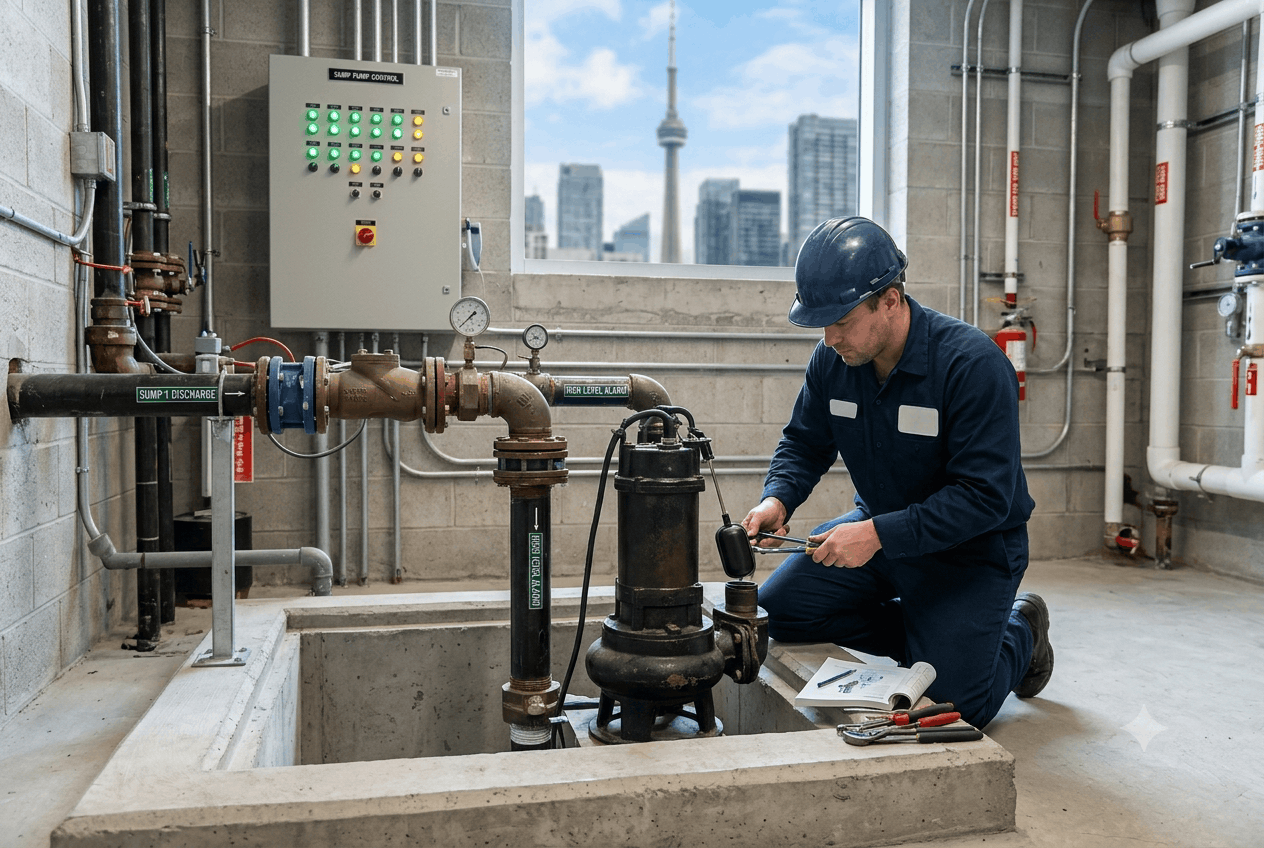
Sump pump problems during spring thaw can put lower building levels at risk of flooding. Water entering parking or mechanical areas can disrupt building operations. For a hotel, office tower, or mall, that can mean closed areas and frustrated tenants.
People Also Ask
What Does a Sump Pump Do in a Commercial Building?
Who Should Service a Commercial Sump Pump?
Sump systems sit out of sight, so they often slip off maintenance lists. Facility teams should include sump system inspections in the building’s commercial plumbing services schedule. This guide covers where pumps sit, what loads they face, how to test them, and how to plan upkeep that holds up through Toronto winters and storm seasons.
Where Sump Systems Sit in Commercial Buildings
Locate each sump pit using building drawings and a site inspection. Common locations include:
- Underground parking levels
- Mechanical and boiler rooms
- Elevator pits
- Basement storage and loading areas
These spaces see little foot traffic. Pump problems may go unnoticed when pits sit outside routinely inspected areas. Label each pit and add it to the inspection log.
Water Volumes in Larger Properties
Water volumes vary widely between commercial properties. Site grading, paved areas, parking ramps, and the local water table all affect how much water reaches a pit.
When reviewing pump capacity, assess groundwater inflow, connected drainage, and operating conditions. Include switches, seals, and motors in the condition assessment. Pump capacity should reflect how the building operates today, not a calculation made years ago.
Kitchen, Food Court, and Washroom Drainage Loads
Sump pits are built for groundwater and clear water. Wastewater from lower level kitchens and washrooms usually flows to a separate sewage ejector system. Water softener brine is another discharge to keep out of the pit, as this guide to water softener installation and plumbing care explains.
Trouble starts when the two systems get mixed up or cross connected. Grease from a food court or restaurant can coat floats and clog impellers if it reaches a sump pit. Malls, hotels, and office towers with below grade commercial kitchen plumbing need clear answers about where each drain goes. Include commercial drain maintenance in the maintenance plan. Separately, confirm which drains connect to each pit.
Inspection Intervals for Facility Managers
No single interval fits every property. The right frequency depends on manufacturer guidance, how often the pump runs, and what sits near the pit. A practical approach includes:
- Visual checks during routine building walkthroughs
- Full operational tests on a schedule set with a licensed plumber
- Extra checks before spring thaw and heavy summer rain
- An inspection after any major storm or power outage
Record every visit. A written log reveals slow changes that a single check would miss.
Testing Float Switches and Check Valves
The float switch tells the pump when to start. Debris, a tangled cord, or a stuck float can stop the pump at the worst moment. A proper test raises the water level, then confirms the pump starts, lowers the water to its intended shutoff level, and stops correctly.
The check valve helps stop pumped water from flowing back into the pit. Have a plumber investigate suspected backflow, unusual discharge noises, or frequent cycling. Include applicable float switches and check valves in inspections according to manufacturer guidance.
Backup Power and Redundant Pump Systems
The storms that fill a sump pit can also knock out power. Many commercial buildings rely on one or more safeguards:
- An additional pump configured for alternating operation or backup duty
- Battery or generator backup
- High water alarms tied to the building’s monitoring system
Backup systems need testing as well. Inspect and test backup power according to the equipment manufacturer’s instructions.
Winter Risks at Discharge Points
Toronto winters create a problem outside the building. Discharge lines that exit above ground can freeze in cold weather. A blocked line can stop water from leaving the pit.
Have a plumber assess discharge routing and freeze protection against the system design and manufacturer’s instructions. Outlets also need to stay clear of snowbanks and plowed piles. Municipal rules may affect where sump water can discharge, so check current City of Toronto requirements before rerouting any line.
Signs a Commercial Pump Needs Service
Facility teams should call commercial plumbers when any of these appear:
- The pump runs constantly or cycles on and off rapidly
- Grinding, rattling, or humming without water moving
- Water rises above the normal operating level or does not fall as expected during pumping
- Rust, corrosion, or an oily sheen in the pit
- Damp walls or water stains near the pit
- Alarms that trigger often
Building a Maintenance Schedule
A written schedule turns upkeep into routine. Start with an inventory of every pump, its age, and its location. Assign each one a test frequency and a responsible staff member or contractor.
Pair seasonal checks with other building tasks, such as winterizing exterior lines in late fall. Keep service records with the rest of the facility plumbing file. A commercial plumbing company can review the plan and flag pumps nearing replacement.
Book a Commercial Sump Pump Inspection
Reliable sump systems come down to a few habits: knowing where every pit sits, testing switches and valves, protecting discharge lines in winter, and keeping backup options ready. Book an inspection through J.A. Plumbing Inc.’s commercial plumbing services in Toronto.