




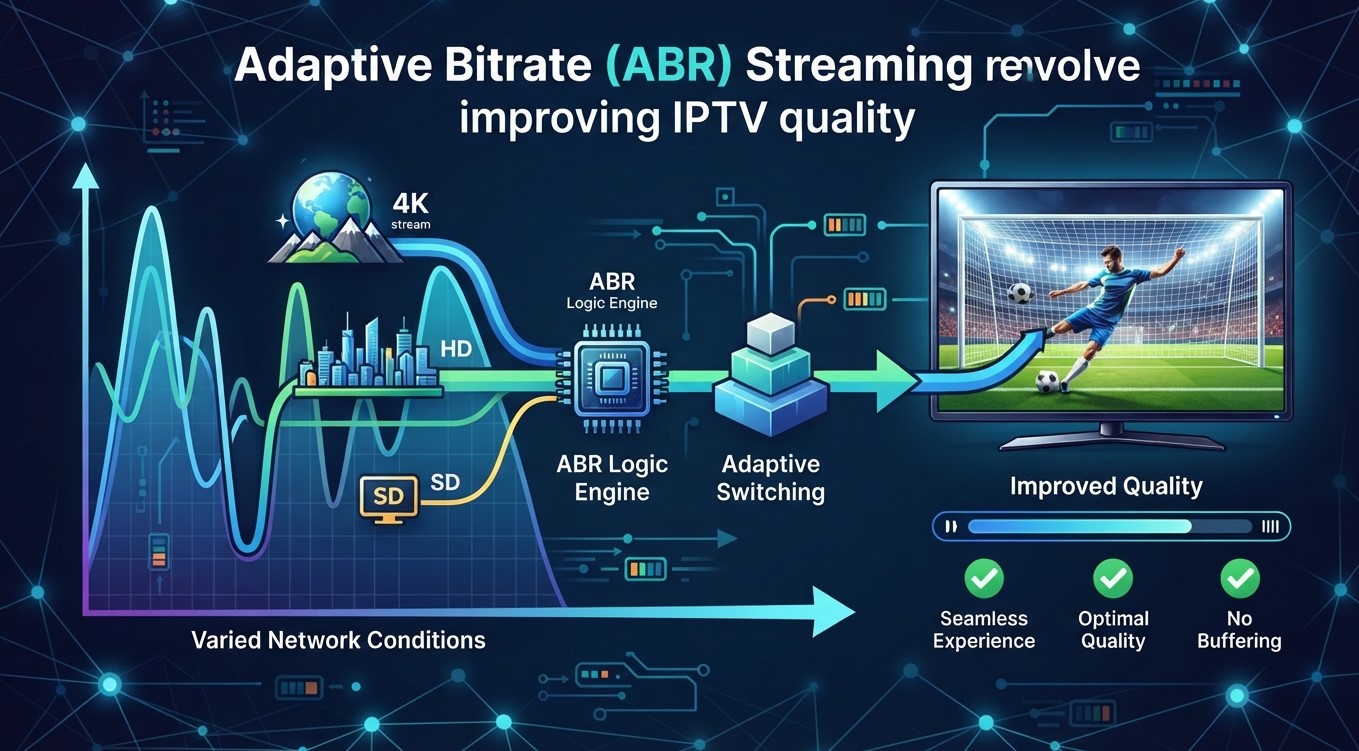
Have you ever noticed that a video becomes blurry when your internet connection slows down and returns to high quality when your connection improves? This technology is called Adaptive Bitrate Streaming (ABR).
Adaptive bitrate streaming helps IPTV platforms deliver smoother video by automatically adjusting stream quality according to available internet speed and device performance. It can reduce buffering and interruptions, making it an important technology for modern streaming.
Whether you are comparing the Best IPTV options or learning how an IPTV Service delivers content, understanding adaptive bitrate streaming can help you make better streaming decisions.
Table of Contents
- What Is Adaptive Bitrate Streaming?
- How Does Adaptive Bitrate Streaming Work?
- How Does It Improve IPTV Quality?
- What Factors Affect Adaptive Bitrate Streaming?
- Benefits of Adaptive Bitrate Streaming
- Can Adaptive Bitrate Streaming Have Limitations?
- How to Get a Better IPTV Streaming Experience
- Frequently Asked Questions
- Final Thoughts
1. What Is Adaptive Bitrate Streaming?
Adaptive Bitrate Streaming is a video delivery technology that automatically changes video quality based on the viewer’s available internet bandwidth and playback conditions.
For example, if you are watching IPTV in Full HD but your internet speed suddenly drops, the streaming system may switch to a lower-quality version to keep the video playing.
When your connection becomes stable again, the stream can gradually return to a higher resolution.
This process helps maintain playback without requiring viewers to adjust video quality manually.
2. How Does Adaptive Bitrate Streaming Work?
Adaptive bitrate streaming uses multiple versions of the same video, encoded at different bitrates and resolutions.
Here is how the process generally works:
Step 1: Video Is Encoded at Different Qualities
The video content is prepared in several quality levels, such as SD, HD, and Full HD. Each version uses a different bitrate.
Step 2: Content Is Divided Into Segments
The video is divided into small segments that can be delivered individually rather than downloading the entire program at once.
Step 3: The Player Monitors Network Conditions
The compatible streaming player estimates available bandwidth and checks its playback buffer.
Step 4: Video Quality Adjusts Automatically
Based on network conditions, the player selects an appropriate video segment from an available quality level.
Step 5: Quality Improves When Conditions Recover
When more bandwidth becomes available, the player can switch back to higher-quality segments.
This adjustment usually happens automatically in compatible streaming systems.
3. How Does It Improve IPTV Quality?
Adaptive bitrate streaming can improve the viewing experience in several ways.
Reduces Buffering
When internet speed decreases, switching to a lower bitrate can help prevent playback from stopping while waiting for data.
Maintains Smoother Playback
The technology helps balance video quality with available bandwidth, supporting more consistent playback.
Adjusts to Changing Internet Speeds
Mobile connections and shared Wi-Fi networks can fluctuate. Adaptive streaming responds to these changes automatically.
Supports Different Devices
Compatible adaptive streaming formats can work across smart TVs, smartphones, tablets, computers, and streaming devices.
4. What Factors Affect Adaptive Bitrate Streaming?
Several factors influence how well adaptive bitrate streaming performs:
- Internet speed: Available bandwidth affects the quality level the player can select.
- Network stability: Frequent speed changes can cause quality fluctuations.
- Device performance: Older devices may struggle with high-resolution playback.
- Video encoding: Compression and bitrate settings influence stream quality.
- Server performance: Content delivery problems can affect playback.
- Application compatibility: The IPTV player must support the streaming format and adaptive bitrate technology.
5. Benefits of Adaptive Bitrate Streaming
Adaptive bitrate streaming offers important advantages for IPTV viewers:
- Reduces interruptions caused by changing network conditions.
- Adjusts video quality without constant manual input.
- Makes streaming more practical on mobile connections.
- Helps devices use available bandwidth efficiently.
- Supports different screen sizes and resolutions.
- Can improve the overall viewing experience.
When comparing the Best IPTV options, consider whether the provider and its supported applications use adaptive streaming technologies.
6. Can Adaptive Bitrate Streaming Have Limitations?
Yes. Adaptive bitrate streaming cannot solve every streaming problem.
If your internet connection is extremely slow, even the lowest available quality may buffer. Similarly, overloaded servers, application errors, or incompatible devices can still cause playback issues.
You may also notice temporary changes in picture quality when network conditions fluctuate.
The technology improves how streams respond to changing conditions, but it does not guarantee uninterrupted streaming.
7. How to Get a Better IPTV Streaming Experience
You can improve your viewing experience by following these practical tips:
- Use a stable broadband or mobile internet connection.
- Connect your streaming device through Ethernet when possible.
- Keep your IPTV application and device software updated.
- Close unnecessary applications using your internet connection.
- Use a compatible device that supports your preferred video quality.
- Restart your router if you experience repeated connection problems.
- Check whether your IPTV provider supports adaptive bitrate streaming.
A reliable IPTV Service should provide clear information about supported streaming formats, device compatibility, and connection requirements.
8. Frequently Asked Questions
Does adaptive bitrate streaming reduce IPTV buffering?
It can reduce buffering by lowering video quality when bandwidth becomes limited. However, it cannot eliminate every network or server-related problem.
Does adaptive bitrate streaming improve picture quality?
It can deliver higher picture quality when sufficient bandwidth is available and automatically reduce quality when necessary.
Is adaptive bitrate streaming available on every IPTV service?
No. Support depends on the provider’s streaming technology, content delivery setup, and compatible player.
Does adaptive bitrate streaming require a fast internet connection?
It can work with different connection speeds, but faster and more stable internet generally allows higher-quality playback.
Can I turn off adaptive bitrate streaming?
Some applications offer manual quality controls, while others manage bitrate selection automatically. Available settings depend on the player.
9. Final Thoughts
Adaptive bitrate streaming plays an important role in modern IPTV by adjusting video quality according to available bandwidth and playback conditions. It can reduce buffering, support smoother playback, and help viewers enjoy content across different devices and network types.
When choosing the Best IPTV option, look beyond channel availability and subscription price. Consider streaming technology, device compatibility, customer support, and content distribution rights.
Explore SmartiFilix
Interested in exploring SmartiFilix? Visit its website to review available plans and features. Check whether its streaming options support your devices and connection requirements, and confirm regional availability and content licensing before subscribing.