




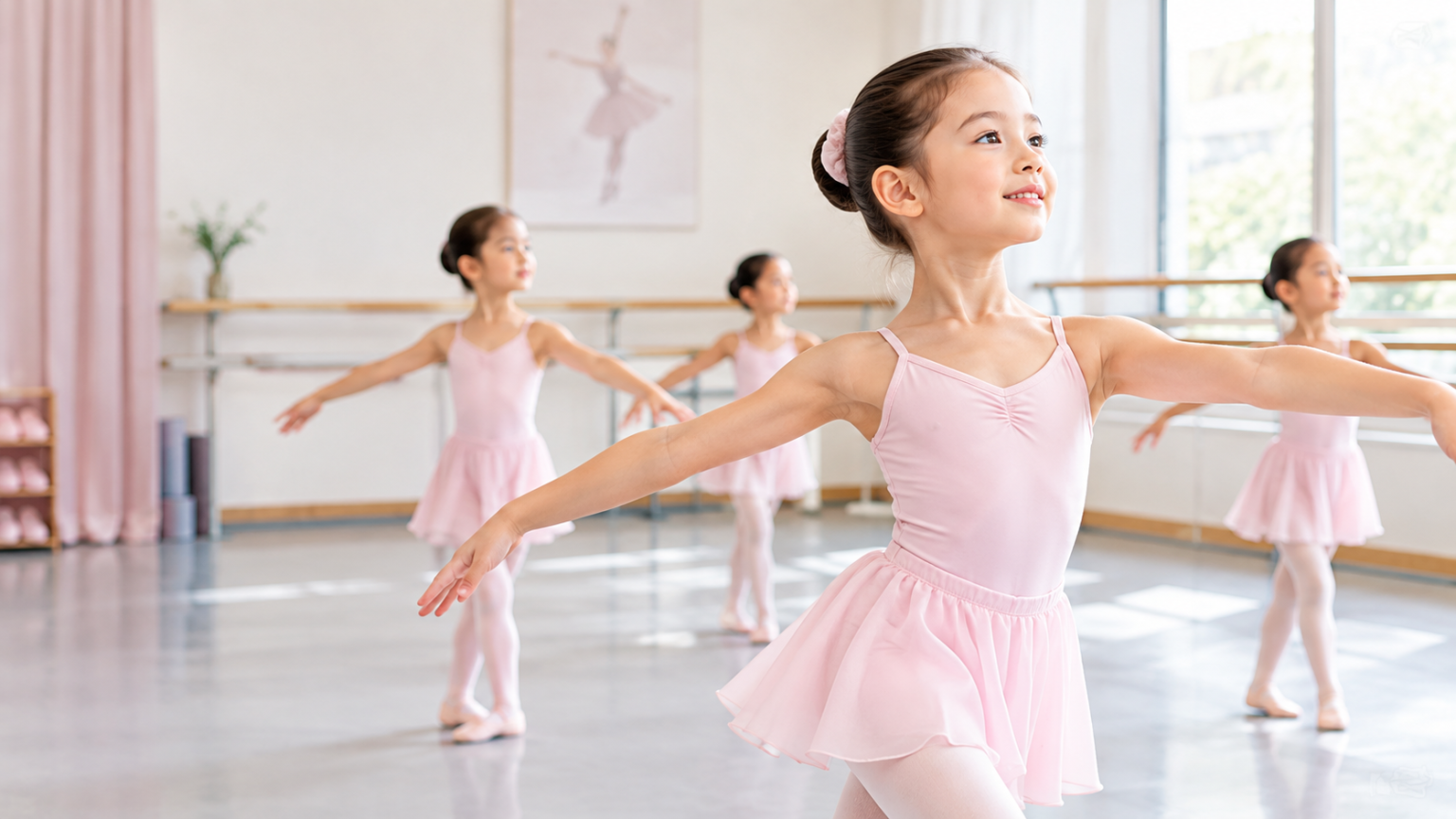
A professional kids ballet programme in Singapore typically includes structured graded levels, classical technique training, musicality exercises, body conditioning, and performance opportunities. Classes follow a progressive curriculum — often aligned with international syllabi such as RAD or Cecchetti — covering posture, coordination, rhythm, and artistry. Age-appropriate methods ensure children develop safely while building confidence and discipline.
If you are a parent comparing ballet schools, knowing exactly what goes into a well-structured programme helps you make a more informed decision. A quality kids ballet class in Singapore goes far beyond learning to point your toes. It is a carefully designed educational experience that shapes a child’s physical development, emotional resilience, and artistic sensibility from the very first lesson.
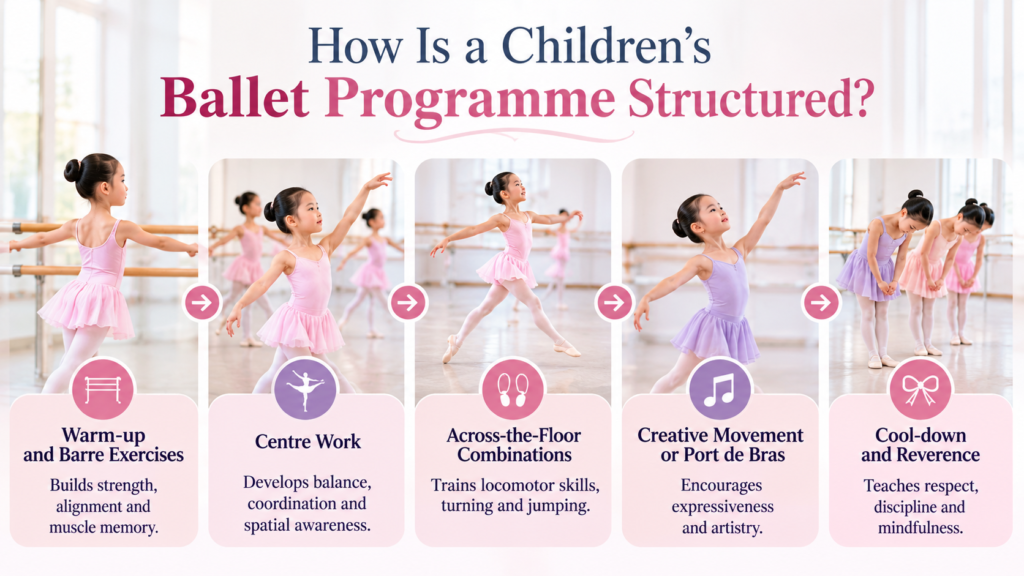
How Is a Children’s Ballet Programme Structured?
Structure is the backbone of any credible children’s ballet programme. Rather than treating each class as a standalone session, professional schools organise training into progressive levels that build logically on one another.
Most programmes divide children into groups by age and ability, typically starting from age three or four. Each level introduces new technical elements only after the previous ones are secure. This graded approach reflects the developmental stage of the child — not just their enthusiasm.
A typical class structure at each level includes:
- Warm-up and barre exercises — builds strength, alignment, and muscle memory
- Centre work — develops balance, coordination, and spatial awareness
- Across-the-floor combinations — trains locomotor skills, turning, and jumping
- Creative movement or port de bras — encourages expressiveness and artistry
- Cool-down and reverence — teaches respect, discipline, and mindfulness
What Classical Ballet Training Methods Are Used?
The training method matters enormously when evaluating a ballet school. In Singapore, well-regarded schools often use internationally recognised syllabi, most commonly the Royal Academy of Dance (RAD) or the Cecchetti Method, both of which provide a structured, examined pathway for young students.
The RAD, founded in 1920 and operating globally including in Singapore, offers graded examinations that give children and parents measurable milestones. These are not just performance markers — they validate that a child has met international standards of classical technique.
Some schools, particularly those rooted in Russian classical tradition, use the Vaganova method — a highly technical system developed at the Vaganova Academy in St Petersburg. This approach emphasises clean lines, expressive arms, and a strong academic foundation in classical form.
Related Guide: How Does Ballet Improve Posture, Balance & Coordination?
Key Differences Between Teaching Methods
- RAD (British): Focuses on graded examinations and a progressive syllabus. Best for students of all levels seeking a structured examination pathway.
- Cecchetti (Italian): Emphasises precision, controlled movements, and port de bras. Best for developing technical refinement and movement quality.
- Vaganova (Russian): Combines academic rigour with full-body expressiveness. Best for classical ballet depth and pre-vocational training.
What Physical and Developmental Skills Does Kids Classical Ballet Training Build?
Ballet is one of the most comprehensive physical disciplines a child can undertake. Unlike sports that isolate specific muscle groups, classical ballet engages the entire body simultaneously while demanding mental focus and emotional awareness.
Children who train consistently in a structured kids classical ballet training programme develop:
- Core strength and postural alignment — essential for healthy spine development
- Flexibility and joint mobility — improved through safe, progressive stretching
- Coordination and proprioception — refined through multi-directional movement patterns
- Musicality and rhythm — developed by moving in time with live or recorded classical music
- Concentration and memory — required to retain combinations and respond to corrections
Research from sports science and paediatric development consistently supports structured movement arts for children. Dance-based training has been linked to improved academic performance, better emotional regulation, and stronger peer relationships in school-age children.
What Does the Ballet Curriculum in Singapore Typically Cover?
A well-designed ballet curriculum in Singapore does not stop at technical drills. Reputable schools integrate a range of complementary components that round out a child’s training.
Musicality and Artistic Development
Children are taught to listen actively to music, identify phrases, and respond expressively. This is not incidental — it is a core skill in classical training and one that distinguishes technically sound dancers from truly artistic ones.
Performance and Stage Craft
End-of-year showcases and recitals are integral to most programmes. They teach children how to project, hold stage presence, manage performance nerves, and work as an ensemble. For many children in Ballet classes, their first performance experience becomes a defining confidence milestone.
Theory and Ballet Vocabulary
Older students are introduced to French ballet terminology — the universal language of classical dance. Understanding terms like plié, tendu, arabesque, and grand battement develops cognitive engagement and prepares students for examinations or vocational training later on.
How Do You Know If a Programme Is Right for Your Child?
Not every child will pursue ballet professionally, and a good programme accounts for this. The best schools create an environment where recreational students thrive alongside those with higher aspirations.
When evaluating a programme, look for these markers of quality:
- Teachers with professional performance backgrounds and formal teaching qualifications
- Class sizes small enough for individual correction and attention
- A clear progression pathway from beginner through to advanced levels
- A focus on safe technique, particularly regarding pointe work eligibility criteria
- Transparent communication with parents about their child’s progress
Pointe work is a good benchmark for how seriously a school takes child safety. Reputable programmes will not introduce pointe shoes before a student is physically ready — typically around age 11 to 12, following a strength and alignment assessment, not simply by age or request.
What Learning Outcomes Should Parents Expect?
Beyond technical ability, a quality programme produces measurable personal development. After a consistent year of training, children typically demonstrate improved self-discipline, greater body awareness, enhanced listening skills, and stronger self-confidence.
Parents often notice changes outside the studio too — better posture at the dinner table, more focused attention at school, and a greater sense of personal responsibility. These are not coincidences. They are the natural outcomes of a programme that teaches children to meet high standards through consistent effort.
The School of Russian Ballet Singapore offers a structured children’s ballet programme rooted in classical Russian tradition, with professional faculty and a curriculum designed to nurture both technical excellence and personal growth. For families seeking a rigorous yet nurturing environment, it represents a considered choice in Singapore’s ballet education landscape.
Frequently Asked Questions
At what age can my child start a kids ballet class in Singapore?
Most ballet schools in Singapore accept children from age three or four into pre-ballet or creative movement classes. Formal classical training with structured technique typically begins around age five to six, once children have sufficient concentration and physical coordination to follow a structured lesson safely.
What is the difference between RAD ballet and Russian Vaganova training?
RAD follows a British-developed graded syllabus with international examinations, making it easy to track progress. The Vaganova method, rooted in Russian classical tradition, focuses on academic rigour, expressive artistry, and full-body technique. Both are respected internationally, but they differ in pedagogical emphasis and stylistic approach.
How many classes per week does a children’s ballet programme require?
Recreational students typically attend one to two classes per week, which is sufficient for healthy development and enjoyment. Children pursuing a more serious classical pathway may train three or more times weekly as they progress through higher grades and prepare for examinations or performances.
When is a child ready to start pointe work in ballet?
Pointe work is generally introduced around age 11 to 12, but readiness is determined by physical strength and alignment — not age alone. A qualified teacher will assess core stability, ankle strength, and foot structure before recommending pointe shoes. Introducing them too early carries a genuine risk of injury.