




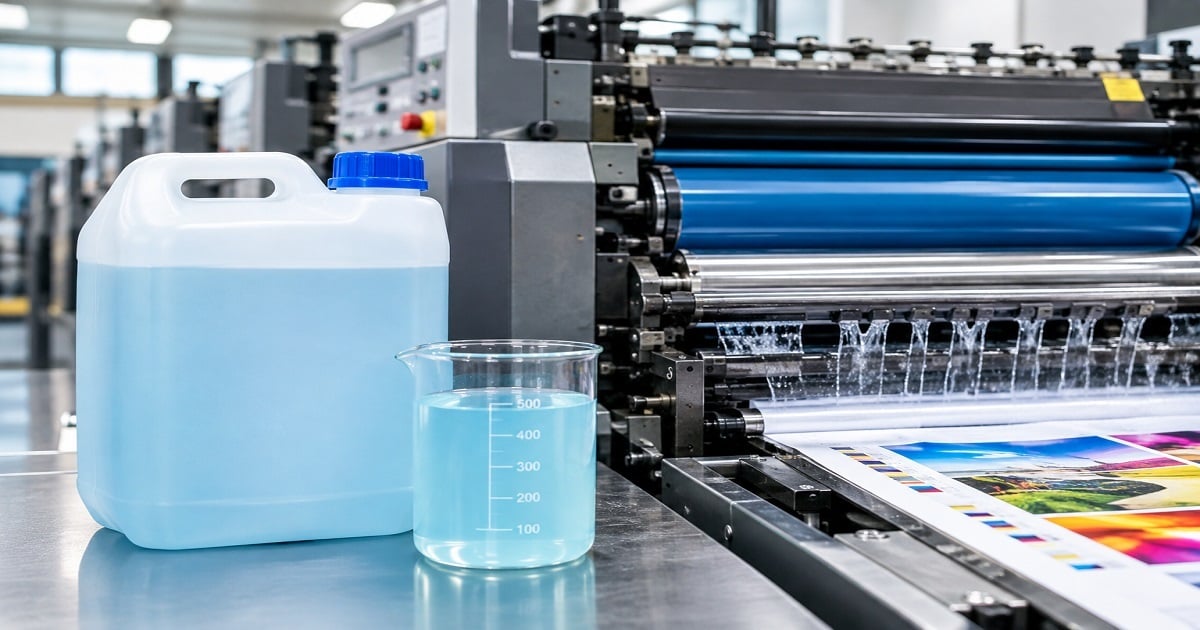
Offset printing fountain solution plays an essential role in maintaining print quality, controlling ink and water balance, and keeping printing plates clean during production. For printing businesses in Pakistan, knowing when to replace offset printing fountain solution in 2027 can help prevent printing defects, reduce material waste, and maintain consistent results. A well-maintained fountain solution supports smooth press operation and helps printers achieve clear images, sharp text, and reliable colour reproduction.
The right time to replace Fountain Solution for Offset Printing solution depends on several factors, including press usage, water quality, ink characteristics, paper dust, contamination, and the condition of the dampening system. Although some printing operations may use the same solution for extended periods, others may need more frequent replacement because of demanding production schedules or changing environmental conditions. Understanding the warning signs can help Pakistani printing businesses improve efficiency and avoid unnecessary downtime.
Understanding the Role of Fountain Solution in Offset Printing
Fountain solution is a specially prepared liquid used in offset printing to keep non-image areas of the printing plate receptive to water and resistant to ink. It helps establish the balance between ink and water, which is necessary for transferring images accurately onto paper or other suitable substrates.
When the solution performs correctly, the printing plate remains clean in non-image areas, reducing the risk of unwanted ink deposits. However, when the fountain solution becomes contaminated or its chemical properties change, the press may experience scumming, uneven colour, excessive water requirements, and other printing problems.
Why Replacing Fountain Solution at the Right Time Matters
Maintaining Consistent Print Quality
One of the main reasons to replace fountain solution is to maintain consistent printing quality. As production continues, the solution can accumulate ink residues, paper fibres, coating particles, and other contaminants. These substances can interfere with the dampening system and make it harder to maintain a stable ink-water balance.
Protecting Printing Equipment
Contaminated fountain solution may contribute to deposits and operating problems within the dampening system. If the solution is poorly maintained, rollers, circulation components, and related parts may require additional cleaning and maintenance.
Reducing Production Waste
Poor fountain solution condition can lead to repeated press adjustments, rejected sheets, and unnecessary material consumption. Operators may spend additional time correcting water settings or adjusting ink delivery when the underlying problem is contaminated solution.
A practical replacement schedule can help minimise these disruptions. For businesses working with expensive packaging stock or tight delivery deadlines, preventing avoidable waste can make a meaningful difference to overall production costs.
Signs That Your Fountain Solution Needs Replacement
Unusual pH or Conductivity Readings
One of the most reliable ways to determine whether fountain solution needs replacement is to monitor its pH and electrical conductivity. These measurements help operators understand whether the solution remains within the working limits established for their printing process.
Persistent Scumming and Toning
Scumming occurs when ink begins to appear in the non-image areas of a printing plate. Toning can produce unwanted background colour or marks that reduce the cleanliness of the printed sheet.
Visible Contamination in the Circulation Tank
The circulation tank can provide useful clues about fountain solution condition. Ink residues, paper fibres, coating particles, sediment, or deposits around the tank may indicate that contaminants are accumulating.
A solution that looks dirty should be investigated, especially when the press also shows unstable printing performance. However, appearance alone cannot confirm whether the chemistry is suitable for continued use.
Repeated Ink-Water Balance Problems
When the press repeatedly requires adjustments to dampening settings, operators should investigate whether the fountain solution is contributing to the instability.
An unsuitable solution may cause excessive water demand, inconsistent ink density, or difficulty keeping non-image areas clean. These problems can affect print consistency and increase setup time.
Before replacing the solution, check dosing accuracy, water quality, roller settings, ink condition, and operating temperature. If the solution remains outside its specified limits or contains excessive contamination, replacement may be necessary.
How Often Should You Replace Fountain Solution in 2027?
There is no universal replacement interval that suits every offset printing press. Some operations may require frequent changes because of heavy production, contamination, or demanding print conditions, while well-maintained systems may operate longer between complete replacements.
For printing companies in Pakistan, a practical approach is to establish a replacement schedule based on the fountain solution manufacturer’s instructions, pressroom experience, and recorded measurements.
Daily Production Monitoring
At the beginning of each working shift, operators should inspect the circulation system and measure the relevant properties of the fountain solution. They should compare the results with the established baseline and the manufacturer’s specifications.
During longer production runs, further checks may be necessary, particularly when the press is operating under demanding conditions. If the readings change significantly, the operator should investigate rather than waiting for visible defects to appear.
Replacement After Heavy Production
Large packaging orders, extended printing runs, and jobs involving coated paperboard can introduce additional contaminants into the system. As a result, the solution may deteriorate more quickly under certain production conditions.
After demanding jobs, inspect the tank, review the measurement records, and evaluate the solution’s condition. Replace it when the manufacturer’s criteria or the pressroom’s validated maintenance limits indicate that it is no longer suitable.
Replacement After Long Shutdowns
A press that remains idle for an extended period may require additional attention before production resumes. Depending on storage conditions, the circulation system may accumulate deposits or develop microbial contamination.
Inspect the tank and circulation components before restarting the press. If the solution has deteriorated, become contaminated, or exceeded the recommended service period, replace it and clean the system as required.
Factors That Affect Fountain Solution Life in Pakistan
Water Quality and Mineral Content
Water quality is an important consideration for Pakistani printing businesses. Differences in hardness, alkalinity, and dissolved minerals can influence how fountain solution concentrate performs.
Water with unsuitable characteristics may contribute to deposits, unstable chemical readings, and inconsistent dampening performance. For this reason, printing companies should evaluate their water source and select a compatible fountain solution.
Where necessary, an appropriate water-treatment system can help improve consistency. However, treatment should be selected according to the concentrate manufacturer’s recommendations rather than assuming that every press requires the same water specification.
Seasonal Temperature Changes
Seasonal temperature variations can affect pressroom conditions and the stability of the dampening process. Warmer environments may increase evaporation and make it more difficult to maintain consistent operating conditions.
During hotter periods, printing businesses should pay closer attention to solution temperature, concentration, and circulation-system performance. Cooler conditions may create different challenges, so operators should follow the requirements of their particular press and chemical product.
Ink, Paper, and Coating Materials
Different printing jobs introduce different materials into the production process. Paper dust, coating residues, ink particles, and other contaminants may gradually alter fountain solution characteristics.
Packaging printers handling coated boards may experience different contamination patterns from businesses producing newspapers or uncoated commercial printing. A replacement schedule should reflect the materials used and the performance history of each press.
Concentration and Chemical Compatibility
Incorrect mixing can shorten the useful life of fountain solution and create problems from the beginning of a production run. Too little concentrate may provide inadequate buffering and dampening performance, while excessive concentrate can also disturb the printing process.
Always measure the concentrate according to the product instructions. Avoid mixing incompatible chemicals or adding cleaning agents to the circulation tank unless the manufacturer explicitly permits it.
The Correct Procedure for Replacing Fountain Solution
Step 1: Inspect and Assess the Existing Solution
Before draining the tank, record the current pH, conductivity, temperature, and any relevant concentration measurements. Compare them with the fresh-solution baseline and the manufacturer’s specified limits.
Step 2: Drain and Clean the System
Drain the old solution safely, following the press manufacturer’s maintenance instructions. Clean the circulation tank, filters, pipes, and other accessible components using compatible cleaning products.
Step 4: Check the Press Before Resuming Production
Inspect the dosing equipment, dampening rollers, and circulation system before restarting the press. Confirm that the new solution is circulating correctly and that the dampening settings are appropriate.
Choosing the Right Fountain Solution Supplier in Pakistan
Selecting a reliable supplier is an important part of maintaining a consistent offset printing process. Printing businesses should look for products that suit their press type, ink system, water characteristics, and production requirements.
The best replacement schedule depends on the printing system, water quality, production workload, and fountain solution manufacturer’s recommendations. Regular testing, accurate mixing, proper circulation-system cleaning, and consistent recordkeeping help operators make informed decisions. By combining routine monitoring with timely replacement, Pakistani printing companies can maintain cleaner printing plates, improve production consistency, and support dependable results across commercial and packaging printing jobs.
Frequently Asked Questions
1. When should fountain solution be replaced?
Replace it when contamination, unstable readings, or the manufacturer’s maintenance criteria indicate that it is no longer suitable for use.
2. Can old fountain solution affect print quality?
Yes. Deteriorated or contaminated solution can contribute to scumming, toning, unstable ink-water balance, and inconsistent printing results.
3. Should pH be checked before replacing fountain solution?
Yes. Measuring pH alongside conductivity helps operators assess the solution and compare it with established operating limits.
4. Does hot weather affect fountain solution?
Yes. Higher temperatures can increase evaporation and affect operating stability, making regular monitoring especially important.
5. Can fresh concentrate restore contaminated fountain solution?
Not always. If contamination is excessive or the solution has deteriorated, draining and cleaning the system before preparing a fresh mixture may be necessary.