







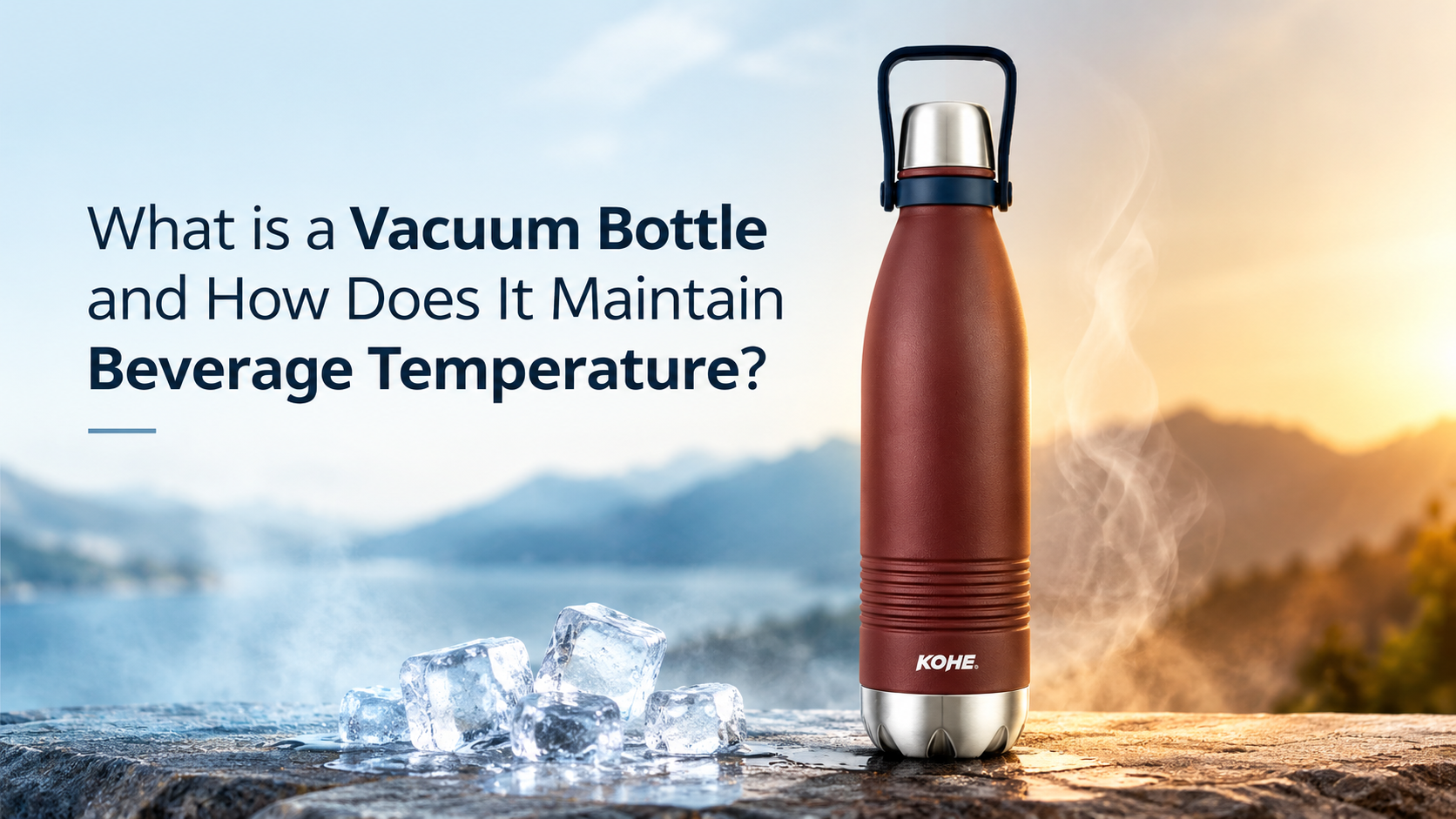
A hot cup of tea during a busy workday or a refreshing drink while travelling can make everyday routines more comfortable. However, beverages often lose their original temperature when left in ordinary bottles for several hours. This is where vacuum bottles become useful. Designed to reduce heat transfer between the beverage and its surroundings, these insulated containers help maintain drink temperature for longer than conventional single-wall bottles.
Vacuum bottles are commonly used for carrying water, tea, coffee, and other beverages to offices, educational institutions, gyms, and outdoor locations. In cities such as Ludhiana, where daily commuting, workplace schedules, and seasonal temperature changes influence drinking habits, an insulated bottle can be a practical addition to everyday essentials.
But how does a vacuum bottle actually work? Its performance depends on the principles of heat transfer, the quality of its insulation, the materials used in its construction, and the way it is maintained. Understanding these factors helps consumers make informed decisions when comparing different vacuum bottles.
This guide explains the science behind vacuum insulation, the role of stainless steel, the factors affecting temperature retention, and the practical considerations involved in choosing and maintaining an insulated bottle. It also explores how products associated with categories such as Vacuum Bottles from Kohe KGOC can be evaluated using objective criteria rather than marketing claims.
What is a Vacuum Bottle?
A vacuum bottle is an insulated container designed to slow down the movement of heat between the liquid inside and the external environment. It typically consists of two walls separated by a space from which most air has been removed.
This reduced-pressure space is called a vacuum layer. Because it contains very few gas molecules, it significantly limits heat transfer through conduction and convection. As a result, hot beverages generally cool more slowly, while cold beverages warm more slowly than they would in an ordinary single-wall container.
Many modern vacuum bottles use stainless steel for their inner and outer walls because it offers durability, corrosion resistance, and suitability for repeated everyday use when manufactured to appropriate food-contact standards.
How Does a Vacuum Bottle Maintain Beverage Temperature?
A vacuum bottle maintains beverage temperature primarily by reducing three forms of heat transfer: conduction, convection, and radiation.
1. Reducing Heat Transfer Through Conduction
Conduction occurs when heat moves through a material from a warmer region to a cooler one. For example, a metal spoon placed in hot tea gradually becomes warm because energy travels through the metal.
In a vacuum bottle, the space between the inner and outer walls interrupts much of the direct heat-transfer path. Although some heat can still travel through connecting components, the reduced contact between the walls helps slow temperature changes.
2. Limiting Convection
Convection occurs when heat moves through the circulation of a fluid, such as air or water. In ordinary containers, surrounding air can transfer heat between surfaces.
A vacuum layer contains too few gas molecules to support significant conventional convection. This makes it an important part of the bottle’s insulating design.
3. Managing Thermal Radiation
Thermal radiation transfers energy through electromagnetic waves. Unlike conduction and convection, it does not require direct contact or a medium.
Some vacuum bottles use reflective or specially treated surfaces to reduce radiative heat transfer. The effectiveness depends on the surface properties and overall construction.
Together, these mechanisms help a vacuum-insulated bottle preserve the temperature of its contents for an extended period.
What Materials Are Used in Vacuum Bottles?
The materials used in a vacuum bottle affect its durability, weight, cleaning requirements, and overall performance.
Stainless Steel
Stainless steel is widely used in reusable insulated bottles. Its useful characteristics include:
- Resistance to corrosion under appropriate conditions.
- Mechanical strength for everyday handling.
- A durable surface suitable for repeated cleaning.
- Compatibility with many beverage-storage applications when the grade and manufacturing process are appropriate.
However, not all stainless steel products are identical. Material grade, surface finish, welding quality, and manufacturing standards can influence long-term performance.
Plastic and Silicone Components
Bottle lids, seals, and drinking spouts may contain food-contact plastics or silicone. These components help prevent leakage and make the bottle easier to use.
A well-designed seal is important because liquid can escape even when the insulated body itself performs effectively. Consumers should follow the manufacturer’s cleaning and temperature-use instructions for these components.
The Vacuum Layer
The vacuum layer is the defining feature of a vacuum bottle. Its insulating performance depends on the quality of the sealed construction and how well the reduced-pressure space is maintained over time.
Damage, manufacturing defects, or deterioration can affect insulation performance. A bottle that suddenly loses its ability to retain temperature may require inspection or replacement.
What Factors Affect Vacuum Bottle Performance?
Not every insulated bottle maintains temperature for the same duration. Several factors influence performance.
Bottle Design and Construction
Double-wall construction, the quality of the vacuum seal, and the design of the neck and lid affect heat transfer. A poorly fitting lid can allow heat to escape or enter more quickly, even when the bottle body is well insulated.
Initial Beverage Temperature
A beverage placed inside at a higher temperature may remain warm longer than one that starts at a lower temperature, although the result also depends on the environment and other conditions.
Similarly, starting with chilled water can help maintain a lower temperature for longer.
Frequency of Opening
Every time the lid is removed, the beverage exchanges heat with the surrounding air. Frequent opening can therefore reduce temperature retention.
Beverage Volume and External Conditions
The amount of liquid, the bottle’s dimensions, and the surrounding temperature can affect cooling or warming rates. For example, a bottle carried outdoors in direct sunlight may experience different conditions from one stored inside an air-conditioned office.
How Should You Choose Vacuum Bottles for Daily Use in Ludhiana?
Selecting a vacuum bottle involves more than comparing appearance or advertised insulation duration. Consider how you intend to use it.
Identify the Required Capacity
A compact bottle may be convenient for short commutes, while a larger capacity may suit longer working hours or travel. Consider the amount of liquid you typically consume and the space available in your bag.
Check the Lid and Leak Resistance
Examine how the lid closes and whether the product provides clear instructions for preventing leaks. If you carry the bottle alongside documents, electronics, or clothing, secure closure is particularly important.
Review Material and Safety Information
Look for clear information about the stainless steel grade, food-contact components, cleaning requirements, and temperature limitations. Avoid assuming that every product described as stainless steel has identical material specifications.
Consider Local Weather and Daily Routines
Ludhiana experiences hot summers and cooler winters. An insulated bottle can be useful across these seasonal conditions, but its performance will still depend on the starting beverage temperature, exposure, and construction quality.
For office use, commuting, or educational settings, practical features such as comfortable handling, a suitable capacity, and easy cleaning may matter as much as insulation.
When comparing Vacuum Bottles from suppliers or product ranges such as Kohe KGOC, use these measurable characteristics to assess suitability. Product specifications should be checked directly rather than inferred from a brand name or general category description.
How to Clean and Maintain a Vacuum Bottle
Regular cleaning supports hygiene and helps prevent unwanted smells or residue.
Follow these practices:
- Wash the bottle after use, particularly when it has contained tea, coffee, or other beverages that can leave residue.
- Use warm water and a suitable mild dishwashing detergent.
- Clean the lid, seal, and drinking opening separately according to the manufacturer’s instructions.
- Allow all components to dry thoroughly before reassembling and storing the bottle.
- Avoid abrasive scrubbers or harsh chemicals unless specifically permitted by the manufacturer.
- Do not place the bottle in a dishwasher or microwave unless the product instructions explicitly allow it.
- Inspect the body for dents, corrosion, or other damage and check the lid for deterioration.
If a bottle develops unusual external heat, visible damage, leakage, or a sudden decline in insulation performance, stop using it until the issue has been assessed.
Conclusion
Vacuum bottles work by slowing heat transfer through a combination of vacuum insulation, carefully designed surfaces, and sealed construction. Their ability to maintain beverage temperature depends on material quality, lid performance, starting temperature, usage habits, and environmental conditions.
For people in Ludhiana, understanding these factors can make it easier to select a bottle for commuting, office use, study, or travel. Comparing specifications and following proper cleaning practices also helps support safe, long-term use.
Before choosing a product, review its technical details and care instructions. A clear understanding of how vacuum insulation works provides a practical foundation for evaluating options, including those available in the Vacuum Bottles category from Kohe KGOC, without relying on unsupported performance claims.
FAQs
1. How long can a vacuum bottle keep beverages hot or cold?
The duration varies by product design, insulation quality, capacity, lid construction, starting temperature, and environmental conditions. Check the manufacturer’s stated performance specifications and testing conditions rather than assuming all vacuum bottles provide the same results.
2. Why does a vacuum bottle maintain temperature better than a regular bottle?
A vacuum bottle contains a reduced-pressure layer between its walls. This layer significantly limits conduction and convection, while some designs also reduce radiative heat transfer. A regular single-wall bottle generally provides much less thermal insulation.
3. Are stainless steel vacuum bottles suitable for everyday use?
They can be suitable for everyday use when made from appropriate food-contact materials and maintained according to the manufacturer’s instructions. Check the product’s material specifications, lid components, cleaning guidance, and intended temperature range.
4. Can a vacuum bottle keep water cold during Ludhiana’s summer?
A properly functioning vacuum bottle can slow the warming of chilled water in hot weather. However, the actual duration depends on outdoor temperature, direct sunlight, initial water temperature, bottle design, and how frequently it is opened.
5. What should I check before purchasing vacuum bottles?
Review capacity, insulation specifications, material information, lid design, leak resistance, ease of cleaning, durability, and the manufacturer’s usage instructions. These factors help determine whether a bottle suits your daily routine.