





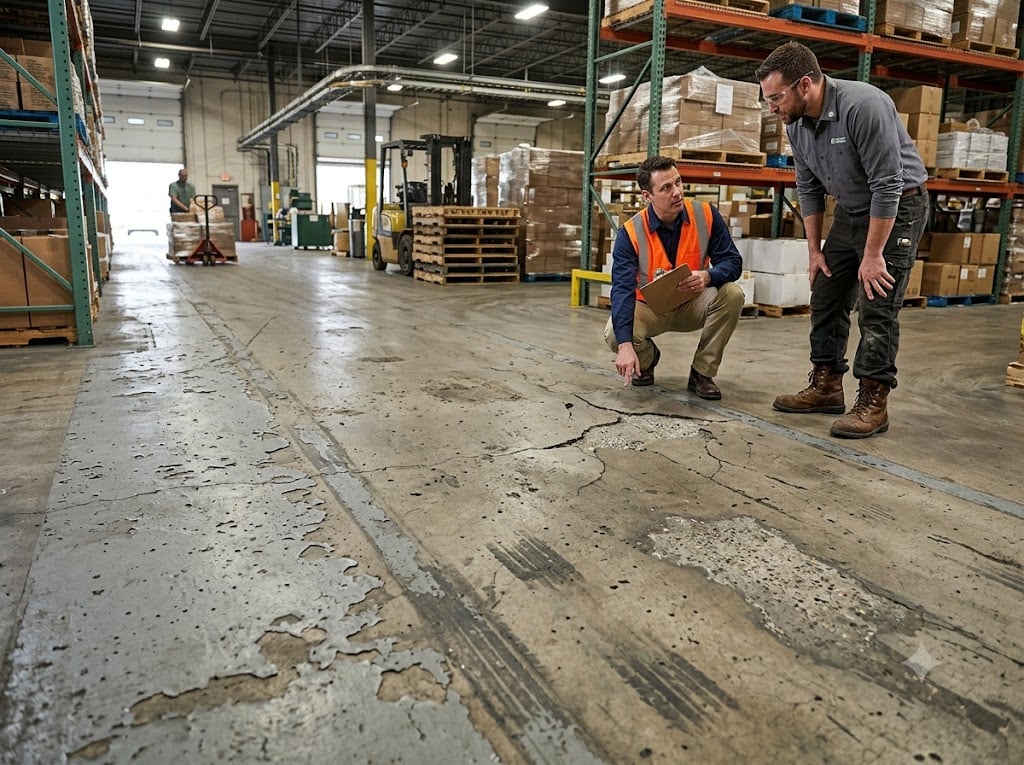
Nobody walks into a warehouse, workshop, or commercial kitchen and compliments the floor until it starts showing signs of wear. Cracks, stubborn stains, concrete dust, and slippery patches can quickly turn into more than an appearance problem. They can affect daily cleaning, workplace safety, equipment maintenance, and the smooth operation of your business.
Concrete is built to handle heavy use, but constant foot traffic, forklifts, chemical spills, and repeated cleaning gradually take their toll. Ignoring early damage can also make repairs more complicated and expensive.
That’s why recognizing when to contact commercial epoxy flooring companies matters. A suitable floor coating can help protect the concrete, simplify maintenance, and provide a surface designed for your facility’s specific demands.
Here are five warning signs that your commercial floor may need professional attention.
1. The Dust Keeps Coming Back
Run your hand across the floor. Does it come away chalky? Do you find fine powder on shelves, tools, or inventory, no matter how often you clean? That’s the concrete surface breaking down, and sweeping won’t fix it.
The dust gets into equipment and settles on products. In kitchens or clinics, it can even cause trouble during inspections. A coating seals the surface and stops the shedding.
2. Cracks and Chipped Edges
Small hairline cracks are common in concrete, but widening gaps and chipped edges near doorways or joints can indicate more serious wear. In busy facilities, forklifts and pallet jacks put extra stress on these weak spots, causing minor damage to spread over time.
Moisture can also penetrate damaged concrete. Before applying a new coating, the surface should be properly repaired, ground, and prepared to help ensure strong adhesion and long-lasting results.
3. Stains That Won’t Leave
Oil, grease, coolant, and cleaning chemicals can gradually penetrate unsealed concrete, leaving stubborn stains that are difficult to remove. In busy service bays and workshops, repeated spills can make floors look worn even after regular cleaning.
These stains can also contribute to lingering odors and make routine maintenance more challenging. A properly installed, non-porous floor coating helps prevent many liquids from soaking into the concrete, making spills easier to clean and keeping the workspace looking cleaner.
4. Slippery Spots and Near Misses
Worn concrete gets slick when it’s wet. Think dishwashing areas, entryways, and loading docks. One slip report is enough to take seriously, because a single injury claim costs far more than a new floor.
Coatings can include flake or grit for grip, even when wet. You can also add safety striping and color zones for busy work areas.
5. The Old Coating Is Giving Up
Already coated? Look for peeling, bubbles, yellow patches near windows, or bare concrete in the busy lanes. Usually the cause is poor prep, moisture in the slab, or a thin product that was never right for the job. DIY kits often fail this way within a year or two. Painting over it won’t help. The old layer has to come off first.
What to Do Next
If a few of these sound familiar, don’t wait for the floor to get worse. Start with an inspection. A good contractor checks cracks, surface strength, moisture, and daily use before suggesting anything.
Then ask how they prepare. Diamond grinding is the step that matters most. Ask about downtime too. Polyaspartic systems can often be back in service in about a day, while traditional epoxy may take several. Check for insurance, a written warranty, and photos of past jobs. Most good commercial epoxy flooring companies such as Rocket City Epoxy will happily share those and give you an itemized quote.
A worn floor doesn’t fix itself. It just gets pricier to fix. If you’re seeing any of these signs, book an inspection now and decide with real numbers in hand.
FAQs
How long does a commercial epoxy floor last?
Under proper preparation and the correct system, most industrial coatings will typically last anywhere from five to ten years. Forklifts, chemical damage, and bad cleaning practices can reduce this. Quick cleanup of spills along with the use of an automatic scrubber can greatly extend the life of the coating.
How long does installation take?
A standard epoxy typically takes between three and five days to install and harden. However, polyaspartics are much quicker, with many installations being completed within one day. Of course, this may vary depending on the size of the area, as well as the condition of the concrete itself.
Can my business stay open during installation?
In most cases, yes, as long as proper planning takes place. Construction crews normally operate in shifts or even at night and on weekends, thus allowing your team to keep working. It is advisable to inform your contractors about those areas that should not be shut down, and the time they should come back.
How much does commercial epoxy flooring cost?
Price will depend on square feet, condition of concrete, type of repairs required, and your choice of product. Polyaspartic paint is initially costlier but lasts longer. There is no other option except for visiting the site physically and then receiving a quotation with all the expenses itemized.
Can you coat over an old, peeling coating?
Not safely. A failing layer will pull the new one up with it. The old coating has to be ground off and the concrete prepped properly first. It takes more effort, but it’s the only way to get a bond that actually holds up for years under heavy daily traffic.