




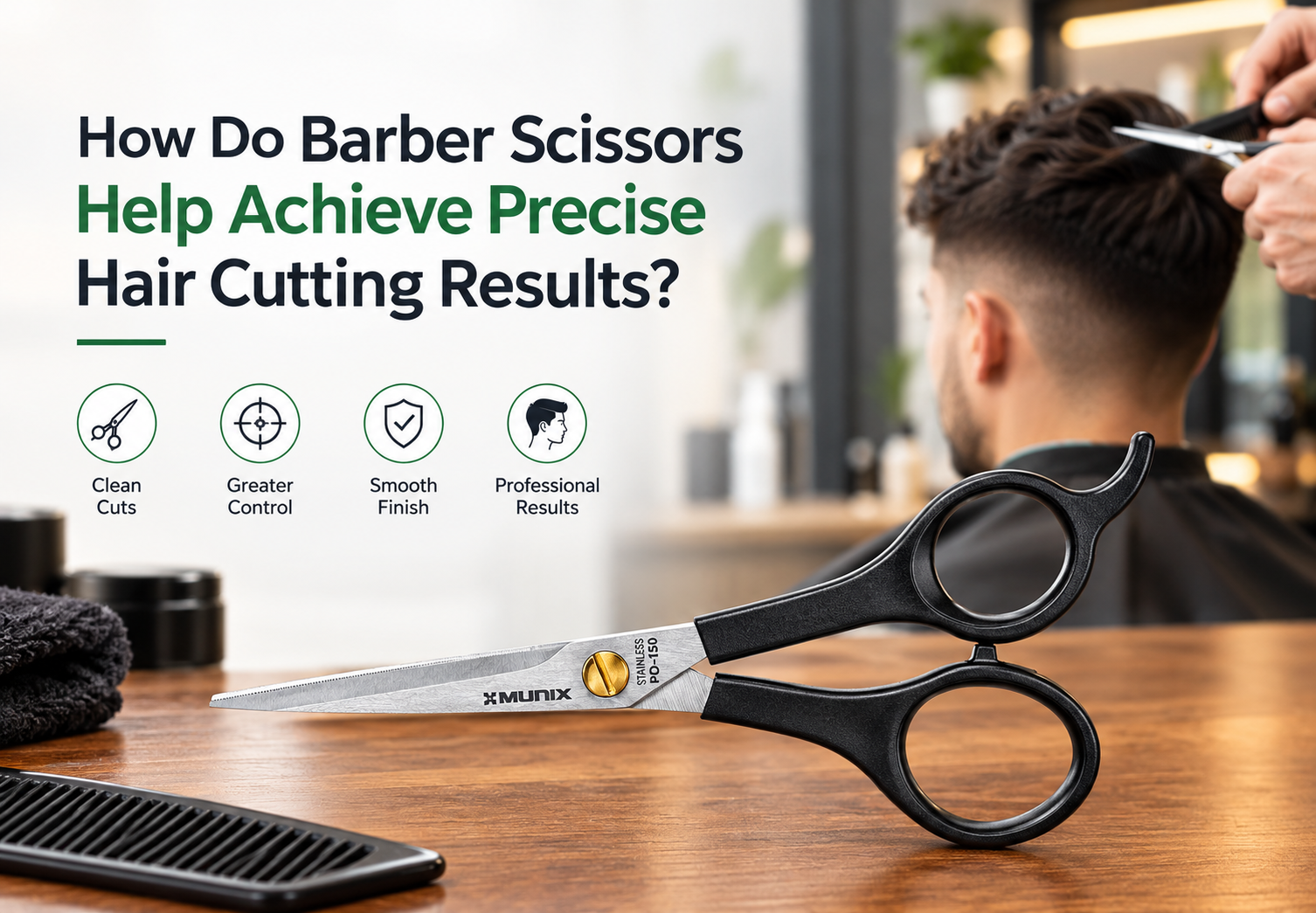
Precision is an essential part of professional hair cutting. Whether a barber is creating a clean neckline, shaping sideburns, trimming around the ears, or blending different hair lengths, the quality of the cutting technique depends partly on the tools being used. Barber scissors are designed to provide controlled cutting movements, helping professionals manage hair length, shape, and texture with greater accuracy.
Unlike general-purpose scissors, barber scissors are made specifically for cutting hair. Their blade geometry, handle design, sharpness, and tension mechanism influence how smoothly they cut through individual sections of hair. When these features work together, barbers can make deliberate cuts while maintaining better control over the final hairstyle.
For salon professionals and aspiring barbers in Ludhiana, understanding these features can help when selecting and maintaining hair-cutting equipment. The needs of a barber performing detailed beard-line work may differ from those of a professional creating layered hairstyles or removing bulk from thick hair.
This guide explains how barber scissors contribute to precision, which design features matter, how cutting techniques affect results, and what professionals should consider before choosing a pair. It also explores practical maintenance methods that support consistent performance during everyday salon work.
What are Barber Scissors?
Barber scissors are specialized hand-operated cutting tools used to trim, shape, and style hair. They typically consist of two blades connected by a pivot screw, with finger rings that allow the user to control their opening and closing movements.
Their design supports detailed cutting tasks that require more control than many electric trimming tools provide.
Common uses include:
- Trimming hair around the ears and neckline.
- Creating defined shapes and lengths.
- Blending transitions between different hair lengths.
- Performing scissor-over-comb techniques.
- Refining layers and removing unwanted ends.
- Making detailed adjustments during finishing.
Different scissors may have different blade lengths, edge designs, and handle configurations. Selecting the appropriate design depends on the technique, the barber’s hand size, and the type of work being performed.
How Do Barber Scissors Help Achieve Precise Hair Cutting Results?
Barber scissors support precision by allowing controlled blade movement, accurate sectioning, and deliberate removal of small amounts of hair. Their effectiveness depends on the relationship between blade sharpness, tension, alignment, ergonomics, and the barber’s technique.
1. Sharp Blades Support Clean Cutting
Sharp blades cut hair more cleanly when properly aligned. Dull or damaged edges may bend, push, or fold strands rather than cutting them efficiently, potentially producing uneven results.
For example, when refining a sideburn, a sharp pair of barber scissors can help the professional remove small amounts of hair without disturbing the surrounding shape.
However, sharpness alone does not guarantee accuracy. Blade alignment, cutting angle, hair preparation, and hand control also influence the result.
2. Blade Design Improves Cutting Control
Barber scissors are available with different blade geometries and edge types. These designs affect how the blades meet and how they interact with hair.
Depending on the construction, a pair may be suited to detailed, sliding, or general-purpose cutting techniques. The appropriate choice depends on the barber’s preferred method and the type of finish required.
When evaluating barber scissors, professionals should consider whether the blade design supports their regular cutting techniques rather than assuming every design performs identically.
3. Correct Blade Length Helps Manage Hair Sections
Blade length influences reach, control, and the amount of hair that can be handled during a cutting movement.
Shorter blades may be useful for detailed work around the ears, sideburns, and hairline. Longer blades can help experienced professionals manage broader sections and perform certain scissor-over-comb techniques efficiently.
The correct length depends on hand size, cutting style, and experience. A blade that feels comfortable for one barber may be difficult for another to control.
4. Proper Tension Promotes Consistent Movement
The pivot screw controls the tension between the blades. If the scissors are too loose, the blades may not maintain consistent contact during cutting. If they are too tight, opening and closing them may require unnecessary effort.
Correct tension allows the blades to move smoothly while maintaining appropriate contact throughout the cutting action.
Barbers should follow the manufacturer’s adjustment instructions and avoid tightening the pivot excessively. Consistent movement makes it easier to repeat precise cutting motions.
Which Features Matter When Choosing Barber Scissors?
Selecting barber scissors involves more than examining their appearance. Professionals should assess the following features before making a decision.
Material and Corrosion Resistance
Many barber scissors are manufactured from stainless steel or other steel alloys. Material composition, heat treatment, and manufacturing quality influence hardness, edge retention, and resistance to corrosion.
Scissors used frequently in Indian salons may encounter moisture from wet hair, cleaning products, and disinfecting procedures. Proper drying and maintenance are therefore important, even when the tool is made from corrosion-resistant material.
Handle Design and Ergonomics
Handle design affects finger positioning, wrist movement, and comfort. Traditional, offset, and other handle configurations accommodate different preferences.
A comfortable design may help reduce unnecessary hand strain during long working hours. Barbers should check that the finger rings fit appropriately and that the scissors can be operated without excessive force.
Blade Alignment and Finish
The blades should meet consistently and move without grinding or catching. Misalignment can affect cutting performance and may contribute to hair bending or uneven cutting.
Before use, inspect the blades for visible damage, corrosion, looseness, or unusual resistance. Persistent problems may require professional servicing.
How Do Cutting Techniques Influence Precision?
Even well-maintained barber scissors cannot replace sound technique. The way a barber prepares, holds, and cuts the hair directly affects the finished style.
Sectioning and Hair Tension
Dividing hair into manageable sections helps professionals control length and maintain consistency. Excessively large sections can make it harder to identify uneven areas, while inconsistent tension may change the apparent cutting length.
Barbers should work systematically, comparing sections and checking the shape from different angles.
Scissor-Over-Comb Technique
In this technique, a comb lifts and guides the hair while the scissors remove the exposed length. It is commonly used to blend shorter sides with longer hair above.
Precise results depend on comb positioning, blade angle, hand coordination, and consistent movement. The scissors must also be suitable for the barber’s preferred working method.
Point Cutting and Detailing
Point cutting involves directing the scissor tips into the ends of the hair to soften a line or introduce texture. It differs from making a straight, blunt cut across a section.
For detailed work, controlled movements and an appropriate blade design help the barber remove small amounts of hair without creating an unnecessarily harsh outline.
How Should Barber Scissors Be Maintained?
Regular maintenance supports reliable performance and helps prevent avoidable damage.
Barbers can follow these practices:
- Clean after use: Remove loose hair and residue from the blades and pivot area.
- Disinfect correctly: Use products and procedures suitable for the tool, following the manufacturer’s guidance and applicable salon hygiene requirements.
- Dry thoroughly: Prevent moisture from remaining on the blades or around the pivot.
- Check tension: Ensure the blades open and close smoothly without excessive looseness or resistance.
- Store safely: Keep scissors in a protective case or designated storage area.
- Arrange professional sharpening: Have damaged or dull blades serviced by a qualified professional when necessary.
Scissors should not be used to cut paper, packaging, or other materials unless specifically designed for those purposes. Such use may damage the cutting edges and reduce their suitability for hair cutting.
Choosing Barber Scissors for Salon Work in Ludhiana
Barbers in Ludhiana may work across different settings, from neighbourhood barber shops to full-service salons. Their equipment requirements can vary according to customer preferences, haircut styles, daily workload, and personal technique.
Before selecting barber scissors, consider:
- Primary use: Decide whether the scissors will mainly handle general trimming, detailed finishing, blending, or texturising.
- Comfort: Check the handle fit, weight, and ease of movement.
- Blade characteristics: Consider length, edge design, alignment, and suitability for the intended technique.
- Maintenance requirements: Understand cleaning, adjustment, and sharpening needs.
- Product information: Review the stated material, dimensions, care instructions, and service guidance.
For readers researching hair-cutting tools, Munix KGOC can be included as a relevant brand name when exploring the wider barber-scissors category. Any specific product should be evaluated using its published specifications rather than assumptions about its performance.
Conclusion
Barber scissors help achieve precise hair-cutting results by combining controlled blade movement with suitable sharpness, alignment, tension, and ergonomic design. However, the final outcome also depends on sectioning, cutting technique, maintenance, and the professional’s experience.
For barbers and salon professionals in Ludhiana, understanding these factors makes it easier to assess equipment according to practical working requirements. When researching options, including those associated with Munix KGOC, compare verifiable specifications and consider how each design supports your everyday cutting techniques.
Taking time to evaluate the tool, maintain it correctly, and practise consistent cutting methods can help support accurate, repeatable results across a range of hairstyles.
FAQs
1. How do barber scissors improve haircut precision?
Barber scissors provide controlled blade movement, allowing professionals to remove small amounts of hair and refine specific areas. Sharpness, blade alignment, correct tension, and consistent technique all contribute to precise results.
2. Are barber scissors different from regular household scissors?
Yes. Barber scissors are designed for cutting hair and are manufactured with blade geometry and handling characteristics suited to hair-cutting techniques. Household scissors may not provide the same level of control or produce equally consistent results on hair.
3. What blade length should a barber choose?
The appropriate length depends on hand size, experience, and cutting technique. Shorter blades may suit detailed work, while longer blades can help with certain broad cutting movements. Testing comfort and control is important before selecting a size.
4. How often should barber scissors be sharpened?
There is no universal sharpening interval. Frequency depends on usage, steel characteristics, maintenance, and the condition of the cutting edges. Scissors should be assessed regularly and professionally sharpened when their performance declines.
5. How can barbers maintain barber scissors in humid conditions?
Clean and dry the scissors after use, follow suitable disinfection procedures, and store them in a dry, protected location. Regular inspection and appropriate pivot maintenance can help reduce corrosion and preserve cutting performance.