





People don’t usually think about their septic systems until there is some problem with them. The septic system is hidden underground, and no one really gives it much thought. But once the drainage slows down or there is an odor from the yard, it is another matter altogether. These little problems can sometimes point to a blocked field line. Getting proper septic tank service early can help you figure out what’s happening before you’re dealing with a much bigger mess. And honestly, it’s better to catch these things early than pay for major repairs later.
1. Your Drains Start Running Slowly
Some of the initial things that you will observe include the problem of water not draining as expected. For instance, you will find that the kitchen drain takes longer time to drain out, or the bathtub starts filling up when you are inside.
Now, a slow drain doesn’t always mean there’s a problem with your septic field line. Sometimes it’s just a clog in one pipe. But when several drains around the house start acting up at once, it’s worth looking into.
The septic system might not be moving wastewater away from the house properly. Don’t just keep using chemical drain cleaners and hope the problem goes away. If the issue is underground, those products won’t solve it.
2. Toilets Make Strange Gurgling Sounds
What about flushing the toilet and hearing a bubbling sound from the drain somewhere else in the house? This shouldn’t be ignored, especially if it happens repeatedly.
This could indicate that there is some air trapped because the flow of waste material through the plumbing system is not ideal. Slow flushes or the backup of water in showers or bathtubs could also occur.
A full septic tank can also give similar symptoms, so there’s no way of knowing the exact reason for this problem. Nevertheless, you’d better have it checked to prevent further complications.
3. Wet Patches Start Appearing in Your Yard
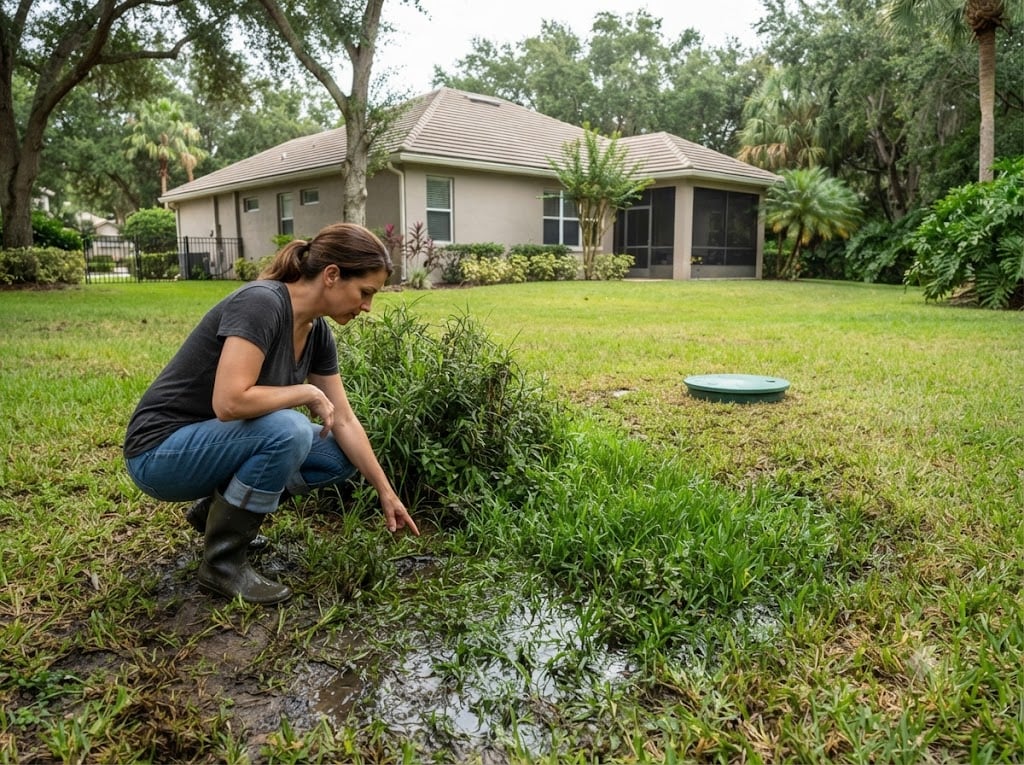
Much information about your system can be revealed through your yard. If you find that a certain portion of your grass remains wet despite no rain, then there may be an issue with your septic field line.
In some cases, there may be little puddles that form, while other times there may be just general dampness that you feel as you step on it. This usually means that the wastewater is not dispersing correctly, so it collects in the upper layer.
Don’t just conclude that the reason for the dampness is because of poor drainage, especially if the dampness is found in your drain field. Stay clear of such places and contact a septic expert.
4. There’s a Sewage Smell Outside
However, there should be no smell of sewage from your yard if you have a properly functioning septic system. Therefore, if there is an unusual smell around the drain field, it is necessary to find out the reason for this.
The reason may be a clogged pipe that causes accumulation of wastewater, which causes odor. A cracked or broken pipe may also produce a similar odor. The overfilling of the septic tank can do so as well.
Opening the window or applying any kind of deodorizing spray will not eliminate the cause of the smell; therefore, it is necessary to conduct an inspection.
5. The Grass Looks Greener in One Spot
This one can be easy to miss. You might notice a patch of grass growing faster or looking much greener than the rest of the lawn.
It may look perfectly fine at first, but extra moisture and nutrients from leaking wastewater can sometimes cause this kind of growth over a septic field line.
Of course, greener grass on its own doesn’t mean your system is blocked. Maybe that area simply gets more water. But if the grass is unusually green and the ground is wet, or there’s a bad smell nearby, don’t ignore it.
What Should You Do About a Blocked Field Line?
To begin with, cut down your water usage. Don’t do multiple loads of laundry on the same day or waste too much water when you don’t have to. It will be counterproductive to overload an overloaded septic system with additional wastewater.
Secondly, schedule an inspection. Septic tank service can determine if you have excess water due to a full tank, a blockage, roots growing into pipes, or problems with the drain field itself.
Also note that septic tank cleaning does not necessarily solve the problem with a blocked field line. In case there are some collapsed pipes or the soil stops absorbing wastewater, you will need further action.
In case there is sewage backup inside your home, limit its use and seek help as soon as possible. Don’t deal with sewage by yourself.
Conclusion
The blocked field line may begin with little indications that you may not even pay much attention to at first. It could be that the water from your showers takes forever to drain away, the sound coming from your toilet sounds funny, or there’s an area in your yard which just won’t dry no matter what.
All these aren’t necessarily signs of a clogged field line, but they’re things to take note of, particularly when there are more than one or two of them occurring at once. Regular servicing of your septic tank will prevent such issues from escalating into costly maintenance problems.
Frequently Asked Questions
How do I know if my septic field line is blocked?
Look for slow drains, gurgling toilets, sewage smells, standing water, or unusually green grass around the drain field. A professional inspection is the best way to confirm the cause.
Is it possible to continue using water when there is a clogged field line?
Reducing water use is ideal until the septic system is inspected. This is due to the fact that using more wastewater will intensify the issue.
Will pumping out the septic tank solve the problem of a clogged field line?
This method will only work when the tank is full; however, other reasons such as damaged pipes, tree roots in the pipes, and other field line problems must be solved separately.
Why does standing water appear above my septic field lines?
Wastewater may not be penetrating into the soil at all; however, heavy rain may be causing such a situation.
What should I do to avoid blocked field lines?
Do not flush inappropriate items into the sewerage system; do not let any kind of grease enter your drains; do not use excess water in the system; and conduct inspections regularly. Moreover, do not allow any vehicles on the drain field.