







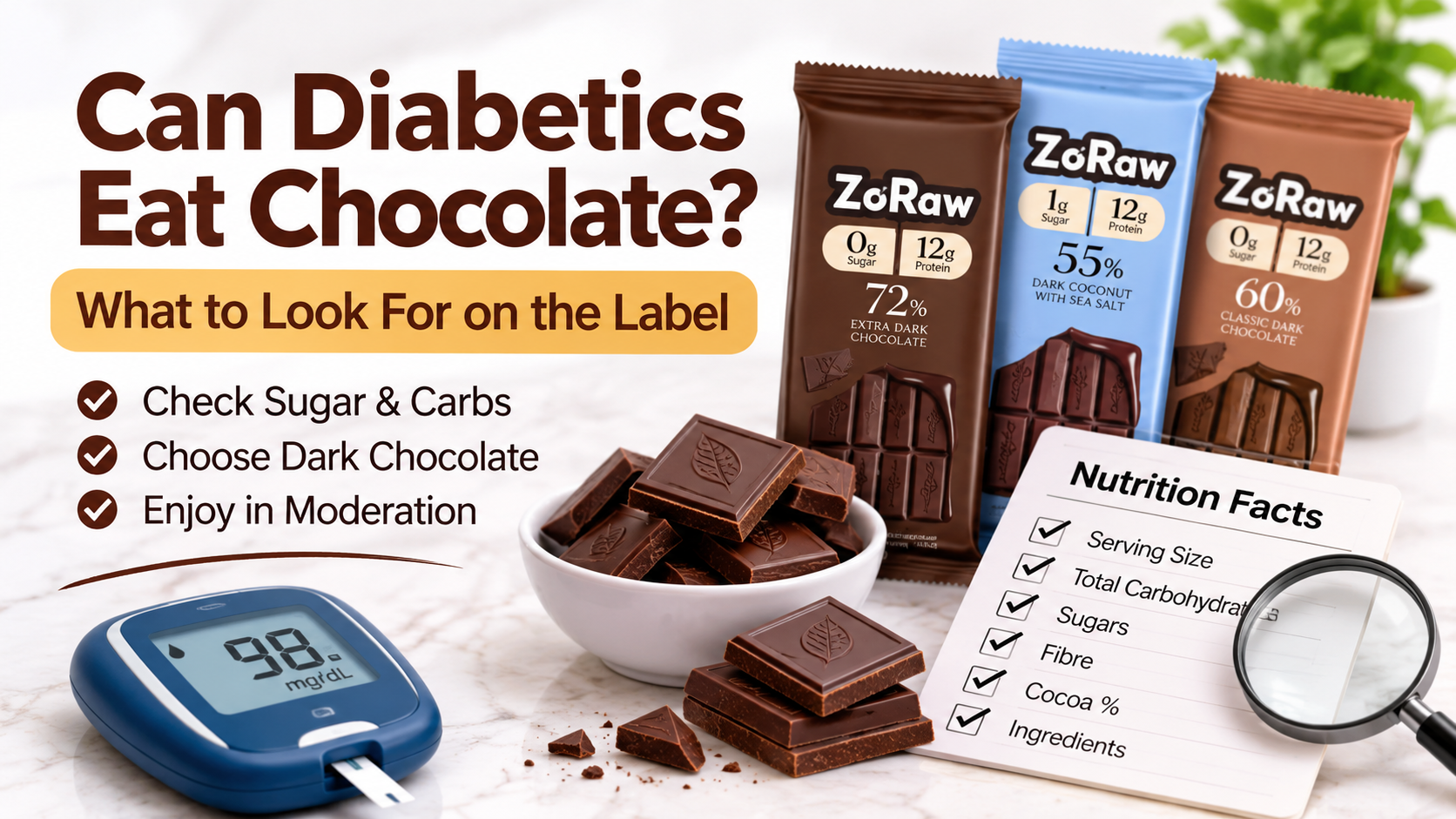
Many people living with diabetes assume chocolate is off the table. In reality, most people with diabetes can fit a small amount of chocolate into their eating plan. The key is knowing what is actually in the bar. Two chocolates that look alike can have very different amounts of sugar, carbohydrates and fat. This guide covers how to read the label and choose diabetic chocolate more confidently.
The Short Answer
Yes, many people with diabetes can enjoy chocolate in moderation. What matters is the type of chocolate, the portion size and how it fits into your overall meals and medication plan. Diabetes affects everyone differently, so check with your doctor, pharmacist or a registered dietitian about what works for you.
Why Chocolate Affects Blood Sugar
Blood sugar responds to the total carbohydrates you eat, not only to sugar. Milk chocolate and white chocolate usually contain a lot of added sugar and can raise blood glucose quickly. Dark chocolate generally contains less sugar, but this varies a lot by brand. Some dark chocolates are still quite sweet, and fillings, caramel, wafers or sweetened coatings can add more carbohydrates.
That is why the label matters more than the front of the package.
What to Look for on the Label
1. Check the serving size first
Nutrition numbers apply to the serving size listed, which is often only a few squares. If you eat two servings, double everything. Compare chocolates using the same serving size.
2. Look at total carbohydrates and sugars
Find “Carbohydrate” and “Sugars” on the Nutrition Facts table. Total carbohydrates matter most if you count carbs. Lower-sugar options help, but a product can be low in sugar and still contain other carbohydrates.
3. Understand sugar alcohols
Many “sugar-free” chocolates use sugar alcohols such as maltitol, erythritol, xylitol or isomalt. They have fewer calories than sugar, but they are not all the same. Maltitol can still raise blood sugar noticeably in some people, while erythritol has little effect on glucose. Large amounts of any sugar alcohol can also cause bloating or digestive upset. If you are not sure how your body responds, start with a small portion.
4. Look for fibre
Fibre slows digestion and can reduce the impact on blood sugar. Some chocolates contain added fibre, and higher-cocoa dark chocolate naturally provides a bit. When counting carbs, ask your healthcare team whether you should subtract fibre or sugar alcohols from your total.
5. Consider the cocoa percentage
In general, a higher cocoa percentage means less room for sugar. Dark chocolate with 70% cocoa or more is a common choice. Percentage alone does not tell you the sugar content, so always confirm on the Nutrition Facts table.
6. Pay attention to fat and protein
Fat and protein slow how quickly sugar is absorbed, which is why some people see a gentler rise in blood sugar with chocolate than with candy. Protein-enriched chocolate can also be more filling. Remember that chocolate still contains calories and saturated fat, so portions still matter.
7. Read the ingredient list
Ingredients are listed from most to least by weight. If sugar, glucose syrup or other sweeteners appear near the top, the product is sweeter than it may seem. Shorter lists are usually easier to evaluate. Also watch for added caramel, cookie pieces or syrups, which increase carbohydrates.
“Sugar-Free” vs “No Added Sugar”
These terms are not interchangeable:
- Sugar-free: contains very little sugar, but may still contain carbohydrates, starches or sugar alcohols.
- No added sugar: no sugar was added during processing, but the product can still contain natural sugars, such as those from milk or fruit.
- Diabetic chocolate: this is a marketing description rather than a guarantee. It does not mean the chocolate has no effect on blood sugar. Always check the numbers for yourself.
Practical Tips for Enjoying Chocolate
- Keep portions small. A square or two is often enough to satisfy a craving.
- Pair it with food. Having chocolate after a balanced meal, or with nuts, may feel more satisfying than eating it on its own.
- Test and track. If you monitor your glucose, note how you respond to a specific chocolate. Individual reactions differ.
- Plan ahead. If you count carbs or take insulin, include the chocolate in your plan instead of treating it as an extra.
- Avoid “health halo” thinking. A bar labelled protein, keto or natural can still be high in calories or sugar alcohols.
Questions to Ask Your Healthcare Team
Because diabetes management is personal, it helps to ask:
- How many carbohydrates should a snack or dessert contain for me?
- Should I count sugar alcohols or fibre in my carb total?
- Does my medication change how I should treat sweets?
A registered dietitian can help you build an eating plan that includes foods you enjoy.
The Bottom Line
Chocolate does not have to disappear when you have diabetes. Check the serving size, compare total carbohydrates and sugars, watch for sugar alcohols, and pick options with a higher cocoa content and simple ingredients. Small portions, smart label reading and guidance from your healthcare team make it much easier to enjoy a treat with confidence.