






You’ve probably heard the name on the news or from a friend. Ozempic, Wegovy, Mounjaro. It’s easy to assume it’s all about a pill or a shot that shrinks your appetite. But the story starts with something your body already makes every time you eat.
That something is GLP-1, short for glucagon-like peptide-1. Once you understand what it does naturally, the medications built around it make a lot more sense.
What GLP-1 Is
GLP-1 is a hormone released by your gut after a meal. Hormones are chemical messengers, and this one carries a simple message: food has arrived, so get ready to handle it.
It travels through your bloodstream and talks to several parts of your body at once, including your pancreas, your stomach, and your brain. Each of those conversations affects how you feel and how your body processes what you eat.
How GLP-1 Works in Your Body
Blood Sugar
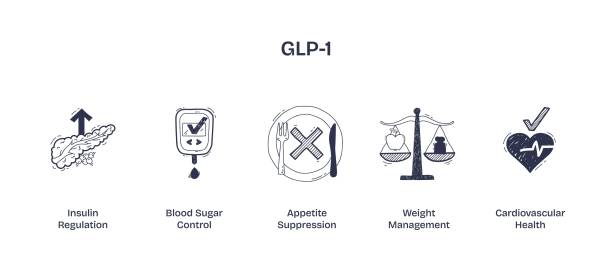
When you eat, your blood sugar rises. GLP-1 helps your pancreas respond by releasing insulin, the hormone that moves sugar out of your blood and into your cells.
It also turns down glucagon, a hormone that tells your liver to release stored sugar. Think of insulin as the brake and glucagon as the accelerator. GLP-1 presses one and eases the other, which keeps your blood sugar steadier after meals.
Digestion
GLP-1 slows the rate at which your stomach empties into your small intestine. Food stays put a little longer and moves along more gradually.
This does two useful things. Sugar from your meal enters your bloodstream more slowly, so there’s less of a spike. And a fuller stomach for longer is one reason you feel satisfied after eating.
Hunger
GLP-1 also acts on receptors in the brain, including areas that help regulate appetite and fullness. When those receptors are activated, you tend to feel full sooner and stay satisfied longer.
This is a physical signal, not a matter of willpower. It’s your body’s built-in way of saying, “That’s enough for now.”
So Why Are There GLP-1 Medications?
Here’s the catch: your natural GLP-1 doesn’t last. Your body breaks it down within minutes, so its effects are short-lived.
GLP-1 medications, often called GLP-1 receptor agonists, are designed to do the same job for much longer. Semaglutide (sold as Ozempic, Wegovy, and Rybelsus), tirzepatide (Mounjaro and Zepbound), and liraglutide (Victoza and Saxenda) are some well-known examples. Tirzepatide also acts on a second hormone receptor called GIP, but it’s usually grouped with the family.
These drugs were first developed for type 2 diabetes, and some are now also prescribed for chronic weight management. All of them require a prescription, and which one suits a person depends on their health history.
GLP-1 and Your Mouth
The effects of these medicines don’t stop the stomach. Some people notice dry mouth, nausea, or reflux, and all three can matter for your teeth. Saliva helps rinse away food and neutralize acid, so less of it makes cavities and gum problems easier to develop. Stomach acid from vomiting or reflux can also wear down enamel.
To be fair, there’s no definitive proof that these drugs directly cause tooth decay. The concern is about those indirect effects, and the fixes are simple: drink water, use fluoride toothpaste, and rinse with water after vomiting, then wait about 30 minutes before brushing.
National Dental Hygiene Month, observed each October, is a good reminder to tell your dentist about any medication you take, including injections, and to keep up with your checkups.
What to Remember
GLP-1 is a natural hormone that helps manage blood sugar, slows digestion, and tells your brain you’re full. Medications copy that signal and make it last longer, which is why they work for diabetes and weight management.
They’re not right for everyone, and side effects are real. If you’re curious about whether one fits your situation, a doctor or pharmacist can look at your health history and give you a straight answer.