





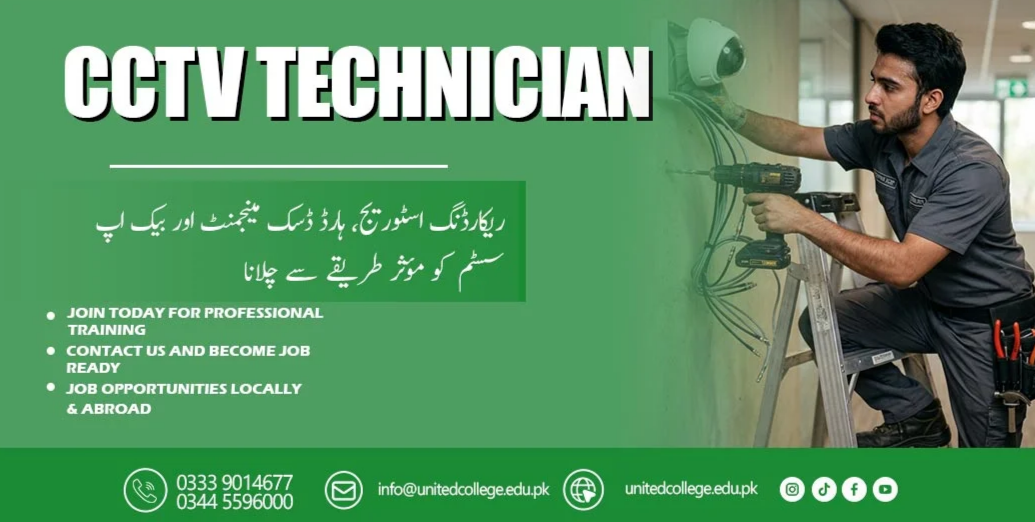
Why Students Should Consider Practical Experience When Choosing a CCTV Institute
Introduction
Learning CCTV technology requires more than understanding cameras and security systems through books or lectures. Students need practical experience to understand how surveillance equipment is installed, configured, tested, and maintained in real situations. Practical training helps learners develop confidence and understand how different CCTV components work together.
When choosing a training institute, students should consider whether the institute provides hands-on learning opportunities. United College of Technology focuses on helping students develop useful technical skills through practical learning. For students searching for a CCTV course in Islamabad, practical experience can be an important factor when selecting the right institute.
Understanding CCTV Equipment Through Practice
CCTV systems include different types of equipment, such as cameras, DVRs, NVRs, monitors, storage devices, cables, power supplies, and networking equipment. Reading about these components is useful, but students understand them better when they actually work with the equipment.
Practical training allows students to:
- Identify different CCTV components.
- Connect cameras and recording devices.
- Practice cable installation and management.
- Configure recording settings.
- Test camera performance.
This hands-on experience can make technical concepts easier to understand.
Developing Installation Skills
CCTV installation requires careful planning and accurate execution. Camera placement, viewing angles, cable routes, power connections, and equipment positioning can all affect system performance.
During practical training, students can practice installing cameras in different positions and learn how placement influences the surveillance area. They can also learn how to organize cables properly and connect equipment safely.
A CCTV course in Islamabad that includes practical installation activities can therefore provide students with skills that are difficult to develop through theory alone.
Learning DVR and NVR Configuration
Recording equipment is an important part of modern surveillance systems. Students need to understand how DVRs and NVRs receive video, store recordings, and manage connected cameras.
Practical exercises can help students learn how to:
- Add and configure cameras.
- Set recording schedules.
- Adjust recording quality.
- Manage storage settings.
Working directly with recording equipment gives students a better understanding of how surveillance systems operate.
Improving Troubleshooting Skills
Technical problems can occur during installation or operation. A camera may stop displaying video, recording may fail, cables may be incorrectly connected, or network communication may be interrupted.
Practical experience teaches students how to identify the possible cause of a problem instead of simply memorizing technical definitions. They can learn to check connections, power supplies, network settings, camera configurations, and recording devices step by step.
Building Confidence Through Hands-On Training
Students may understand CCTV concepts but still feel unsure when handling actual equipment. Practical sessions provide an opportunity to perform tasks under guidance and gradually develop confidence.
At United College of Technology, practical learning can help students become more comfortable with CCTV equipment and technical procedures. Repeated practice allows learners to make mistakes, understand those mistakes, and improve their skills before dealing with real-world projects.
Why Practical Experience Matters for Career Preparation
Employers and clients often need people who can perform technical tasks rather than only explain theoretical concepts. Students with hands-on experience may find it easier to demonstrate their abilities during interviews, internships, or entry-level technical work.
Practical training can help learners develop skills related to:
- CCTV installation
- Camera configuration
- DVR and NVR setup
- Cable management
- Basic networking
- System testing
- Troubleshooting
- Routine maintenance
These skills can provide a stronger foundation for anyone planning to work in the security technology field.
Choosing the Right CCTV Institute
Students should look beyond course names and fees when comparing training institutes. They should also consider the type of practical facilities available and whether learners get enough time to work directly with CCTV equipment. Before enrolling, students can ask whether the institute provides practical demonstrations, hands-on sessions, equipment-based exercises, troubleshooting activities, and instructor guidance.
For learners looking for a CCTV course in Islamabad, selecting an institute with a balance of theory and practical experience can make the learning process more useful and engaging.
Certificate and Practical Skills
A course certificate can demonstrate that a student has completed formal training, but practical skills are equally important. A certificate becomes more valuable when the learner can also explain and demonstrate what they learned during the course.
Students at United College of Technology can combine classroom knowledge with practical exposure to build a stronger understanding of CCTV technology. This combination can help learners feel more prepared to apply their knowledge after completing their training.
Conclusion
Practical experience should be an important consideration when students choose a CCTV institute. Hands-on training helps learners understand equipment, develop installation skills, configure recording systems, solve technical problems, and build confidence.
For students interested in a CCTV course in Islamabad, choosing an institute that provides practical learning can create a stronger foundation for future technical work. United College of Technology provides an environment where students can develop both theoretical knowledge and practical understanding of modern CCTV systems.