







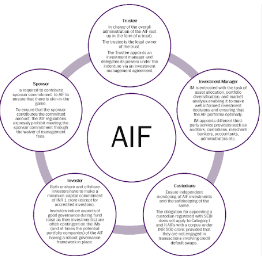
An Alternative Investment Fund (AIF) is more than a financial structure for collecting investments. It requires trust, accountability, and a clear commitment from the people managing it. One important element that supports this foundation is the aif sponsor commitment. It demonstrates that the sponsor has a financial interest in the fund’s performance and is willing to share investment risks alongside other investors.
For fund managers, investors, and financial professionals, understanding sponsor commitment is essential for building a transparent and well-managed investment structure. Knowing how it works also helps stakeholders understand their responsibilities and the importance of regulatory compliance.
What Is an AIF Sponsor Commitment?
An AIF sponsor commitment refers to the portion of capital that an Alternative Investment Fund’s sponsor is required to invest in the fund under applicable regulations. The sponsor is generally the person or entity that establishes the fund and takes responsibility for initiating its operations.
This contribution is commonly known as skin in the game. It means the sponsor has its own money invested alongside other investors rather than relying entirely on external capital.
The purpose is to encourage responsible fund management. When sponsors contribute their own capital, they have a direct financial interest in making informed investment decisions, managing risks, and protecting the interests of investors.
Why Is Sponsor Commitment Important for AIFs?
Sponsor commitment plays an important role in strengthening investor confidence and promoting responsible financial management.
1. Creates Alignment Between Sponsors and Investors
When sponsors invest their own capital, their financial interests become more closely aligned with those of the fund’s investors. Both parties have an interest in achieving sustainable investment performance.
2. Builds Investor Confidence
Investors often evaluate the sponsor’s experience, reputation, and financial involvement before committing their money. A meaningful sponsor contribution can demonstrate confidence in the fund’s investment strategy.
3. Encourages Responsible Decision-Making
Having personal or institutional capital invested in the fund encourages sponsors to carefully evaluate opportunities, monitor portfolio performance, and maintain appropriate risk-management practices.
4. Supports Better Fund Governance
Sponsor participation reinforces accountability and encourages fund managers to maintain transparent reporting, proper documentation, and compliance procedures.
AIF Sponsor Commitment Requirements in India
In India, Alternative Investment Funds are regulated by the Securities and Exchange Board of India (SEBI) under the SEBI (Alternative Investment Funds) Regulations, 2012, as amended.
Under the regulatory framework, sponsors and managers are generally required to maintain a continuing interest in the fund through a specified minimum contribution.
The prescribed requirements are:
- Category I AIF: At least 2.5% of the corpus or ₹5 crore, whichever is lower.
- Category II AIF: At least 2.5% of the corpus or ₹5 crore, whichever is lower.
- Category III AIF: At least 5% of the corpus or ₹10 crore, whichever is lower.
These requirements establish a minimum financial commitment and help ensure that the sponsor or manager has a continuing interest in the fund.
It is important to distinguish between sponsor commitment and an investor’s ordinary capital contribution. Sponsor commitment is a regulatory requirement designed to establish financial participation by the sponsor or manager.
How Is AIF Sponsor Commitment Calculated?
The calculation depends on the fund’s category and total corpus.
For example, consider a Category II AIF with a corpus of ₹100 crore. The minimum contribution would be 2.5% of the corpus, which equals ₹2.5 crore.
If the fund has a corpus of ₹300 crore, 2.5% would equal ₹7.5 crore. However, because the applicable maximum threshold is ₹5 crore, the minimum required contribution would be ₹5 crore.
This calculation helps sponsors understand their financial obligations before launching a fund or accepting investor commitments.
Common Compliance Considerations
Meeting the financial requirement is only one part of maintaining a compliant AIF structure. Sponsors and managers should also pay attention to the following areas:
- Accurate documentation: Maintain clear records of sponsor contributions and supporting financial documents.
- Regulatory compliance: Follow applicable SEBI regulations, circulars, and reporting requirements.
- Fund structure: Ensure the contribution is appropriately arranged according to the fund’s legal structure.
- Ongoing monitoring: Review sponsor commitment throughout the fund’s lifecycle.
- Transparent communication: Provide investors with relevant information about the fund’s structure and financial arrangements.
Professional legal and compliance guidance can help identify regulatory changes and prevent avoidable documentation or reporting issues.