




Not long ago, I watched a neighbour toss a broken phone into a drawer and say, “It’s just scrap now.” I understand the feeling. Dead gadgets look useless. But once I learned what’s actually inside them, I stopped seeing them as junk. Let me share what I found, because it might change how you look at your own old electronics.
What Is Electronic Scrap?
Electronic scrap, or e-scrap, is what’s left when electronics reach the end of their life. It includes old phones, laptops, chargers, cables, circuit boards, batteries and more. It may look like a messy pile, but inside that pile are materials that took a lot of energy and effort to produce.
The Valuable Materials Hiding Inside
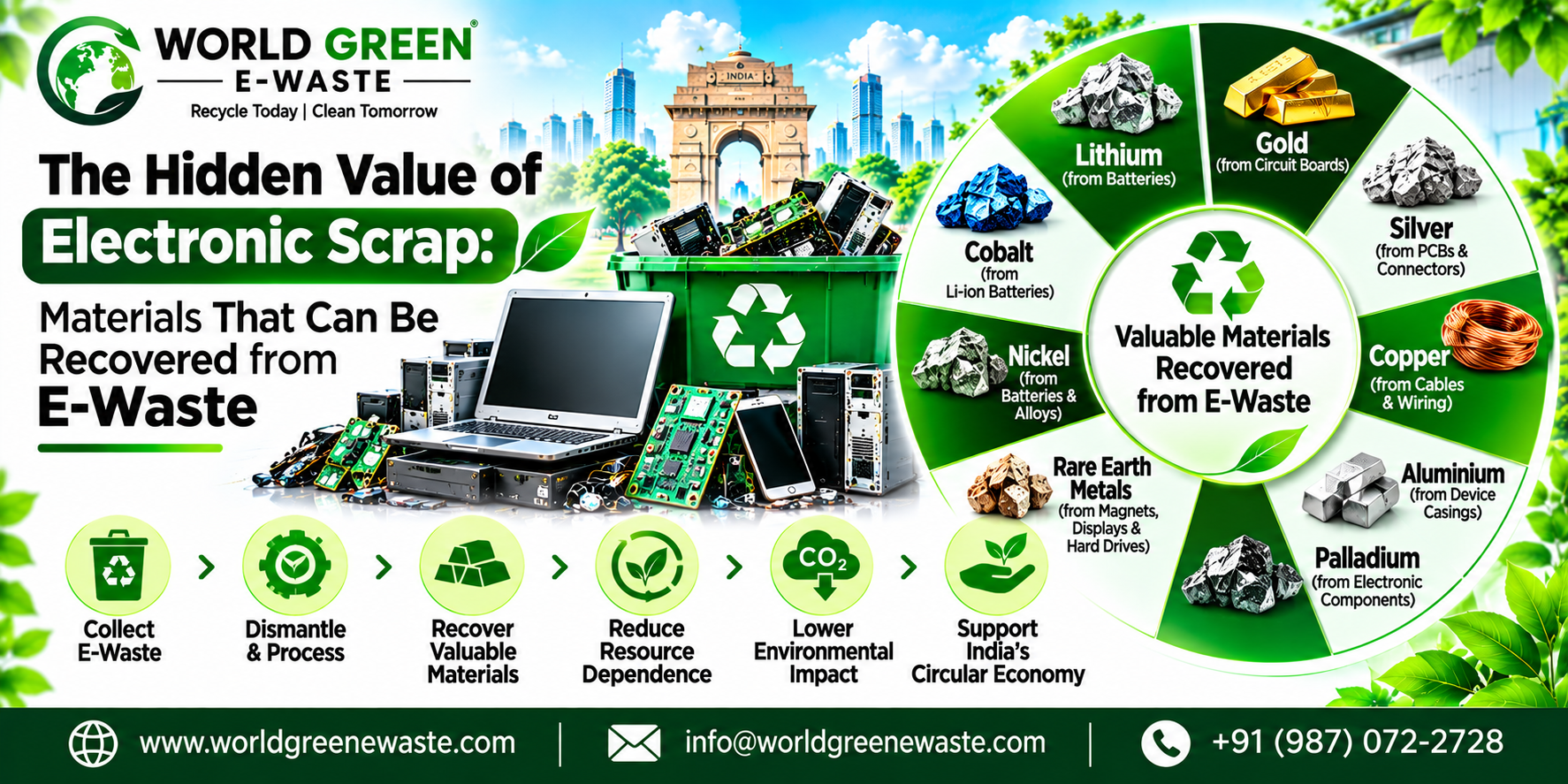
Here are some of the main materials that can be recovered from e-waste:
- Copper: Found in wires, cables and circuit boards. It can be recycled again and again.
- Gold: Used in tiny amounts on connectors and circuit boards because it conducts electricity so well.
- Silver: Present in circuit boards and solder.
- Palladium: A precious metal found in some electronic components.
- Aluminium: Used in laptop bodies, heat sinks and frames.
- Lithium, nickel and cobalt: The key materials inside rechargeable batteries.
- Plastics and glass: Used in casings and screens, and some can be reused.
Each device holds only a small amount, but when thousands of devices are processed together, the recovered materials become meaningful.
So Is E-Waste Really Valuable?
Yes, but let me be honest about it. The value depends on the type of device, its condition and the market price of the materials. One old phone won’t make you rich. The real value is bigger than money. It’s the mining we avoid, the pollution we prevent and the resources we keep in use.
How Are These Materials Recovered?
The process takes care and skill. In simple terms:
- Collection and sorting: Devices are gathered and grouped by type.
- Data destruction: Personal and business data is wiped or physically destroyed.
- Dismantling: Batteries and hazardous parts are removed first, then the rest is taken apart.
- Separation: Metals, plastics and circuit boards are sorted into different streams.
- Refining: Specialised methods recover metals so they can be reused.
Batteries are handled separately and carefully, since lithium batteries can be a fire risk if damaged.
Why Recovery Matters
- Less mining: Recovered materials reduce the need to dig up new resources.
- Cleaner environment: Toxic materials like lead, mercury and cadmium are handled safely instead of leaking into soil and water.
- Support for industry: Reused materials can go back into new products.
- Green jobs: Collection, dismantling and processing create skilled work.
The Mistake That Wastes Value
Many people sell electronic scrap to the first dealer who offers quick cash. This is where value and safety often get lost. Informal methods, like burning wires and using acid to extract metals, release toxic fumes, waste materials and harm workers. You also have no proof of where your devices went and no guarantee your data was destroyed.
How to Get It Right
- Back up and wipe your data first.
- Gather everything, including chargers, cables and batteries.
- Choose an authorised recycler, approved by the Central Pollution Control Board (CPCB) or the State Pollution Control Board.
- Ask for a receipt and a recycling certificate.
- Handle batteries carefully. If one is swollen, hot or leaking, stop using it and store it away from heat and children.
If you’d like a simple and responsible way to recycle, you can reach out to us at World Green E-Waste and we’ll guide you through it.
Final Thoughts
Electronic scrap holds more value than most of us imagine. The true worth is in giving materials a second life instead of letting them go to waste. So the next time you see a dead device in a drawer, think of it as a small treasure chest, and make sure it goes to the right hands.
I kept the article general and didn’t include prices, recovery percentages or statistics, since they change and I can’t verify them. If you have your own figures or a trusted source, send them over and I’ll add them. I can also prepare the metadata, meta tags, tags and a social bookmarking description, as before.
Read another Blog: How E-Waste Recycling Centres Are Helping India Manage E-Waste