




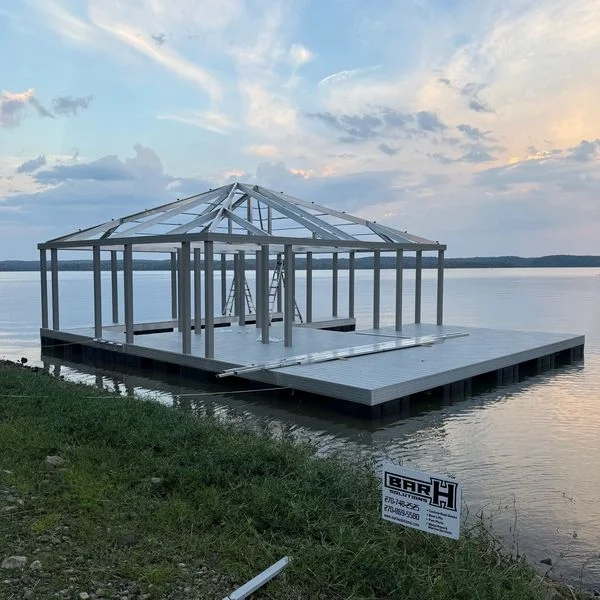
“How long’s it actually gonna last though?” First thing people ask, every time, once they get past the sticker shock on pricing out aluminum boat docks. Fair question honestly. Nobody wants to drop real money and then six years later be dealing with the same headaches they had with their old wood dock, just, I guess, slower this time.
Real answer is it depends, and yeah I know that’s not the number people actually want to hear. But a well-built aluminum dock, put in right, can run twenty-five, thirty years without much trouble. A badly built one? Could be showing real problems by year eight. The material’s honestly not the big variable here. It’s the build quality. Talked to a few installers about this over the years, BAR H Solutions included, and the lifespan question always lands on the same handful of things.

Why Aluminum Just Holds Up Better
So why does aluminum age the way it does. Unlike steel it doesn’t rust, not in the traditional sense anyway. What happens instead is this thin oxide layer forms on the surface pretty much right away once it hits air and water, and that layer protects what’s underneath instead of eating into it, which is the exact opposite of what rust does to steel. Kind of a big deal when you think about it. It’s basically the whole reason aluminum stuff in marine settings outlasts steel by so much.
Wood’s its own mess entirely. Doesn’t corrode sure, but it rots, and rot doesn’t care how careful you are, moisture gets into the fibers eventually and that’s that, just a matter of time. Aluminum skips both of those failure paths pretty much completely. That alone buys you a lot more years than whatever came before it.
Honestly the Install Decides Most of This
Here’s the part nobody likes hearing. You could buy the nicest aluminum on the market and still end up with a dock falling apart in under ten years if whoever put it in rushed the job. Pilings driven to the wrong depth for your soil. Flotation that was never actually calculated against real load, just guessed at. Connections bolted when they should’ve been welded, or welded poorly.
A good installer actually walks your site first, before anything’s built. Checks depth at a few different spots, not just wherever’s closest to shore and easy. Factors in your actual boat, now and down the road, when sizing out flotation. This, more than the material spec sheet honestly, is where your dock’s real lifespan gets decided. I’ve seen gorgeous aluminum sections go in badly and start showing structural issues within a few years. And I’ve seen mid-tier stuff outlast everyone’s expectations purely because whoever installed it actually knew what they were doing.
Gauge Thickness, the Detail Everyone Skips
This gets glossed over way too much and it shouldn’t be. Aluminum comes in different gauge thicknesses, and the gap between a thin budget gauge and a real structural gauge is massive once you’re talking years of wave action, people walking on it, boats bumping into it over time.
Thinner gauge saves money up front, sure, I get the appeal. But it tends to show stress fatigue sooner, little cracks starting at stress points, just generally aging worse under actual use. BAR H Solutions built their name on not cutting that particular corner, using real structural gauge even though it costs more, because the long-term difference is big enough that the short-term savings aren’t really worth it. Ask any installer flat out what gauge they’re quoting, and push past a vague answer if you get one. This one number affects lifespan more than almost anything else on the spec sheet.
Your Water Isn’t My Water
Lifespan math shifts a ton depending on where the thing actually sits. A dock in some calm sheltered cove ages completely differently than one sitting out in open water chop, or one dealing with a tidal river and current twice a day.
Wave action and boat wake create ongoing stress on connections and flotation, year after year, and a dock built assuming calm water but installed somewhere exposed is gonna wear faster than whatever its rated lifespan says. Same deal with tidal exposure, that constant rise and fall puts cyclical stress on the whole thing that a still lake dock just never deals with. Good design accounts for your actual water, not some generic template, and that step alone can stretch or shrink how long yours lasts by years.
Low Maintenance, Not Zero Maintenance
People get this wrong a lot, assuming aluminum means no maintenance ever. It’s low, not zero, and that gap matters if you want the upper end of that twenty-five to thirty year window instead of limping in at the low end.
Checking fasteners and connections once a year catches small stuff before it turns into bigger stuff. Rinsing it off now and then keeps salt or mineral buildup from piling up in ways that can mess with certain parts eventually, especially anywhere dissimilar metals touch, since that’s where corrosion can sneak in even on an otherwise solid aluminum build. It’s a fraction of what wood or steel demands, for sure, but skip it entirely and assume the material’s handling it all on its own, and you’ll probably be disappointed sooner than you expected.
Signs Yours Might Not Be Aging Right
Already got an aluminum dock and wondering if it’s holding up the way it should? Few things worth checking now and then. Look at the connection points for cracking or stress fractures, especially where sections join up or where flotation attaches to the frame. Feel around for flex or give underfoot that wasn’t there when it was new.
Also keep an eye on anywhere dissimilar metals meet, that’s where galvanic corrosion can happen even on aluminum if it wasn’t properly isolated during the install. Noticing any of this earlier than you’d expect? Worth getting somebody out to actually look rather than just waiting and hoping. Catching stuff early is basically always cheaper and easier than catching it late, every single time.
What to Ask If Lifespan’s Your Main Worry
If longevity’s really the thing driving your decision toward aluminum boat docks, there’s a specific list of questions worth running through with any installer before you sign anything. What gauge are they using and why that one specifically. Welded joints or bolted, and what’s the real difference fifteen, twenty years out.
Ask how they’re accounting for your actual water, tide, current, wind, whatever applies to your spot. Ask for references from installs that are at least ten years old if they’ve got any, since honestly that’s the only real way to see long-term performance instead of just how something looks fresh out of the box. A company that’s confident in their work, and this is where BAR H Solutions tends to stand out from the pack, will have those older references ready without hesitating.
Conclusion
Real lifespan on aluminum boat docks isn’t really about the aluminum itself, that part’s pretty well settled at this point, corrosion resistance and strength, fine. It’s everything around it. Gauge, weld quality, a proper install, whether the design actually fits your water instead of just following some generic layout.
Get those right and you’re looking at decades with barely any upkeep. Get them wrong and even good material won’t save you from problems showing up way earlier than they should. Ask the detailed stuff, check older references, work with people like BAR H Solutions who treat the small details, gauge, welds, water-specific planning, as seriously as closing the sale. That’s honestly the whole difference between a dock that lasts eight years and one that lasts thirty.