




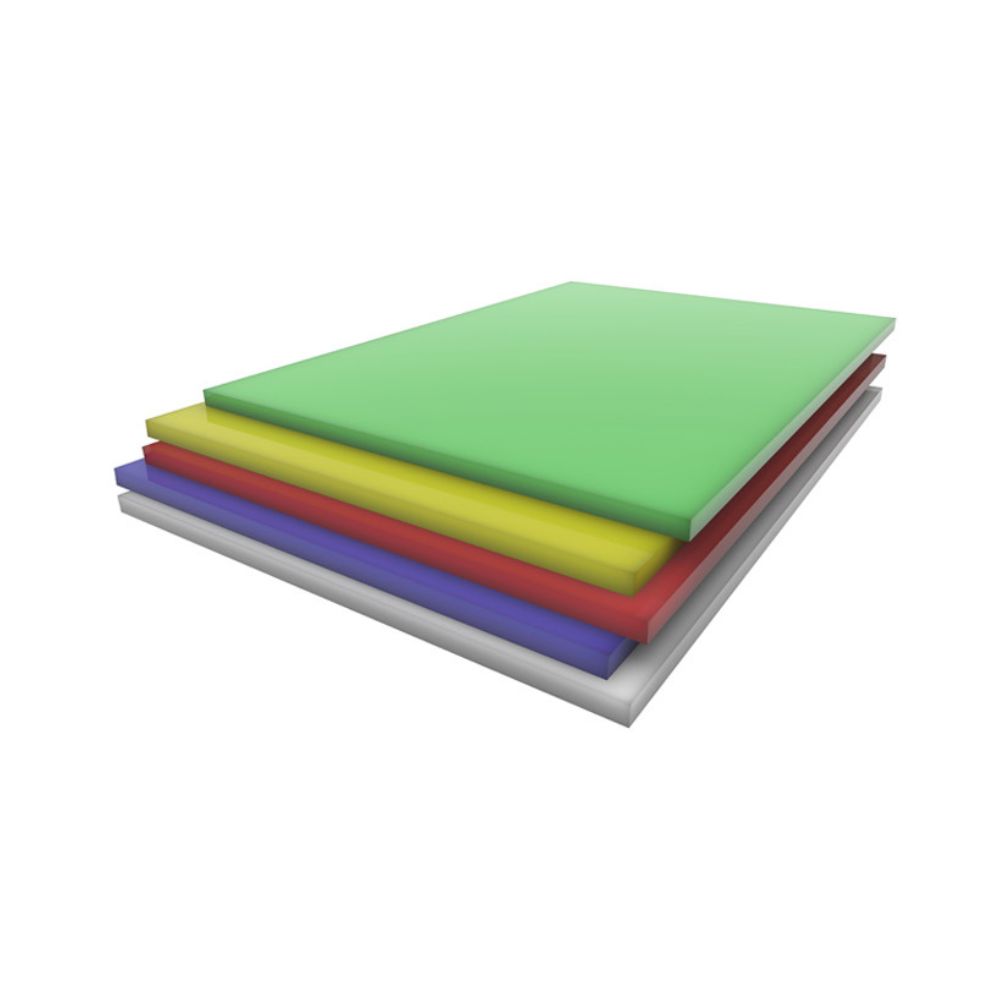
Three white plastic sheets stacked together are very similar. One will flex like a garden hose, one will be strong enough to make a tank, and one can line a gravel chute for years. All three are polyethylene sheets.
The difference is in the molecular structure. Density and chain length affect strength, wear, and chemical resistance. Picking the wrong grade can lead to cracked tanks, worn linings, and wasted money when you don’t need the performance.
People Also Ask
Which is stronger, HDPE or UHMW?
It depends on what you need. HDPE is stiffer and has more tensile strength. UHMW has much greater impact strength and is more abrasion resistant. HDPE is better for structural components, while UHMW is better for parts involving wear/impact.
What is LDPE sheet used for?
LDPE sheet is best for parts that require flexibility instead of strength. Gaskets, flexible lids, splash guards, vapor barriers, and thermoformed packaging. Because of its soft surface, it is not ideal for structural parts, as it has low wear resistance.
Why is UHMW so slippery?
UHMW has a very low coefficient of friction and a waxy surface. The long molecular chains are difficult to pull away from the surface, creating a free-flowing, slippery surface for bulk materials.
Same Polymer, Three Different Structures
Every polyethylene sheet starts with the same building block: ethylene. What changes is how the molecular chains branch and how long they grow.
- LDPE (low density): heavily branched chains that pack loosely, with a specific gravity of about 0.910 to 0.925
- HDPE (high density): straighter chains that pack tightly, with a specific gravity of about 0.941 to 0.965
- UHMW (ultra-high molecular weight): extremely long chains, with molecular weights of roughly 3.5 to 7.5 million g/mol
Tighter packing raises stiffness, hardness, and chemical resistance. Longer chains raise toughness and abrasion resistance. These two levers explain nearly every performance gap between grades.
How Do the Grades Compare in Strength?
Strength means different things on a plant floor. Stiffness, tensile strength, and impact toughness rarely peak in the same grade.
HDPE leads in stiffness and tensile strength. A high-density polyethylene sheet holds its shape in tank walls, panels, and structural fabrications. It also machines to tighter tolerances than UHMW.
UHMW trades some stiffness for exceptional impact strength. It absorbs hits that would crack many plastics, even far below freezing.
LDPE is soft and flexible. It suits parts that bend, seal, or cushion, not parts that carry structural loads.
How Do They Handle Wear and Abrasion?
Wear properties are the most distinguishing difference between grades.
UHMW is by far the best at resisting sliding abrasive wear. Long polymer chains help prevent tearing and the low coefficient of friction allows bulk materials to slide. Typical uses would be chute liners, truck bed liners, conveyor wear strips and chain guides.
HDPE can be used at a lower cost for moderate wearing. Light duty guides, cutting boards and low sliding liners can all be used. However, it will not last as long in highly abrasive conditions.
LDPE has poor wear properties and is unlikely to be used in sliding applications.
A good rule of thumb can be applied here. If the application involves sliding, scraping or impacts then UHMW should be your first choice. If the application is more structural then HDPE would be your first choice.
How Does Chemical Resistance Compare?
All three grades resist water, most acids, bases, and salt solutions. That shared trait makes HDPE plastic sheets a staple in chemical storage, wastewater, and plating lines.
Differences appear at the edges:
- Higher density improves chemical resistance, so HDPE outperforms LDPE in aggressive service
- Strong oxidizers, such as concentrated nitric acid, attack all polyethylene grades
- Aromatic and chlorinated solvents can cause swelling, especially at higher temperatures
- Some HDPE grades can stress-crack when exposed to detergents while under load
UHMW and HDPE perform similarly in most chemical environments. Buyers should still check a resistance chart for each chemical, concentration, and temperature.
Temperature, Moisture, and Outdoor Exposure
Polyethylene is generally unsuitable for high temperature applications. The continuous working temperature of most polyethylenes maxes out at approx. 80°C. Low density polyethylene will soften more quickly than others. However all three will remain hard at low temps. Ultra high molecular weight polyethylene retains its impact strength at cryogenic temperatures.
All grades will have very low water absorption. This makes them dimensionally stable in damp areas.
Natural polyethylene will degrade after being exposed to long periods of UV light. Parts to be used outdoors should be black or UV stabilised.
Grade Comparison at a Glance
| Property | LDPE | HDPE | UHMW |
|---|---|---|---|
| Stiffness | Low | High | Moderate |
| Impact strength | Good | Good | Excellent |
| Abrasion resistance | Low | Moderate | Excellent |
| Friction | Moderate | Moderate | Very low |
| Chemical resistance | Good | Excellent | Excellent |
| Weldability | Good | Excellent | Limited |
| Machinability | Fair | Good | Fair |
| Relative cost | Low | Low | Higher |
Fabrication Differences That Affect Grade Choice
Grade choice also depends on how the part gets made.
- Welding: HDPE welds well with hot air or extrusion welders. UHMW does not melt-flow, so standard welding does not work.
- Thermoforming: HDPE forms at about 130°C to 135°C and holds its new shape after cooling.
- Machining: HDPE holds tighter tolerances. UHMW deflects more under cutting and needs sharp tools and firm support.
A welded tank therefore points toward a high-density polyethylene sheet. A machined wear block points toward UHMW.
Matching the Grade to the Job
- Food processing cutting surfaces: HDPE cutting board grade or natural UHMW, both available in food-compliant grades
- Bulk material chutes and hoppers: UHMW for sliding abrasion and flow
- Chemical tanks and fume hoods: high density polyethylene sheet for weldability and chemical resistance
- Marine dock fenders and bumpers: UHMW for impact and low friction
- Flexible covers, gaskets, and vapor barriers: LDPE for softness and formability
What to Specify When Ordering
Clear specs prevent costly substitutions. A good request includes:
- Grade (LDPE, HDPE, or UHMW) and any additives
- Thickness and sheet size
- Color, UV stabilization, or food-contact needs
- Operating temperature and chemical exposure
- Whether the part will be welded, formed, or machined
Johnston stocks HDPE plastic sheets in sizes up to 60 x 120 inches, from 1/16 inch to 3 inches thick. UHMW sheet runs up to 5 inches thick.
Putting Polyethylene to Work
Density and chain length decide how a polyethylene sheet performs. HDPE brings stiffness, weldability, and chemical resistance. UHMW brings wear life and impact toughness. LDPE brings flexibility.
Johnston Industrial Plastics, in business since 1942, carries all three grades across four Canadian warehouses. Their team can cut, machine, or fabricate parts to drawing. Contact the nearest branch in Toronto, Montreal, Winnipeg, or Edmonton for grade advice and pricing.
Frequently Asked Questions
1. What is the difference between HDPE and UHMW sheet?
HDPE is a rigid material that is easy to weld and cost-effective. UHMW has very long molecular chains, giving it improved abrasion resistance, impact resistance, and low friction properties. UHMW is suitable for wear applications, and HDPE is suitable for structural applications.
2. Can HDPE sheet be welded?
Yes. HDPE welds well with hot air or extrusion welding equipment. Nitrogen is often used as the welding gas to prevent oxidation. This makes HDPE a practical choice for tanks, ducts, and fabricated enclosures.
3. Is polyethylene sheet safe for food contact?
Unmodified polyethylene made from food-approved resins is suitable for food contact. Natural UHMW and HDPE cutting board grades are widely used in food plants. Buyers should request compliance documents for the specific grade before ordering.
4. Does polyethylene sheet hold up outdoors?
Natural polyethylene breaks down under prolonged UV exposure and becomes brittle. Black and UV-stabilized grades resist sunlight much longer. Outdoor parts such as dock fenders and liners should use a UV-resistant grade.
5. What chemicals damage polyethylene?
Strong oxidizers like concentrated nitric acid attack polyethylene. Aromatic and chlorinated solvents can cause swelling, especially when warm. Most acids, bases, salts, and water-based solutions have little effect on HDPE or UHMW.