




Buying a used car requires more than checking its mileage and taking it for a short drive. You need to verify the vehicle’s history, inspect the body and mechanical components, test its electronics, and confirm that the documents match the car. A professional inspection can also uncover problems that are difficult to identify during a quick viewing.
This used-car inspection checklist explains what to check before buying, what warning signs to look for, and when you should walk away from a deal.
1. Research the Car Before You Inspect It
Start by researching the exact make, model, year, engine, and trim level. Check the vehicle’s typical market price and learn about common problems associated with that generation.
Compare several similar cars rather than judging one listing in isolation. Look at:
- Model year
- Engine and transmission
- Mileage
- Trim and equipment
- Number of previous owners
- Accident or repair history
- Service records
- Current market price
- Registration and inspection status
Mileage matters, but it should never determine your decision by itself. A well-maintained car with higher mileage can be a better purchase than a low-mileage vehicle with poor maintenance.
If you regularly need a vehicle but are still comparing ownership costs, checking daily car rental options can also give you a practical reference for short-term transportation costs while you decide what type of car fits your needs.
2. Check the VIN and Vehicle History
Find the vehicle identification number (VIN) and compare it with the VIN shown on the registration documents and other records.
A VIN is normally a 17-character identifier on modern vehicles. You can use a VIN decoder to confirm information about the vehicle, although a decoder is not a substitute for a complete history check. NHTSA’s VIN decoder, for example, provides manufacturer-reported information about a vehicle.
Check the available history for:
- Previous accidents
- Flood or water damage
- Salvage or total-loss records
- Stolen-vehicle records
- Odometer discrepancies
- Previous ownership
- Major repairs
- Service history
- Import or auction history
For vehicles with U.S. history, the NHTSA VIN decoder can help verify basic VIN information, while the NICB VINCheck service can identify certain theft, salvage, and flood-damage records reported by participating insurers. NICB specifically warns that VINCheck is not a complete vehicle-history report, so a clean result does not prove that the vehicle has never been damaged or stolen.
Do not rely on a seller’s verbal statement that the car has “never been in an accident.” Verify the claim through available records and physical inspection.
3. Match the Documents With the Car
Before inspecting the mechanical condition, make sure the paperwork makes sense.
Check:
- VIN
- Registration documents
- Vehicle make and model
- Model year
- Engine details where applicable
- Ownership information
- Mileage records
- Inspection certificates
- Service invoices
- Financing or lien information
- Import documents if relevant
Look for differences between the documents and the vehicle.
For example, if the VIN on the dashboard does not match the registration record, stop the purchase process until the discrepancy is explained and independently verified.
In Dubai, vehicle inspection is part of processes involving registration, renewal, transfer, or export. The RTA states that vehicle inspection can result in a Technical Inspection Certificate used for these transactions.
You can check the Dubai RTA vehicle services for current inspection and vehicle-transfer requirements.
4. Inspect the Exterior in Daylight
Inspect the car outside in good daylight. Avoid relying on a dark parking garage because poor lighting can hide paint differences, dents, and scratches.
Walk around the entire vehicle and compare the panels from different angles.
Check the paint and body panels
Look for:
- Different paint shades between panels
- Overspray on rubber seals
- Uneven panel gaps
- Scratches and dents
- Wavy reflections
- Poor-quality repainting
- Rust or corrosion
- Cracks in plastic panels
- Signs of body filler
Uneven gaps or different paint finishes can indicate previous body repairs.
A paint-depth gauge can provide additional information when available, but it should not be treated as definitive proof of accident damage. Factory paint thickness varies between manufacturers and panels.
Check the doors, hood, and trunk
Open and close every panel.
A door that requires unusual force, sits unevenly, or produces an abnormal sound may indicate alignment or previous repair problems.
Check the hinges, bolts, and surrounding seams for disturbed paint or tool marks.
5. Inspect the Glass, Lights, and Wheels
Check every piece of glass for cracks, chips, and unusual replacement marks.
Look at the markings on the windshield and other windows. Different manufacturing dates do not automatically prove an accident, but major differences can justify further investigation.
Test all exterior lights, including:
- Headlights
- High beams
- Turn signals
- Brake lights
- Reverse lights
- Fog lights
- Daytime running lights
Inspect the wheels for cracks, bends, and heavy curb damage.
Then examine the tires.
Check:
- Tread depth
- Uneven wear
- Cracks
- Bulges
- Tire age
- Matching tire sizes
- Alignment-related wear
Uneven wear on one side of a tire can indicate alignment, suspension, or steering problems.
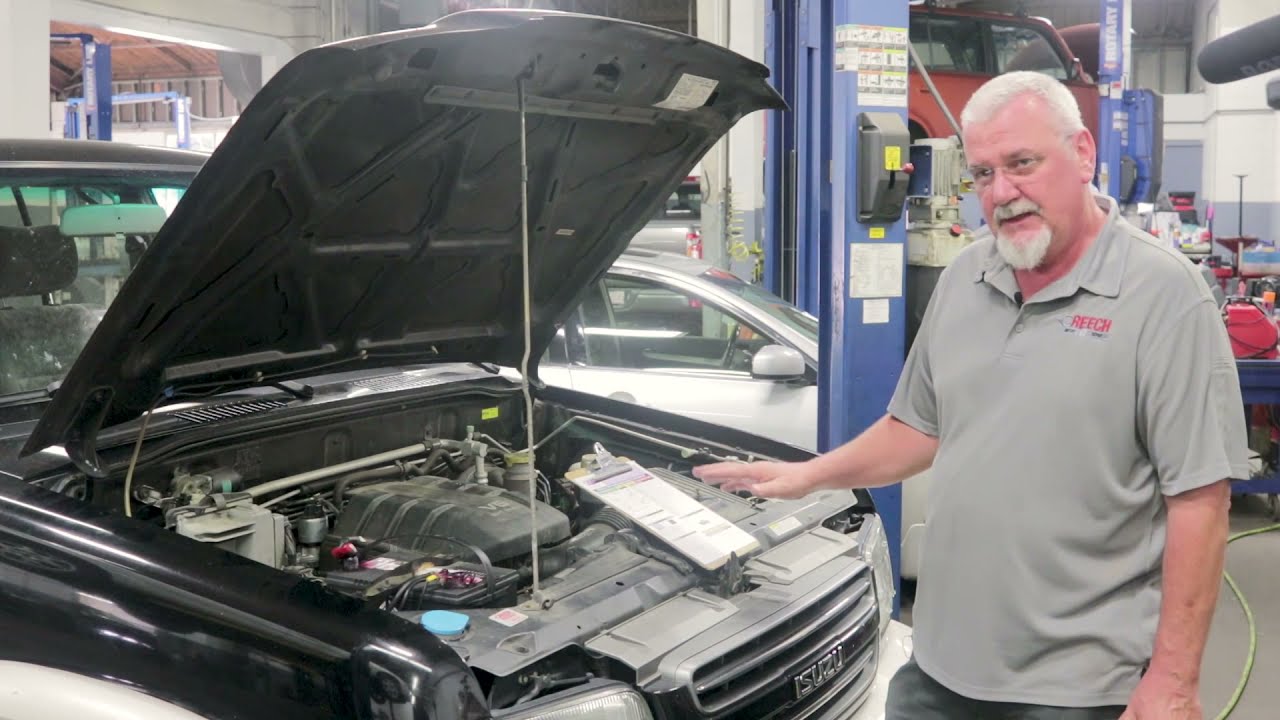
6. Check Under the Hood
Inspect the engine bay before starting the vehicle if possible.
Look for:
- Oil leaks
- Coolant leaks
- Brake-fluid leaks
- Damaged hoses
- Cracked belts
- Corroded terminals
- Loose wiring
- Missing covers
- Heavy oil residue
- Signs of previous repairs
Do not panic over normal dust or light surface dirt. Focus on fresh fluid, wet areas, strong oil residue, damaged components, or evidence of poorly completed repairs.
Check the engine oil level and condition according to the manufacturer’s procedure. A very low level can indicate poor maintenance or a leak.
Also check the coolant reservoir when the engine is cold. Never remove a hot radiator cap because pressurized coolant can cause serious burns.
7. Inspect the Engine for Signs of Trouble
Start the engine and listen carefully.
A healthy engine should start without excessive cranking, abnormal knocking, or persistent rattling.
Watch for:
- Difficult starting
- Excessive vibration
- Persistent smoke
- Unusual knocking
- Loud ticking
- Irregular idle
- Strong fuel smell
- Warning lights that remain illuminated
Do not judge the engine only by sound. Some noises are normal for specific engines, while others require professional diagnosis.
Smoke color can also provide clues, but it should not be used as a diagnosis by itself.
Persistent blue smoke can indicate oil consumption. Thick white smoke after the engine has warmed up may indicate a coolant-related problem. Black smoke can indicate excessive fuel or combustion issues on some engines.
A qualified technician should investigate any persistent abnormal smoke.
8. Check the Transmission and Clutch
The transmission should engage smoothly and predictably.
For an automatic transmission, check for:
- Delayed engagement
- Harsh shifting
- Slipping
- Strong jolts
- Unusual noises
- Transmission-fluid leaks
For a manual transmission, check:
- Clutch engagement
- Gear selection
- Grinding
- Clutch slipping
- Unusual clutch pedal behavior
During the test drive, accelerate gradually and observe how the transmission responds at different speeds.
A single unusual shift does not automatically mean the transmission needs replacement, but repeated harsh engagement or slipping deserves professional inspection.
9. Test the Brakes, Steering, and Suspension
These components directly affect safety, so do not skip them.
Brakes
During a safe test drive, check whether the car:
- Stops smoothly
- Pulls to one side
- Produces grinding noises
- Vibrates heavily under braking
- Has an unusually soft or hard pedal
Do not perform aggressive braking on public roads simply to test the vehicle.
Steering
The steering should respond predictably without excessive play.
Watch for:
- Steering-wheel vibration
- Pulling to one side
- Excessive looseness
- Clunking sounds
- Difficulty returning to center
Suspension
Drive over normal road imperfections at a safe speed and listen for unusual knocking or rattling.
Inspect the tires and suspension components for uneven wear or visible damage.
10. Test Every Electrical Feature
Modern vehicles can contain dozens of electrical systems, and replacing some modules can be expensive.
Test the equipment fitted to the specific vehicle, including:
- Air conditioning
- Heating
- Power windows
- Central locking
- Electric mirrors
- Seat controls
- Infotainment system
- Speakers
- Reverse camera
- Parking sensors
- Cruise control
- Driver-assistance systems
- Interior lights
- Instrument-cluster displays
- USB and charging ports
Turn the air conditioning on and allow it to operate for several minutes. A system that feels cold initially but becomes weak later may need further diagnosis.
11. Check the Dashboard Warning Lights
Turn the ignition on before starting the engine and observe the warning lights.
Many warning lights should illuminate briefly during the vehicle’s self-check and then turn off after the engine starts.
Pay attention to warning lights that remain on, especially:
- Check engine
- ABS
- Airbag/SRS
- Battery
- Oil pressure
- Transmission
- Traction control
- Electronic stability control
Do not accept a seller’s explanation that a warning light is “just a sensor” without getting the fault diagnosed.
A diagnostic scan can reveal stored or active trouble codes that are not obvious from a visual inspection.
Also check whether the warning lights behave normally when the ignition is switched on. A professional inspection can help identify situations where warning indicators have been deliberately disabled or hidden.
12. Inspect the Interior and Look for Wear
The interior can tell you whether the vehicle’s condition matches its claimed mileage.
Check:
- Steering wheel wear
- Pedal wear
- Driver’s seat condition
- Seat-belt condition
- Door-handle wear
- Gear selector wear
- Dashboard condition
- Carpet condition
- Roof lining
- Trunk area
Heavy wear does not prove that the odometer has been altered. However, when severe interior wear conflicts with unusually low mileage, investigate the vehicle history more carefully.
Look underneath the carpets and inside the trunk for moisture, corrosion, water stains, or unusual odors. These signs can indicate previous water intrusion.
13. Check the Airbags and Seat Belts
Airbag systems require particular attention because previous crash repairs can leave hidden safety problems.
Check whether:
- The airbag warning light operates normally during startup
- Seat belts retract correctly
- Buckles lock and release properly
- Seats have unusual damage
- Dashboard or steering-wheel sections show signs of replacement
Do not buy a vehicle simply because the dashboard looks clean after an accident repair.
If you suspect previous airbag deployment, have the vehicle inspected by a qualified technician with appropriate diagnostic equipment.
14. Take a Proper Test Drive
A short drive around the seller’s parking area is not enough.
Drive the vehicle under normal conditions where legally and safely possible.
Pay attention to:
| Area | What to observe |
| Engine | Starting, acceleration, idle quality |
| Transmission | Shift quality and engagement |
| Brakes | Stopping, vibration, pulling |
| Steering | Tracking and steering response |
| Suspension | Noise, bouncing, stability |
| Tires | Vibration and road noise |
| Air conditioning | Cooling performance |
| Electronics | Warning lights and system operation |
Drive at different speeds and use different road conditions when safe. Listen with the windows open and closed because some noises are easier to identify from outside the cabin.
Do not let the seller rush the test drive.
15. Get an Independent Pre-Purchase Inspection
This is one of the most important steps when buying a used car.
Ask an independent mechanic or qualified inspection service to examine the vehicle before you commit to the purchase.
An inspection can identify problems that a normal buyer may miss, including:
- Engine leaks
- Transmission problems
- Suspension wear
- Brake condition
- Structural repairs
- Diagnostic faults
- Cooling-system problems
- Undercarriage damage
- Previous accident repairs
The inspector should work independently from the seller. A seller’s own inspection can provide useful information, but it should not replace an independent assessment.
The FTC also recommends having a used vehicle inspected by an independent mechanic before purchase, even when a vehicle has already been inspected or certified by a dealer.
16. Inspect the Underside of the Car
If possible, inspect the underside using a proper lift or inspection ramp.
Look for:
- Oil leaks
- Coolant leaks
- Transmission-fluid leaks
- Bent components
- Damaged underbody panels
- Exhaust damage
- Rust
- Fresh undercoating
- Welding marks
- Scraped suspension components
Fresh undercoating is not necessarily a problem, but it can make previous repairs harder to identify. Ask why it was applied and have the underlying areas inspected.
Structural damage deserves particular attention because cosmetic repairs can make a severely damaged vehicle appear much better than it actually is.
17. Compare the Car With Its Service Records
A service history becomes much more useful when you compare it with the physical condition of the vehicle.
Look for consistent records showing:
- Oil changes
- Brake work
- Tire replacement
- Major scheduled maintenance
- Battery replacement
- Transmission service where required
- Cooling-system work
- Manufacturer-recommended maintenance
Check dates and mileage on invoices.
For example, if a service record shows 120,000 km but the current odometer shows 85,000 km, stop and investigate the discrepancy.
Do not assume that a stamped service book proves complete maintenance. Original invoices, digital service records, and workshop records can provide stronger supporting evidence.
18. Check for Accident and Flood Damage
Accident damage is not always a reason to reject a vehicle. A properly repaired minor accident may have little effect on reliability.
The concern increases when you find evidence of:
- Structural damage
- Poor panel alignment
- Airbag replacement
- Chassis repairs
- Welding
- Significant paintwork
- Water intrusion
- Electrical problems
Flood damage deserves special caution.
Look for:
- Damp or musty smells
- Corrosion in unusual areas
- Water lines
- Mud or debris under carpets
- Corroded electrical connectors
- Electrical faults
- Moisture inside lights
- Rust beneath seats
A vehicle can appear normal after being cleaned, while corrosion and electrical problems emerge later.
19. Check the Tires and Maintenance Costs
Do not calculate the purchase price alone.
Estimate the immediate maintenance that may be required after purchase.
Potential costs include:
- Tires
- Brake pads and discs
- Battery
- Fluids
- Filters
- Suspension components
- Major scheduled service
- Air-conditioning repairs
- Insurance
- Registration and inspection
A car that costs less upfront can become more expensive if it needs several major repairs immediately after purchase.
If you are comparing ownership with temporary transportation, looking at weekly car rental options can provide another real-world cost comparison for situations where you only need a vehicle for a limited period.
20. Check the Market Price Before Negotiating
After completing the inspection, compare the vehicle with similar listings.
Use the same criteria:
- Same model
- Similar year
- Similar mileage
- Similar trim
- Similar condition
- Similar ownership history
- Similar location
Do not negotiate only because you found a scratch or worn tire. Estimate the actual repair cost and use documented issues when discussing the price.
A professional inspection report can give you a stronger basis for negotiation because it separates cosmetic issues from mechanical or safety-related problems.
21. Know When to Walk Away
Some problems justify stopping the purchase rather than negotiating a lower price.
Consider walking away when you find:
- VIN discrepancies
- Suspicious ownership documents
- Evidence of VIN tampering
- Major undisclosed structural damage
- Serious flood damage
- Unresolved major mechanical faults
- Significant odometer inconsistencies
- Seller refusal to allow an independent inspection
- Pressure to pay before verification
- A price that seems unrealistically low with no reasonable explanation
A cheap purchase is not a good deal if the vehicle has hidden problems that cost more than the money saved.
Used Car Inspection Checklist
Before making the final payment, confirm each of these points:
- VIN matches the documents
- Vehicle history has been checked
- Ownership documents are valid
- Mileage appears consistent
- Exterior panels have been inspected
- Paintwork has been checked
- Tires are in acceptable condition
- Engine bay has been inspected
- Engine starts normally
- Transmission operates correctly
- Brakes work properly
- Steering and suspension have been tested
- Air conditioning works
- Electrical equipment has been tested
- Dashboard warning lights have been checked
- Interior condition matches the claimed mileage
- Airbags and seat belts have been inspected
- Undercarriage has been checked
- Service records have been reviewed
- Independent inspection has been completed
- Final price reflects the vehicle’s actual condition
Should You Buy a Used Car Without an Inspection?
For an inexpensive vehicle, you might be tempted to skip a professional inspection to save money. That can be a costly decision if the car has an engine, transmission, structural, or electrical problem.
A professional inspection is particularly important when buying an expensive vehicle, a high-mileage car, a luxury model, an imported vehicle, or a car with incomplete service records.
If the seller refuses to let an independent mechanic inspect the vehicle, treat that refusal as a serious warning sign.
What Is the Most Important Thing to Check on a Used Car?
There is no single component that determines whether a used car is a good purchase.
The strongest approach combines four checks:
- Verify the vehicle’s identity and documents.
- Review its history and service records.
- Inspect the mechanical and structural condition.
- Get an independent professional inspection.
A clean exterior or low mileage cannot compensate for a questionable history or major mechanical fault.
For buyers who are still deciding between different vehicle categories, it can also help to compare the practical requirements of economy, SUV, luxury, and other vehicle types before committing to ownership. In Dubai, an authoritative company provide different rental categories, which can be useful when someone needs temporary transportation while taking more time to evaluate a purchase.
Final Thoughts
The safest way to check a used car is to treat the purchase as an investigation rather than a quick sale.
Verify the VIN, inspect the body, check the engine and transmission, test the electronics, drive the vehicle properly, review the records, and arrange an independent inspection. Most importantly, investigate anything that does not match the seller’s description.
A used car does not need to be perfect to be a good purchase. It needs to have a verifiable history, a condition that matches its price, and no major hidden problems that could turn a seemingly cheap vehicle into an expensive repair project.