





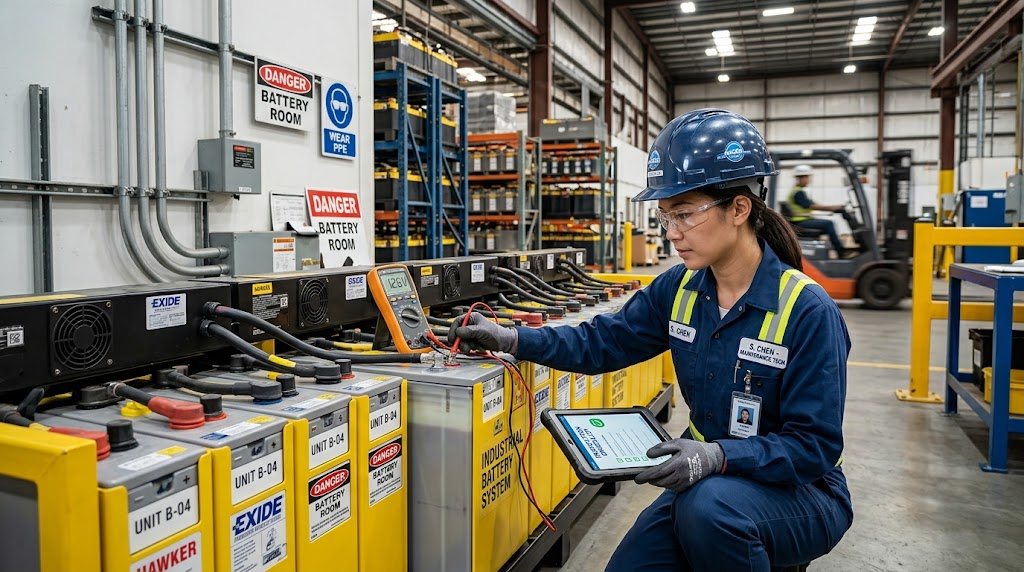
Industrial batteries are often the hidden workhorses behind warehouses, manufacturing facilities, distribution centers, and other demanding operations. They power forklifts, material-handling equipment, backup systems, and other machines that businesses depend on every day. When a battery performs well, it is easy to overlook. But when it starts losing capacity, overheating, or failing unexpectedly, the impact can quickly spread to productivity, operating costs, and workplace safety.
That is why regular inspections are so important. A professional Industrial battery service can help identify early signs of wear, damage, charging problems, and other issues before they become expensive failures. Instead of waiting for equipment to stop working, businesses can use inspections as a proactive way to protect their batteries and keep operations running smoothly.
What Is an Industrial Battery Inspection?
An industrial battery inspection is a systematic check of a battery’s physical condition, electrical performance, connections, charging system, and general operating environment. The exact inspection process depends on the type of battery and the equipment it powers, but the goal is always the same: identify potential problems before they interfere with normal operations.
An inspection may include checking:
- Battery voltage and performance
- Terminals and electrical connections
- Cables and connectors
- Signs of corrosion
- Cracks, leaks, or physical damage
- Charging behavior
- Battery temperature
- Water or electrolyte levels in applicable lead-acid batteries
- Battery cleanliness
- Signs of overheating or unusual wear
- Overall battery condition and age
Regular inspections create a clearer picture of battery health and make it easier to decide when maintenance, repair, rebuilding, or replacement may be appropriate.
Why Waiting for Battery Failure Can Be Costly
One of the biggest mistakes businesses make is treating battery problems as something to address only when equipment stops working. Unfortunately, battery failure rarely happens without warning.
A battery may gradually lose capacity, develop resistance, suffer from damaged connections, or experience charging problems long before it completely fails. If these warning signs go unnoticed, a relatively small problem can turn into a major repair.
For example, a loose or corroded connection can increase electrical resistance. This can cause heat buildup and reduce the amount of power reaching the equipment. If the problem continues, surrounding components may also be affected.
Regular inspections help catch these issues while they are still manageable.
1. Inspections Improve Workplace Safety
Safety should always be a priority when dealing with industrial batteries. Depending on the battery type, problems can involve heat, electrical hazards, corrosive materials, gas buildup, or physical damage.
A damaged battery casing, exposed connection, excessive heat, or leaking electrolyte should never be ignored. Even when a battery appears to be working normally, an underlying problem may create unnecessary risk.
Routine inspections give trained personnel an opportunity to identify unsafe conditions and address them before they become more serious.
Employees should also be trained to recognize basic warning signs. If a battery smells unusual, becomes excessively hot, leaks, shows visible damage, or behaves differently during charging, it should be reported rather than left in service without evaluation.
2. Inspections Help Extend Battery Life
Industrial batteries are significant investments, so getting reasonable service life from them matters.
Inspection alone cannot prevent every form of battery aging, but it can help identify conditions that accelerate deterioration. Problems such as poor charging habits, dirty connections, insufficient maintenance, excessive heat, and improper storage can all contribute to premature battery wear.
By identifying these issues early, businesses can make corrections before they cause unnecessary damage.
For example, if an inspection reveals recurring charging problems, the business can investigate the charger, charging schedule, battery condition, or operator practices. Fixing the underlying cause may prevent repeated stress on the battery.
3. Inspections Reduce Unexpected Downtime
Few things are more frustrating for an operations manager than equipment becoming unavailable at the wrong time.
If a forklift battery suddenly loses its ability to hold a charge, the equipment may need to be taken out of service. In a busy warehouse, even one unavailable forklift can create delays, particularly when equipment availability is already limited.
Regular inspections support preventive maintenance. They help businesses identify batteries that are showing signs of declining performance so they can plan maintenance around operational schedules.
This is much easier than dealing with an unexpected failure during a busy shift.
4. They Reveal Charging Problems
Charging practices have a major effect on industrial battery performance. A battery that is consistently undercharged, overcharged, or charged under unsuitable conditions may experience unnecessary wear.
During an inspection, technicians can look for signs that the battery is not being charged correctly. Depending on the battery system, this may involve examining charging patterns, connections, battery temperature, and the condition of the charger.
A business may discover that the problem is not simply an aging battery. The charger, charging procedure, or operating schedule could be contributing to poor performance.
Identifying the actual cause is important because replacing a battery without correcting the underlying problem may simply lead to another failure.
5. Inspections Catch Connection and Corrosion Issues
Battery connections may seem like a small detail, but they have an important role in electrical performance.
Loose terminals, damaged cables, and corrosion can interfere with current flow. These conditions may cause heat, voltage drops, inconsistent equipment performance, or unnecessary strain on electrical components.
During routine inspections, connections should be examined for signs of corrosion, looseness, physical damage, or excessive wear.
Keeping connections clean and secure can support more reliable battery performance and reduce the chances of avoidable electrical problems.
6. They Help Businesses Plan Maintenance Costs
Unexpected repairs are difficult to budget for. Preventive inspections make maintenance expenses more predictable.
When inspections are documented over time, businesses can track how batteries are performing and identify patterns. A battery that has shown gradual deterioration over several inspections may be approaching the point where repair, rebuilding, or replacement should be considered.
This gives managers time to compare options and plan accordingly.
Instead of suddenly needing to purchase a replacement battery, a company may be able to schedule the work during planned downtime. Better planning can make maintenance less disruptive and easier to manage financially.
What Should Be Checked During an Inspection?
A thorough inspection should consider more than whether the equipment starts and operates.
Physical Condition
The battery housing should be checked for cracks, swelling, leaks, or other visible damage. Physical problems can indicate deeper issues and should be evaluated promptly.
Terminals and Cables
Connections should be inspected for corrosion, looseness, fraying, or other signs of damage. Poor connections can affect electrical performance and create heat.
Battery Cleanliness
Dirt, moisture, and residue can contribute to corrosion and other problems. Keeping batteries clean makes it easier to identify new issues and supports proper operation.
Charging Performance
Charging behavior should be monitored for unusual patterns. If a battery takes unusually long to charge, loses its charge quickly, or becomes excessively hot, further evaluation may be necessary.
Fluid Levels for Applicable Batteries
For flooded lead-acid batteries, electrolyte levels are an important maintenance consideration. Water should be added according to the battery manufacturer’s recommendations and using the correct procedure. Maintenance-free and other battery technologies require different care, so businesses should always follow the manufacturer’s guidelines.
How Often Should Industrial Batteries Be Inspected?
There is no single inspection schedule that works for every business.
The right frequency depends on factors such as:
- Battery type
- Equipment usage
- Number of operating shifts
- Charging practices
- Operating environment
- Battery age
- Manufacturer recommendations
- Previous maintenance history
Equipment used heavily every day may require more frequent attention than equipment used occasionally.
In addition to scheduled inspections, operators should perform basic visual checks as part of normal equipment use. Any unusual smell, heat, leakage, performance change, or visible damage should be reported immediately rather than waiting for the next scheduled inspection.
Signs That a Battery Needs Immediate Attention
Some warning signs should not be ignored. These include:
- The battery struggles to hold a charge.
- Equipment runs for significantly less time than usual.
- The battery becomes unusually hot.
- Charging takes longer than expected.
- There is visible corrosion around terminals.
- Cables or connectors appear damaged.
- The battery casing is cracked or swollen.
- There are signs of leakage.
- Equipment performance becomes inconsistent.
- The battery repeatedly requires charging sooner than expected.
These symptoms do not necessarily mean the battery must be replaced. The underlying cause should be properly diagnosed first.
Inspection Records Are Worth Keeping
A good inspection program should include documentation.
Records can include the inspection date, battery identification, observed condition, maintenance performed, test results, and recommendations for future work. Over time, these records create a useful maintenance history.
This information can help businesses identify recurring problems and determine whether a particular battery is becoming unreliable.
It can also help managers compare battery performance across different pieces of equipment and operating conditions.
Make Inspections Part of a Preventive Maintenance Program
Regular inspections work best when they are part of a broader maintenance strategy rather than a one-time activity.
Businesses should establish clear procedures for checking batteries, charging equipment correctly, cleaning components, reporting problems, and scheduling professional evaluations when necessary.
Operators should understand that small changes in battery behavior matter. Maintenance teams should have a straightforward process for documenting and responding to those reports.
The goal is not simply to inspect batteries more often. The goal is to create a system where potential problems are noticed, documented, and addressed before they cause unnecessary disruption.
Conclusion
Industrial batteries play a critical role in keeping equipment and daily operations moving. Although they are designed for demanding environments, they still require proper care and attention. Regular inspections can identify physical damage, charging issues, corrosion, connection problems, and declining performance before these issues develop into costly failures.
A proactive inspection routine can improve safety, reduce unexpected downtime, extend useful battery life, and make maintenance costs easier to plan. When professional evaluation or repairs are needed, working with an experienced provider such as Battery Rescue LLC can help businesses make informed decisions about maintaining, rebuilding, or replacing their industrial batteries.
The best time to discover a battery problem is before it stops your operation. By making inspections a regular part of preventive maintenance, businesses can keep their batteries healthier, their equipment more dependable, and their operations running with fewer surprises.