



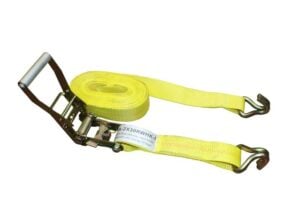

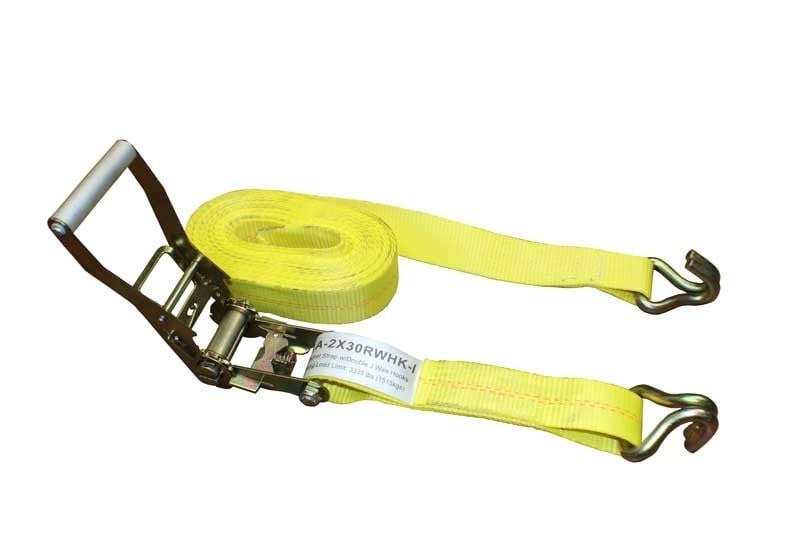
Tie-down assemblies keep cargo from shifting, sliding, or falling during transport. Selecting them requires more than matching strap length or width to the load. The working load limit, end fittings, anchor points, cargo characteristics, and equipment condition all determine whether a tie-down will hold as intended.
People Also Ask
Can you still use a strap with a missing label?
Industry inspection criteria call for removal; FMCSA assigns a default rating, but you can’t verify the strap’s actual condition or rating.
How tight should a ratchet strap be?
Tension the strap until the cargo is secure, using only the ratchet handle. Cheater bars can overload the webbing and hardware.
Does sunlight damage tie-down straps?
Yes. Prolonged UV exposure weakens polyester webbing, often shown by fading and stiffness. Store straps out of direct sunlight.
Can cargo ratchet straps be repaired?
Don’t repair damaged webbing in the field. Replace the strap, or return it to the manufacturer if they offer repair.
What Are Cargo Tie-Down Straps?
Cargo tie-down straps are synthetic web assemblies that secure freight to a trailer, truck bed, or deck. They are typically made of polyester webbing, which offers high strength with low stretch, and are tensioned with a ratchet, cam buckle, or trailer-mounted winch.
Understanding the Components of a Ratchet Strap Assembly
A ratchet strap assembly includes a fixed end, a running end of webbing, a ratchet that applies tension, and end fittings that attach to anchor points. Every component carries the same tension, so each must be rated for the assembly’s working load limit.
Common Types of Cargo Ratchet Straps
Cargo ratchet straps are commonly supplied as two-piece assemblies with end fittings on both pieces or as endless straps that wrap around the cargo without hooks. Two-piece straps suit flatbed and trailer securement, while endless straps often bundle or unitize loads.
How Webbing Width Affects Strap Selection
Wider webbing generally carries a higher rating and spreads tension over a larger area of the cargo. Heavy-duty tie-down straps for flatbed freight are commonly 4 inches wide, while 1- and 2-inch straps serve lighter loads. Our comparison of 4-inch and smaller straps covers these differences in detail.
Understanding Working Load Limits
The working load limit is the maximum load an assembly is rated to secure in service. Under FMCSA rules in 49 CFR Part 393, a tiedown’s working load limit equals that of its lowest-rated component, and the combined working load limit of all tiedowns must be at least half the cargo weight.
Choosing End Fittings for the Securement Point
End fittings must match the anchor point they attach to. Flat hooks fit flatbed rub rails, wire hooks and double J hooks suit stake pockets and D-rings, and track fittings attach to E-track or logistic track. A fitting that does not seat fully can slip or deform under tension.
Matching Tie Down Straps to the Cargo
Cargo weight establishes the minimum combined rating, but the cargo’s surface and fragility also matter. Finished or painted surfaces may require wider webbing or protective sleeves, while rigid cargo with sharp edges requires edge protection to prevent cutting.
How Load Shape and Weight Distribution Affect Securement
Tall cargo with a high center of gravity is prone to tipping and needs tiedowns positioned to resist that motion. Cylindrical cargo needs blocking or cradles to prevent rolling. FMCSA rules also set a minimum number of tie-downs based on cargo length and weight, so distribution along the load matters as much as total rating.
Environmental Conditions That Can Affect Tie Down Equipment
Prolonged sunlight degrades polyester webbing through UV exposure, and chemicals, heat, and abrasive surfaces can weaken it further. Moisture and road salt corrode ratchets and hooks. Equipment used in these conditions requires more frequent inspection and earlier replacement.
How to Inspect Cargo Tie Down Straps Before Use
Inspect each strap before every use. Confirm that the rating label is legible, then examine the full length of the webbing, the stitching, the ratchet, and both end fittings. Set aside any strap with damage or a missing label rather than using it.
Signs of Webbing Wear and Damage
Common webbing damage includes cuts, tears, abrasion, burns, melted or charred fibers, and broken or worn stitching. Faded, stiff, or brittle webbing indicates UV or chemical degradation. Knots also reduce webbing strength and should never be used to shorten a strap.
Inspecting Ratchets, Hooks, and Other Hardware
The ratchet should operate smoothly, lock securely, and release fully, with no cracked, bent, or heavily corroded parts. Check hooks for open throats, twisting, cracks, and wear. Any distortion indicates the hardware has been overloaded.
When a Tie-Down Strap Should Be Removed From Service
Remove a strap from service when its label is missing or illegible, its webbing shows cuts, burns, melting, or broken stitching, or its hardware is distorted, cracked, or fails to function. Destroy damaged straps or clearly tag them so they cannot return to service.
Storage and Handling Considerations
Store straps clean, dry, and coiled, away from sunlight, heat, and chemicals. Avoid dragging webbing across rough surfaces or leaving straps loose in truck beds, where abrasion and contamination can occur.
Common Cargo Securement Mistakes to Avoid
Frequent mistakes include relying on width instead of the marked rating, using too few tie-downs for the cargo length, omitting edge protection, twisting or knotting webbing, and using a cheater bar on the ratchet. Never use ratchet straps for overhead lifting. For lifting applications involving swivel hooks, see our guide to selecting swivel hooks based on load, rigging hardware, and lifting conditions.
Cargo Tie-Down Strap Selection and Inspection Checklist
- The combined working load limit is at least half the cargo weight
- Number of tie-downs meets the requirement for cargo length and weight
- End fittings match the vehicle’s anchor points
- Edge protection is in place where webbing contacts sharp edges
- Rating labels are present and legible
- Webbing is free of cuts, burns, abrasions, and broken stitching
- Ratchets and hooks function correctly and show no distortion
Conclusion
Effective load securement depends on selecting cargo tie-down straps by rating, end fitting, and cargo type, then inspecting them before every use. To discuss tie-down equipment for your application, contact Murphy Industrial Products, Inc.