





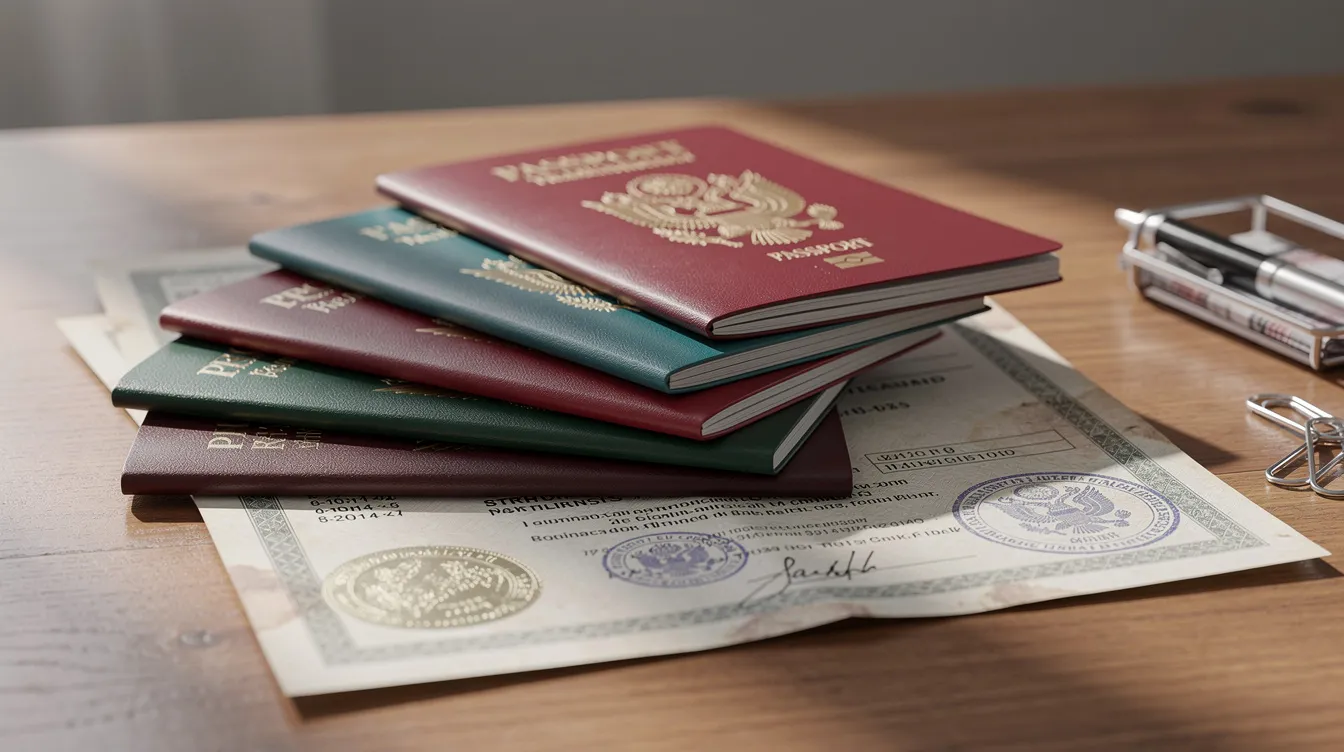
Applying for German citizenship requires you to submit a range of official documents. If those documents are not already in German, they must be accompanied by certified translations. This applies to everything from your birth certificate and passport to your marriage certificate, criminal record, and proof of renunciation of previous citizenships. Certified translations are required for German naturalization applications without exception.
A certified translation in Germany is not just any translation. It must be produced by a sworn translator (beeidigter or vereidigter Übersetzer) who is publicly appointed and registered with a German court. The translation must include the translator’s official seal, signature, and a statement confirming accuracy and completeness. Translations by non-certified translators are not accepted by authorities, not even if those persons are professional linguists. Only sworn translators can provide legally accepted translations in Germany.
This article gives you the complete document checklist for a German naturalization (Einbürgerung) application and explains exactly which documents must be translated, what format is required, and how to avoid costly delays. Transzlate is a Germany-based online provider of certified translations accepted by Einbürgerungsbehörden, Ausländerbehörden, and the BVA.
This guide is part of our complete guide to certified translations in Germany, covering sworn translators, pricing, turnaround times, and every document type you may need translated.
When Do You Need Certified Translations for German Citizenship?
German naturalization offices, Standesämter, and the Bundesverwaltungsamt (BVA) only process documents in German. If you submit official documents in another language, those documents must be accompanied by a sworn translation. This applies to every stage of the Einbürgerungsantrag, from the initial application to final review.
Typical situations where certified translations are required:
- You were born abroad and your birth certificate is in a foreign language
- You married outside Germany or underwent a name change in another country
- You hold or previously held citizenship in another country and need to document your nationality history
- Your educational diplomas, employment records, or criminal background checks are from your country of origin
- Your documents use non-Latin scripts (Arabic, Cyrillic, Chinese, etc.)
Translations for citizenship applications must meet specific requirements based on local citizenship authority directives. Certified translations are valid across all German federal states and are accepted across Germany and the European Union. They remain valid indefinitely, so you can reuse them for later procedures like family reunification (Familiennachzug) or obtaining a German ID card (Personalausweis). You can order certified translations by uploading scanned documents online, making the process straightforward even if you are abroad.
Core Citizenship Documents: What Must Be Translated for Einbürgerungsantrag
This is the central checklist. If any of the following documents are not already in German, you will need to have them translated by a sworn translator registered in Germany before you submit your Einbürgerung (naturalization) application.
Identity and civil status documents:
- Birth certificate for the applicant (and parents, if German citizenship is derived via descent)
- Current and previous passports from all nationalities
- National ID cards containing identity information not shown elsewhere
- Marriage certificate, divorce decree, or death certificate of spouse where applicable
- Name change certificates or court orders
Criminal records and residency proof:
- Foreign certificate of good conduct (for example, a UK ACRO certificate, US FBI background check, or Spanish “Certificado de antecedentes penales”)
- Residence permits or visas documenting legal residence abroad
- Previous naturalisation or renunciation certificates from other countries
German naturalization offices require translations to be performed by court-appointed translators. Each document submitted for naturalization must be accurately translated to ensure official understanding. Non-German documents must be officially translated for BVA recognition. Unverified documents can stall or invalidate citizenship proceedings entirely.
Each certified translation must include a complete rendering of all stamps, annotations, and marginal notes, plus the translator’s statement of accuracy, date, signature, and official seal. Note that exact requirements may vary by Bundesland, so always cross-check your local Einbürgerungsbehörde’s checklist.
Family & Civil Status Documents: Birth, Marriage, Adoption, Name Changes
German nationality law is strongly rooted in descent (Abstammung) and marital status. Providing the correct family documents is critical: authorities need to fully reconstruct your family relationships to confirm eligibility for German citizenship.
Documents frequently needing certified translation for the naturalization (Einbürgerung) process:
- Birth certificates for all relevant generations when deriving citizenship through descent (Abstammung): applicant, parents, sometimes grandparents
- Marriage certificates of the applicant and, if required, parents or grandparents, especially when citizenship was gained or lost through marriage
- Adoption papers, recognition of paternity, or custody court decisions affecting name or nationality
- Official name change documents when the applicant’s name differs from German records
Always request the “long form” or “full extract” version. For example, a US “long-form birth certificate,” an Indian birth certificate from the Municipal Corporation, a UK “full birth certificate,” or a Brazilian “certidão de inteiro teor” will contain the complete information authorities need.
Many foreign public documents require an apostille or formal legalization for acceptance in Germany. The apostille must be on the original document before being presented to the translator: sequence matters. Sworn translators are certified by German courts and ensure all seals and endorsements are translated so that German authorities see a complete picture.
Education, Work & Integration Evidence: Which Documents Need Translation?
Beyond identity and family status, Einbürgerungsbehörden assess your integration in Germany: education, employment, language level, and civic knowledge. Some of these things will need certified translation.
Documents that commonly need translation:
- Foreign school-leaving certificates (e.g. high school diplomas, A-Levels, Baccalauréat)
- University diplomas and transcripts used to prove qualification or secure professional recognition
- Professional licenses or registration certificates if applicable to your application
Non-German educational credentials may need translation depending on local authority specifications. Some authorities accept documents in English or French without translation, but many still explicitly require a certified translation into German. European Union public documents may not require translation if a multilingual standard form is submitted, but this exception applies only to specific EU standard forms, not to all EU documents.
Proof of German language proficiency (e.g. telc Deutsch B1, Goethe Institut Zertifikat, ÖSD) and Einbürgerungstest certificates are usually already in German and do not need translation. Sworn translators follow strict rules for certified translations and, at Transzlate, we work with non-Latin scripts and transliterate names consistently with your existing Meldebescheinigung and passport records to avoid discrepancies.
Special Cases: BVA, Applicants Abroad & Complex Nationality Histories
The Bundesverwaltungsamt (BVA) handles complex cases: descendants of German emigrants, persons living outside Germany, late repatriates (Spätaussiedler), and applicants with tangled nationality histories. The BVA is particularly strict about certified translations: translations by non-certified translators are not accepted by the BVA under any circumstances.
Additional documents that may need translation for BVA cases:
- Proof of non-acquisition or loss of foreign citizenship (Bescheinigungen über den Nichterwerb einer fremden Staatsangehörigkeit)
- Old foreign passports, military service books, voter registration records, or immigration records proving historic residence
- Certificates confirming no previous naturalisation in other states, or restitution of German citizenship
German authorities typically reject translations done by foreign translators unless pre-approved. Transzlate works exclusively with court-sworn professionals listed in Germany’s official translator database. Incomplete or non-certified translations can significantly delay case processing and trigger Nachforderungen, written requests for additional documentation that add weeks or months to your process.
How to Get Certified Translations for Einbürgerung with Transzlate
Transzlate offers a fully online process for certified translations tailored to Einbürgerung and other German authorities. Here is how it works:
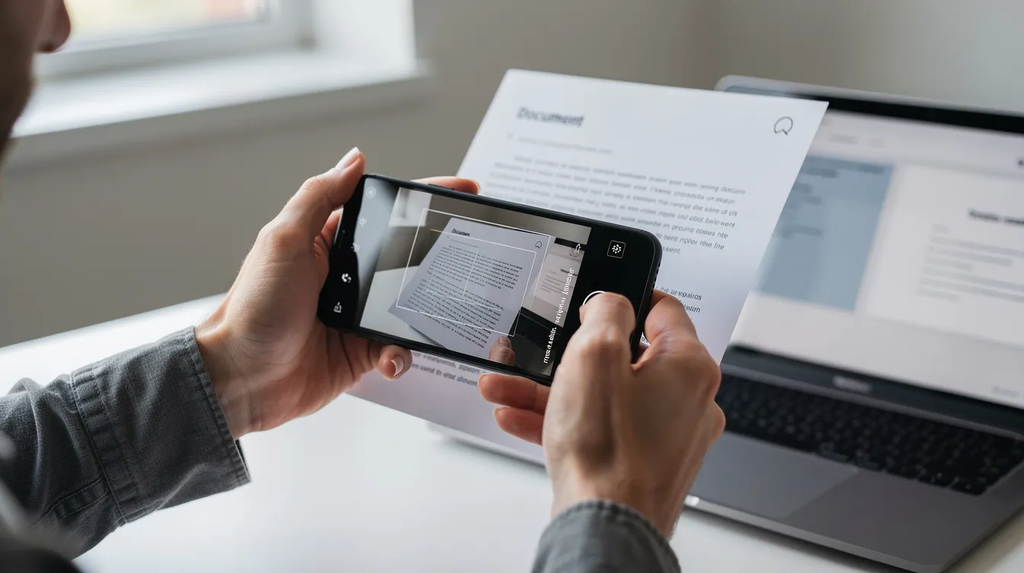
- Scan or photograph your official documents clearly (front and back where relevant) and upload them securely to the Transzlate platform. A good photograph or scan is sufficient.
- Select your source language and specify the purpose “auf Einbürgerung / for German citizenship.” This ensures correct formatting for your Einbürgerungsbehörde.
- Receive a transparent quote, often within the same business day. Having multiple documents translated together can reduce cost per page.
Delivery formats:
- A scanned copy of the certified translation (PDF with visible stamp and signature) is sent via email for immediate upload to online portals
- Paper originals are sent by post within Germany, and to EU addresses if needed, with tracking and express delivery on request
All translations are performed by court-sworn translators who are publicly appointed (öffentlich bestellt und beeidigt). Certified translations must include the translator’s official seal and signature. Transzlate offers an acceptance guarantee: if any German authority does not accept your translation, we revise it at no extra cost. All data and documents are handled under German and EU data protection standards.
Practical Tips: Avoiding Mistakes and Delays in Your Einbürgerung File
Small translation issues lead to big delays. Here are concrete tips to keep your Einbürgerung application on track:
- Always ask your Einbürgerungsbehörde for its current document checklist and confirm which documents require certified translations before ordering. Requirements can differ: what applies in Berlin may not apply in Munich.
- Ensure all names, dates, and places in translations match your current passport spelling and Meldebescheinigung. Alert your translator if your name already appears in a specific transliteration.
- Translate slightly more than the bare minimum when documents are connected, for example, both sides of a multi-language certificate or all pages of a divorce judgment.
- Order translations well before deadlines, especially if you still need to obtain apostilles or consular legalisations. The correct sequence: original document → apostille/legalisation → certified translation.
- Never use online machine translators, friends, or non-sworn persons to translate official documents. These will be rejected, costing you time and money.
Getting your documents right the first time is the single most effective way to speed up the Einbürgerung process. Applicants who send incomplete or incorrectly certified files routinely face months of additional waiting.