




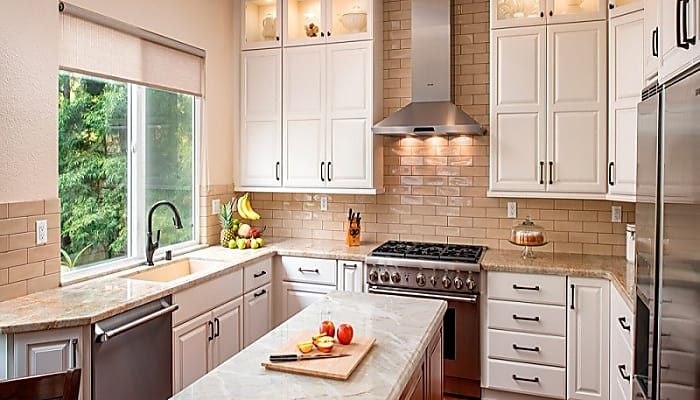
Countertops have a large effect on how a kitchen looks and works. They provide space for preparing food, holding appliances, serving meals, and handling many everyday tasks. Therefore, the surface needs to offer more than an attractive appearance. Granite remains an important natural-stone option because every slab has its own mineral pattern and color variation. However, choosing granite involves more than finding a sample that matches the cabinets. Homeowners should also consider slab selection, maintenance, edges, seams, thickness, and installation.
Why Granite Continues to Work in Many Kitchen Styles
When comparing granite countertops Columbus Ohio options, homeowners may notice a wide range of light, dark, warm, cool, subtle, and dramatic slabs. This natural variation makes granite suitable for many different interior styles. A light granite surface can brighten a kitchen with dark cabinets. In contrast, darker granite can add depth when paired with light cabinetry. Some slabs have quiet mineral movement, while others contain large veins and strong color changes. Because granite forms naturally, no two slabs are identical. Therefore, viewing a full slab can provide a better idea of the finished surface than looking at a small sample.
Natural Variation Is Part of the Material
Granite may contain veins, speckles, crystals, and areas with different mineral concentrations. These differences should not automatically be viewed as defects. Instead, they are part of the stone’s natural character. However, homeowners who prefer a very uniform surface should understand this feature before making a decision. A slab with strong movement may also require careful planning so the most attractive areas appear in visible countertop sections.
Consider How the Kitchen Is Used
A countertop should match the household’s daily habits. A kitchen used for frequent cooking needs enough preparation space and a surface that can handle regular activity. Meanwhile, a kitchen used mainly for light meals may place greater importance on appearance. Families should consider where small appliances will sit, where groceries are unloaded, and where meals are prepared. These questions affect more than material selection. They also influence seam placement, sink position, backsplash choices, and countertop dimensions.
Understand Granite Maintenance
Granite is a natural stone, so proper care matters. Many granite surfaces benefit from sealing because the stone can contain pores. A suitable sealer can help reduce liquid absorption and make daily care easier. However, maintenance requirements can vary according to the specific stone and finish. Therefore, homeowners should ask about care requirements for the slab they choose. For routine cleaning, gentle methods are usually preferable. Spills should also be cleaned promptly rather than left on the surface for long periods.
Avoid Treating Every Stone the Same
Different natural stones can have different care needs. Even granite slabs may vary in porosity. Consequently, a maintenance schedule should be based on the actual material rather than a general rule found online. Homeowners should also understand that sealing does not make a countertop completely immune to staining. Instead, it provides additional protection and more time to clean spills.
Look at Full Slabs Before Making a Final Decision
Small samples are useful for comparing basic colors. However, they cannot show the full movement of natural granite. A full slab may contain large veins, mineral clusters, or major changes from one end to the other. Therefore, viewing the complete slab can help homeowners understand how it will appear across a large island or long countertop run. If the kitchen requires more than one slab, matching also becomes important. Slabs from the same group may provide better visual continuity.
Coordinate Granite With Cabinets
Cabinets and countertops occupy much of the visible kitchen area. As a result, they should support each other rather than compete. Busy cabinet doors can work well with quieter granite. Conversely, simple cabinet fronts can provide a calm background for a more dramatic slab. Undertones also matter. Warm wood cabinets may pair naturally with granite containing cream, brown, gold, or warm gray minerals. Meanwhile, white, gray, or dark cabinets may work with cooler stone patterns. There is no single correct combination. However, viewing samples together under the room’s actual lighting can reduce surprises.
Do Not Forget Flooring and Wall Colors
Countertops should also relate to the rest of the room. A granite slab may look perfect beside a cabinet sample but clash with existing flooring. Therefore, homeowners should compare all major fixed finishes side by side. Paint is usually easier to change than cabinets, floors, or countertops. Consequently, it often makes sense to select expensive permanent materials first and choose wall colors afterward. Backsplash design should follow the same principle. If the granite contains strong movement, a simple backsplash may provide visual balance. On the other hand, subtle granite may allow more freedom for patterned tile.
Think Carefully About Edge Profiles
The countertop edge changes both appearance and feel. Simple edges can suit modern and transitional kitchens. More detailed profiles can support traditional designs. However, appearance is not the only factor. Some decorative edges add fabrication work and may affect the total project price. The edge should also suit the thickness and visual character of the slab. For many homes, a clean and simple edge keeps attention on the natural stone itself.
Plan the Sink Area Early
The sink is one of the most important countertop openings. Homeowners should decide on the sink style before final fabrication measurements. An undermount sink creates a smooth countertop edge around the opening, while other sink types have different installation requirements. Faucet holes, soap dispensers, filtered-water taps, and other accessories should also be considered. Making these decisions early helps avoid last-minute changes.
Understand Why Seams May Be Necessary
Large countertops cannot always be produced from one piece of stone. Slab dimensions, kitchen layout, access to the room, and safe handling can all affect seam placement. Therefore, some kitchens will require one or more seams. Good planning can place seams in less noticeable or structurally sensible locations. Homeowners should ask where seams are expected before fabrication. This discussion is especially important for large islands, long countertop runs, and complicated layouts.
Consider Lighting Before Selecting the Final Slab
Lighting can change the appearance of granite. Natural daylight may reveal mineral colors that look less noticeable under artificial lighting. Warm bulbs can make cream and gold tones more visible, while cooler lighting may emphasize gray or blue undertones. Therefore, samples should be viewed under lighting similar to the finished kitchen whenever possible. Under-cabinet lighting can also make the countertop more visible during evening use.
Compare Appearance With Practical Needs
A dramatic slab can become the visual focus of a kitchen. However, the most striking stone is not always the best choice for every room. A busy household may want a pattern that hides crumbs and minor marks between cleanings. Meanwhile, someone who prefers a very calm interior may choose softer movement. The right decision combines visual preference with daily use. That balance is particularly useful when planning kitchens around Dublin, Columbus, Ohio, where homeowners may be updating anything from compact kitchens to larger open layouts.
Prepare Properly for Installation
Installation day requires preparation. Base cabinets should be secure, level, and ready to support the countertop. Appliances that affect measurements should also be confirmed. Homeowners should clear access paths so large stone pieces can be moved safely into the kitchen. Because granite sections can be heavy, installation should follow the measurements and fabrication plan closely.
Think of the Countertop as Part of the Whole Kitchen
A countertop should not be selected in isolation. Cabinets, appliances, lighting, flooring, backsplash, sink, hardware, and wall colors all contribute to the finished result. Therefore, homeowners researching kitchen countertops in Columbus can benefit from comparing the countertop with the complete material palette before approving the final slab. This broader view can prevent a single feature from overpowering the room.
Final Thoughts
Granite can bring natural character and a strong visual foundation to a kitchen. However, successful results depend on planning.
Homeowners should look beyond color and consider maintenance, slab movement, edge details, seams, lighting, and installation conditions.
When these decisions are considered together, granite can become a practical and attractive part of a well-planned kitchen rather than simply another decorative surface.
1. Is granite a good choice for kitchen countertops?
Granite can be a practical choice because it offers natural beauty, durability, and many color options. However, proper care and installation are important.
2. Does every granite slab look the same?
No. Granite is a natural stone, so each slab can have different veins, mineral patterns, and color variations.
3. Does granite need to be sealed?
Many granite surfaces benefit from sealing. However, the exact maintenance requirements depend on the type and porosity of the stone.
4. How should granite be matched with kitchen cabinets?
Compare cabinet and granite samples together. Consider undertones, pattern strength, lighting, flooring, and backsplash colors before making the final choice.
5. Can granite countertops have seams?
Yes. Seams may be needed depending on slab size, kitchen layout, countertop length, and installation access. Proper planning can help keep seams less noticeable.