





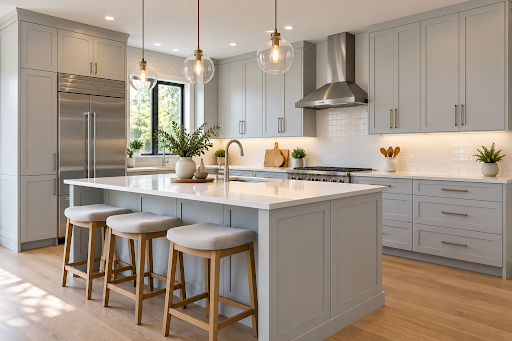
Kitchen cabinets have a major influence on how a kitchen looks and functions. They provide essential storage while covering a large portion of the room, so their design can affect the entire character of the space. Homeowners with smaller kitchens often face a difficult balance. They want enough storage without making the room feel crowded. At the same time, they may prefer a cabinet style that provides character without excessive decorative detail. Slim Shaker cabinets offer an interesting solution for this type of kitchen planning. They combine the familiar framed appearance of Shaker cabinetry with a slimmer profile that can help make better use of limited space. For Milwaukee homeowners, understanding how this cabinet approach affects storage, appearance, and layout can make it easier to decide whether it fits their renovation plans.
What Makes Slim Shaker Cabinets Different?
Shaker cabinetry is recognized for its clean lines and simple framed construction. The design has remained popular because it can work with traditional, transitional, and contemporary interiors. The slim version takes this familiar appearance and adapts it to spaces where depth and visual simplicity are important. Rather than relying on a heavily decorative door profile, the design focuses on clean proportions and efficient use of space. The current Badger Cabinets Shaker collection describes its slim option as a space-saving solution with reduced depth, particularly suited to smaller kitchens and streamlined designs. Badger Cabinets This makes the style worth considering when homeowners want a balance between classic cabinet character and a more compact appearance.
Consider the Available Kitchen Space
Cabinet selection should begin with the dimensions of the kitchen. Wall length, room depth, appliance placement, doors, windows, and walking areas can all influence the final cabinet layout. In a compact kitchen, cabinet depth can affect how open the room feels. A slimmer configuration may help preserve more usable movement around preparation and cooking areas. However, homeowners should not focus only on cabinet dimensions. Storage capacity, accessibility, and countertop space should also be considered. The best layout is one where the cabinets fit naturally into the room without restricting how homeowners move between different work zones.
How a Slimmer Profile Can Help Small Kitchens
Smaller kitchens require careful planning because every area needs to serve a purpose. Oversized cabinetry can reduce walking space and make an already compact room feel more confined. A slimmer cabinet profile can provide an alternative when homeowners want to maintain storage while controlling the amount of visual and physical space occupied by the cabinetry. This does not mean that every cabinet needs to be shallow. Instead, homeowners can identify areas where a slimmer configuration provides the most value. For example, certain storage areas may work well with reduced depth while larger base cabinets continue to provide deeper storage where it is actually needed.
Compare Slim Shaker With Other Door Styles
Cabinet door profiles create different visual effects, so comparing styles can help homeowners determine which direction fits their kitchen.
| Cabinet Style | Main Character | Suitable Design Direction |
| Slim Shaker | Simple with a compact profile | Modern and transitional |
| Standard Shaker | Balanced and timeless | Traditional to modern |
| Flat Panel | Smooth and minimal | Contemporary |
| Raised Panel | Detailed and dimensional | Traditional |
| Recessed Panel | Structured and subtle | Classic and transitional |
Homeowners considering slim shaker cabinet designs can compare the profile with other options before choosing a final direction. The right choice depends on the amount of detail desired, available space, surrounding materials, and overall kitchen style.
Plan Storage Around the Cabinet Profile
A slimmer cabinet design should still provide practical storage. Homeowners should think about what will be stored inside each section before deciding where reduced-depth cabinetry makes sense. Frequently used items should remain easy to access. Utensils, cooking tools, and smaller supplies may work well in drawers or shallow storage areas. Larger cookware and appliances may require deeper cabinets or dedicated compartments. The most effective kitchen layouts do not treat every cabinet as identical. Instead, different cabinet configurations are assigned according to the items they need to accommodate.
Use Colors to Change the Overall Appearance
The cabinet color can significantly influence how a slim profile appears within the kitchen. Light finishes can make the room feel more open, while darker colors can add depth and contrast.
White Finishes
White cabinetry creates a bright and clean appearance. It can work particularly well in compact kitchens because lighter surfaces can help maintain an open visual effect.
Grey Finishes
Grey provides a neutral alternative with more depth than white. Different shades can create either a soft or stronger appearance depending on the surrounding materials.
Natural Wood Finishes
Wood tones add warmth and texture. They can balance the simple lines of Shaker doors and create a more inviting kitchen.
Dark Finishes
Black and other deep finishes can make the cabinets a stronger focal point. They often work best when balanced with lighter countertops, walls, or flooring. The finish should be considered alongside natural lighting because the same cabinet color can appear different throughout the day.
Combine Slim Cabinetry With Modern Hardware
Hardware can change the way Shaker cabinets are perceived. Simple handles and pulls can reinforce the clean appearance of the doors, while more decorative hardware can introduce traditional character. Long, slim pulls can complement the vertical and horizontal lines of the cabinet design. Smaller knobs can create a quieter appearance. The hardware should also coordinate with faucets, lighting fixtures, appliances, and other metal elements in the kitchen. Small details can make the overall design feel more intentional without adding unnecessary decoration.
Consider Countertops and Backsplashes
The simplicity of Shaker doors provides flexibility when selecting countertops and backsplashes. Homeowners can use these surfaces to introduce texture, color, or pattern without creating a visually crowded room. A countertop with subtle veining can complement neutral cabinetry without overpowering it. More noticeable patterns may work when the cabinet finish and hardware remain understated. Backsplash materials should also support the overall design. Simple tile can reinforce a minimalist look, while patterned materials can add personality. The best combinations create contrast while maintaining visual balance.
Add Storage Features Where They Matter Most
Cabinet storage should reflect the way the kitchen is used. A carefully planned layout can make slim cabinetry more practical by assigning each area a specific function.
Useful features can include:
- Pull-out organizers
- Adjustable shelves
- Drawer dividers
- Tray storage
- Corner organizers
- Dedicated appliance compartments
These features can make it easier to organize smaller items while keeping frequently used products accessible. Homeowners should focus on features that solve real storage problems rather than adding accessories that may not provide meaningful benefits.
Consider Slim Shaker Cabinets for Open-Concept Kitchens
Open-concept kitchens require careful visual planning because the cabinetry may be visible from dining and living areas. A simple cabinet profile can help the kitchen blend more naturally with nearby spaces. Slim Shaker cabinetry can provide enough detail to create character while maintaining clean lines. The finish becomes particularly important in an open layout. Neutral colors can create continuity, while a contrasting island can define the kitchen area without separating it visually from the rest of the home. This approach can create a connected appearance across the larger living space.
Explore Different Brand Options
Cabinet style is only one part of the selection process. Homeowners should also consider the brands and collections available within that style. Different collections may offer variations in materials, finishes, construction, colors, and configurations. For example, homeowners researching Woodoo cabinet options can consider a collection that includes multiple Slim Shaker finishes and related door styles. The current Woodoo selection includes options such as Frosty White Slim Shaker, Iron Black Slim Shaker, and Premium Oak Slim Shaker. Badger Cabinets Comparing these variations can help homeowners determine which finish and configuration best suits their kitchen.
Think About Durability and Construction
Cabinet style should never be considered separately from construction quality. Kitchen cabinets are exposed to daily opening, closing, cleaning, moisture, and general household use. Homeowners should review the materials used for the cabinet boxes, doors, shelves, drawers, and hardware. Drawer slides should move smoothly, while hinges should support proper door alignment. Shelves should also provide sufficient support for the items being stored. A visually attractive cabinet is more useful when its construction can handle regular kitchen activity over time.
Make Small Kitchens Feel More Organized
A smaller kitchen can feel comfortable when storage and movement are planned together. Cabinets should provide enough capacity without making the room difficult to navigate. Slimmer cabinet configurations can support this goal when they are used in appropriate areas. Light finishes, organized storage, and simple door profiles can also reduce visual clutter. Lighting plays another important role. Under-cabinet lighting can brighten work surfaces and make the kitchen feel more functional. The goal is not simply to make a small kitchen look larger. It is to make the available space work better.
Consider Milwaukee Kitchen Design Needs
Milwaukee homes include a wide range of layouts and architectural styles. Some homeowners may be updating compact kitchens, while others may be remodeling larger spaces with open layouts. Slim Shaker cabinetry can adapt to different design directions because the basic door profile remains simple and versatile. For homeowners working with limited space, the reduced-depth approach may be worth considering alongside other storage and layout solutions. The final decision should be based on actual measurements and household requirements rather than appearance alone.
Work With Cabinet Professionals
Selecting cabinetry involves more than choosing a door profile. Measurements, cabinet configuration, storage requirements, finishes, hardware, and installation all affect the final result. Milwaukee homeowners can work with cabinet professionals to review different cabinet styles and determine which configurations make sense for their kitchens. Professional input can also help identify areas where reduced-depth cabinetry may be useful and where standard cabinet dimensions would provide better storage. This type of planning can make the renovation process more predictable and help homeowners avoid layout problems.
Final Thoughts
Slim Shaker cabinetry offers a practical way to combine a familiar cabinet style with a more compact approach to kitchen planning. Its clean profile can work well in smaller kitchens, open layouts, and interiors where homeowners prefer a streamlined appearance. The best results come from considering cabinet depth alongside storage capacity, color, hardware, countertops, lighting, and overall kitchen workflow. For Milwaukee homeowners, comparing different Shaker configurations and brand collections can help identify a cabinet solution that fits both the available space and the desired design.