






Crop productivity depends on a chain of decisions that begins well before harvest. Farmers need to protect plants from insects and diseases, maintain adequate nutrition, manage soil conditions and ensure that crop protection products are applied effectively. When any one of these areas is neglected, yield potential can decline even when the crop initially appears healthy.
Modern farming therefore requires more than simply purchasing pesticides. Understanding the target pest, selecting the appropriate formulation, using suitable application technology and supporting plants with balanced nutrition are all part of effective crop management. An agrochemical supplier with knowledge across these areas can help farmers and agricultural professionals access solutions suited to different production challenges.
From an agrochemical spreader used to improve spray coverage to nutrient sources such as potash and gibberellic acid, today’s agricultural toolbox includes products serving very different purposes. At the same time, biological crop protection is expanding through bio pesticides companies, while targeted insecticides remain important for difficult pests such as stem borers.
JU Agri Sciences Pvt. Ltd. brings these different areas together through its portfolio of crop protection, biological and plant nutrition solutions for Indian agriculture.
Why Crop Protection Needs More Than a Single Product

Farmers often encounter several challenges during one crop cycle. A rice crop may face stem borer pressure while also requiring disease protection and balanced nutrition. Cotton can experience sucking pests and caterpillars, while soybean and wheat require careful weed and nutrient management.
Treating every problem with the same type of input is rarely an efficient strategy. Instead, farmers need to understand what is happening in the field and select interventions according to the crop, pest, disease, growth stage and environmental conditions.
This is the foundation of Integrated Pest Management. It combines monitoring, cultural practices, biological measures and appropriately selected pesticides rather than depending entirely on routine chemical applications.
Such an approach can also support resistance management. When farmers rotate suitable modes of action and avoid unnecessary applications, they can reduce excessive selection pressure on pest and pathogen populations.
Understanding the Role of an Agrochemical Supplier
An agrochemical supplier is an important link between manufacturers, agricultural retailers and farmers. However, modern agricultural supply is about more than moving products from one location to another.
Farmers increasingly need access to different categories of solutions, including insecticides, fungicides, herbicides, biological products, plant nutrition inputs and agricultural adjuvants. They also benefit from technical information that helps them understand when and how products should be used.
A dependable agricultural supply network can therefore contribute to better access, product availability and informed crop-management decisions.
Product Selection Should Follow the Agricultural Problem
The right product depends on the problem being addressed. An insecticide intended for caterpillars should not automatically be considered suitable for sucking pests. Similarly, a fungicide designed for one disease may not provide useful control against an unrelated pathogen.
Farmers should identify the target problem first, then verify the registered crop, pest or disease, dosage and application instructions before purchasing and applying an agricultural input.
Making Better Use of an Agrochemical Spreader
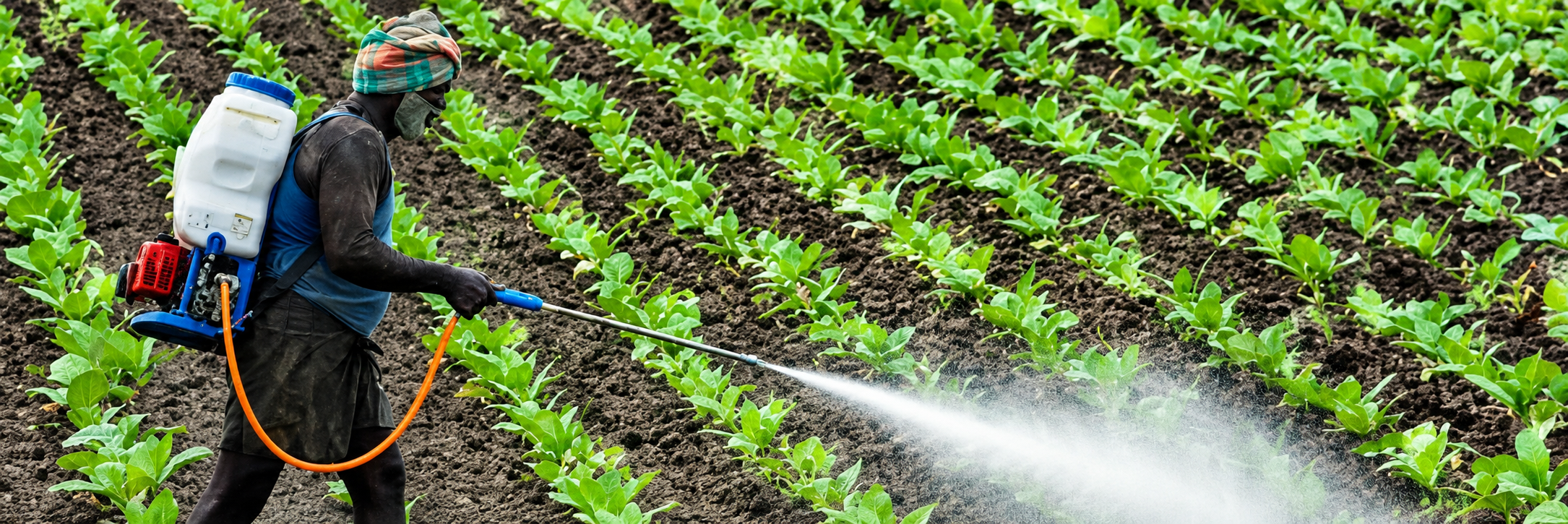
Spray application quality can strongly influence the performance of a crop protection program. Even a technically suitable product may perform poorly when coverage is uneven, equipment is incorrectly calibrated or application conditions are unsuitable.
An agrochemical spreader or compatible adjuvant can sometimes improve spray characteristics such as spreading and wetting on plant surfaces. This can be particularly relevant where thorough coverage is necessary.
However, farmers should not assume that every pesticide requires an additional spreader. Compatibility depends on the formulation, crop, target and label recommendations.
Application Quality Matters as Much as Product Choice
Nozzle selection, spray volume, equipment calibration, water quality and weather conditions can all influence the quality of an application.
Windy conditions can increase drift, while unsuitable temperatures or rainfall soon after application can affect product performance. Farmers should therefore follow the product label and use appropriate equipment rather than attempting to compensate for poor spraying with additional pesticide.
Efficient application can reduce wastage while improving the consistency of crop protection.
Potash Fertilizer Benefits Beyond Basic Nutrition
Plant protection and plant nutrition are closely connected. Crops require sufficient nutrients to develop healthy roots, stems, leaves and reproductive structures.
Potassium is one of the major plant nutrients and plays important roles in physiological processes related to water regulation, enzyme activity and overall plant development. Consequently, understanding the potash fertilizer benefits can help farmers appreciate why potassium management is an important part of balanced crop nutrition.
However, fertilizer application should be based on crop requirements and soil conditions. More fertilizer does not automatically mean greater yield.
Balanced Nutrition Supports Crop Performance
Nitrogen, phosphorus and potassium work together, while secondary and micronutrients also contribute to crop development. An imbalance can limit the response to other nutrients.
Soil testing, crop observations and local agronomic recommendations can help farmers determine whether additional potassium is required. Proper irrigation and soil management are also important because nutrient availability is influenced by the root-zone environment.
Stem Borer Management Requires Timely Action
Stem borers can become serious pests in crops such as rice because their larvae feed within plant tissues, making them more difficult to reach once they are well established.
Searching for the best insecticide for stem borer should therefore not be reduced to comparing product names. Effective management begins with field monitoring and correct identification of the pest.
Farmers should look for symptoms such as dead hearts in younger plants or characteristic damage during later crop stages. Early recognition can allow management decisions to be made before the pest population causes extensive damage.
Integrated Stem-Borer Management
Chemical control can be combined with field sanitation, removal of heavily infested plant material where practical, balanced fertilization and monitoring of pest populations.
Where insecticide application is justified, farmers should select a registered product for the crop and target pest and follow the recommended dose. Repeatedly applying the same mode of action can increase resistance risk, making rotation and Integrated Pest Management important.
The objective should be effective pest suppression rather than unnecessary repeated spraying.
How Biological Crop Protection Is Expanding
Agriculture is increasingly exploring biological solutions that can complement conventional pesticides. Bio pesticides companies are developing products based on microorganisms, naturally derived substances and other biological mechanisms.
These products can broaden the range of crop protection tools available to farmers. In an Integrated Pest Management program, biological inputs may be combined with monitoring, cultural practices and selective chemical applications.
Biological crop protection also aligns with growing interest in more sustainable agricultural systems. However, biological products are not universal substitutes for conventional pesticides. Their performance can depend on environmental conditions, target organisms, storage and application practices.
Technical Handling Remains Important
Farmers should understand the intended use and handling requirements of a biological product before application. Storage temperature, shelf life, water quality and compatibility with other agricultural inputs may influence performance.
As the biological sector grows, product quality and technical guidance will become increasingly important for farmers making purchasing decisions.
Gibberellic Acid and Crop Growth Management
Plant growth regulators can serve different purposes from traditional fertilizers and pesticides. Gibberellic acid is a plant growth regulator associated with processes such as cell elongation and growth development.
Its agricultural use depends on crop, formulation, timing and the desired physiological response. Because growth regulators influence plant development, indiscriminate application can produce undesirable results.
Farmers should therefore follow crop-specific recommendations and approved label directions rather than assuming that higher application rates will improve plant growth.
Growth Management Should Complement Nutrition
Gibberellic acid should not be viewed as a replacement for basic plant nutrition. A crop suffering from nutrient deficiency, poor root development or inadequate water availability may not respond as expected to a growth regulator.
A stronger approach considers the complete production environment, including soil fertility, irrigation, crop stage and overall plant health.
Pest Control Chemicals and Responsible Application
The term pest control chemicals covers a broad range of products used to manage insects, mites and other agricultural pests. Their effectiveness depends on selecting the correct active ingredient and formulation for the target organism.
Farmers should avoid choosing pesticides solely because they are described as powerful. A product’s suitability depends on the target pest, crop registration, pest life stage and application conditions.
Responsible use also includes personal safety, correct storage, proper disposal of containers and protection of beneficial organisms wherever possible.
Resistance Management Should Be Part of Every Program
Insects can develop reduced sensitivity to insecticides when the same mode of action is used repeatedly. This can gradually reduce field performance.
Rotating suitable insecticide groups, monitoring pest populations and avoiding unnecessary applications can help reduce resistance pressure. Biological and cultural measures can also contribute to a more diversified pest-management program.
JU Agri Sciences: Supporting a Broader Agricultural Approach
JU Agri Sciences Pvt. Ltd. has more than two decades of experience in crop protection and sustainable agriculture. Its portfolio includes insecticides, fungicides, herbicides, biological fertilizers, biological pesticides, bio-stimulants and plant nutrition products.
With more than 130 agricultural products and a broad network of trade partners and retailers across India, the company works with the changing requirements of farmers across crops such as paddy, cotton, wheat, soybean, pulses, vegetables and fruits.
For an agricultural company operating in India’s diverse farming environment, product development needs to reflect different crop conditions, pest pressures and production systems. The combination of chemical crop protection, biological solutions and plant nutrition provides farmers with a wider set of tools for integrated crop management.
The Future of Agricultural Inputs Is More Integrated
Indian agriculture is moving toward more precise and informed input management. Farmers are increasingly interested in products that can be incorporated into broader crop-management programs rather than used independently.
Better pest monitoring, digital field records, precision spraying and improved formulations can help farmers use agricultural inputs more efficiently. At the same time, biological products and soil-health solutions are expanding the range of approaches available to growers.
The future is likely to favour agricultural systems where crop protection, nutrition and biological management work together. This does not eliminate the need for pesticides. Instead, it encourages more targeted and responsible use.
Conclusion: Smarter Inputs Begin With Better Decisions
Effective crop production depends on matching the right agricultural input to the right problem. An agrochemical supplier can help provide access to diverse crop protection and plant nutrition categories, while an agrochemical spreader may improve spray characteristics when its use is appropriate. Understanding potash fertilizer benefits can support more balanced nutrition, while targeted insecticide programs can help address serious pests such as stem borers.
At the same time, bio pesticides companies are expanding biological options for Integrated Pest Management, and products such as gibberellic acid have specific roles in crop growth management. Responsible use of pest control chemicals brings these tools together through careful selection, monitoring and application.
JU Agri Sciences supports this integrated agricultural approach through its broad portfolio of crop protection, biological and plant nutrition solutions. Farmers, dealers and agricultural professionals can explore appropriate solutions through the company’s resources while following registered product labels and qualified agronomic recommendations for safe and effective use.
Frequently Asked Questions
What should farmers look for in an agrochemical supplier?
Farmers should consider product availability, quality, technical support, reliable information and access to agricultural solutions appropriate for their crops and target problems.
What is an agrochemical spreader used for?
An agrochemical spreader or compatible adjuvant may improve spray spreading, wetting or coverage when recommended for a particular formulation and application. It should not be added automatically to every pesticide spray.
What are the main potash fertilizer benefits?
Potassium supports several important plant functions, including water regulation, enzyme activity and overall crop development. Its application should be based on crop and soil requirements.
What is considered the best insecticide for stem borer?
There is no universally best insecticide for every stem-borer situation. The appropriate choice depends on the crop, stem-borer species, pest stage, registration and resistance-management requirements.
How do bio pesticides companies support sustainable agriculture?
Bio pesticides companies provide biological crop protection products that can complement conventional pesticides, monitoring and cultural practices within Integrated Pest Management programs.
What is gibberellic acid used for in agriculture?
Gibberellic acid is a plant growth regulator used for specific crop-growth purposes. Its application should follow crop-specific recommendations because timing and concentration can significantly affect plant response.