







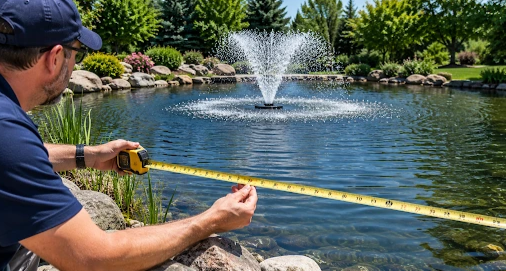
A still pond can look peaceful, but it often hides problems. Stagnant water loses oxygen, warms quickly in summer, and becomes a breeding ground for algae and mosquitoes. Fish become stressed, plants struggle, and unpleasant odors can drift across the yard. Moving water is the simplest remedy, and many property owners across the United States choose a floating fountain for pond use because it combines aeration, circulation, and visual appeal in one unit. The device sits on the surface, pulls water from below, and throws it into the air in a pattern that lets oxygen dissolve as droplets fall back. Unlike fixed installations, it needs no construction and can be moved when the layout changes. This article explains how these units work, how to match the size to your water body, and which habits keep them running smoothly through every season, so your pond stays clear, healthy, and pleasant to look at.
How Surface Fountains Improve Water Quality
A floating unit has a motor, an intake screen, a spray nozzle, and a float that holds everything at the right depth. The pump draws water from just under the surface and forces it through the nozzle, creating a spray pattern such as a tall column, a tiered shape, or a wide bell. As droplets fall, they absorb oxygen and release trapped gases, while the turbulence mixes upper and lower layers. This helps prevent thermal stratification, the layering that leaves the bottom cold and starved of oxygen. Better oxygen levels support fish and beneficial bacteria that break down organic waste. Moving water also makes it harder for mosquitoes to lay eggs and slows the spread of surface scum. Keep in mind that a floating fountain for pond support balances but does not replace good pond management, such as limiting nutrient runoff, removing debris, and avoiding overfeeding fish. Think of it as one important part of a larger plan for keeping water healthy.
Choosing the Right Size, Power, and Spray Pattern
Sizing depends on surface area and depth. A small garden pond of a few hundred gallons needs only a low-wattage unit, while a one-acre pond calls for a larger motor with a stronger spray. Depth matters because the intake must sit in water deep enough to avoid pulling in mud, so check the minimum depth listed in the specifications. Cord length is another practical detail, since the power cable must reach a safe outlet protected by a ground-fault circuit interrupter. When buying a floating fountain for pond owners should also compare spray height, flow rate in gallons per minute, and nozzle choices. Taller sprays look dramatic but lose water to wind drift, so those on windy sites may prefer lower, wider patterns. Consider the material too, since stainless steel and corrosion-resistant plastics last longer in outdoor conditions. Look for units with replaceable nozzles and accessible filters for easier servicing, and confirm that the warranty covers the motor.
Conclusion
Evening ambiance is a popular extra. LED fixtures installed on the unit make the spray glow after dark, and pond fountain lights are available in warm white and color-changing options that turn a simple water feature into a focal point. Choose waterproof, low-voltage models, and keep wiring neat and protected. Installation is straightforward: anchor the unit with cables or ropes, place it away from the shoreline, and position it so the spray does not reach nearby plants or walkways. Clean the intake screen every few weeks, since leaves and algae reduce flow, and rinse the nozzle if the spray looks uneven. Before freezing weather arrives, remove the unit and store it dry, because ice can crack housings and damage motors. Inspect power cords for cuts, test the ground-fault protection, and run the fountain briefly before returning it to the water in spring. With sensible sizing and regular care, a floating fountain for pond use rewards you with cleaner water, healthier fish, and a lively view for many seasons.