






Choosing between dried fruits and fresh fruits might seem like a simple decision, but both offer unique nutritional benefits and practical advantages. Fresh fruits are naturally juicy, refreshing, and rich in water, while dried fruits provide concentrated flavor, natural sweetness, and convenient storage. Whether you need a quick snack at work, something nutritious for your children, or an easy addition to your travel bag, both options deserve a place in your pantry.
But which one is better for everyday snacking? The answer depends on your nutritional needs, lifestyle, portion preferences, and personal taste. Let’s compare their benefits and differences to help you make smarter snack choices.
1. Nutritional Differences Between Dried and Fresh Fruits
Fresh and dried fruits provide essential nutrients, including dietary fiber, vitamins, minerals, and naturally occurring plant compounds. However, the drying process changes their nutritional concentration.
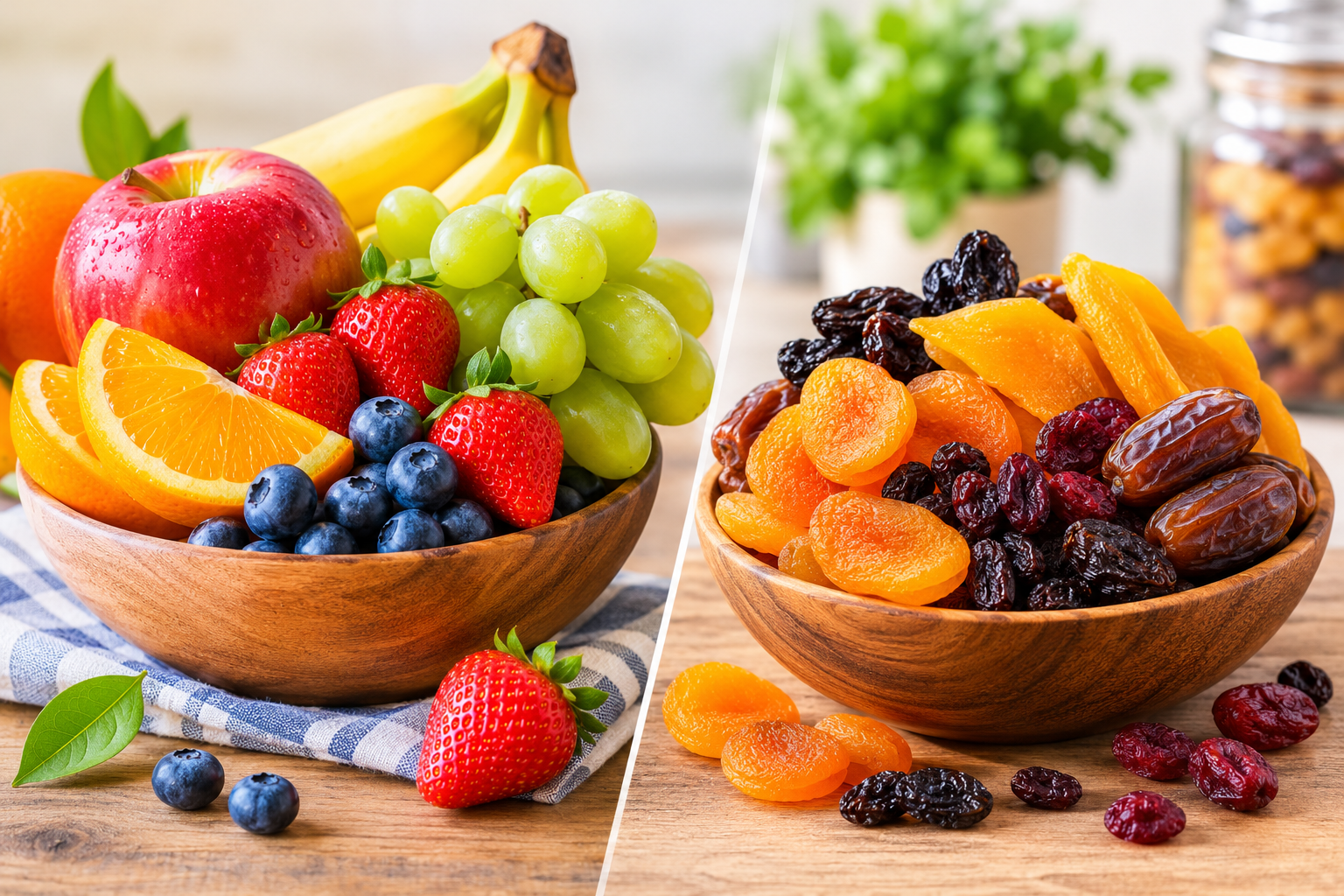
Fresh fruits contain a high percentage of water, making them naturally hydrating and relatively low in calories per serving. Fruits such as apples, oranges, grapes, and strawberries are excellent choices when you want a refreshing snack that helps support daily hydration.
Dried fruits, on the other hand, have most of their water removed. This makes their nutrients and natural sugars more concentrated by weight. For example, raisins, dried apricots, dates, and dried mangoes can provide fiber and minerals in smaller portions.
One important consideration is vitamin content. Some vitamins, particularly vitamin C, can decrease during drying and storage. Therefore, fresh fruits may be a better source of certain heat-sensitive vitamins.
Both options can contribute to a balanced diet, so there is no need to choose just one.
2. Convenience and Shelf Life: Which Snack Fits Your Lifestyle?
Convenience is one of the biggest reasons people choose dried fruits. Unlike many fresh fruits, which require refrigeration or careful handling, dried varieties are generally easier to store and carry.
A small pack of dried mangoes, cranberries, or banana chips can fit inside a handbag, lunchbox, or office drawer. They are also useful for road trips, hiking, school lunches, and busy workdays when preparing fresh snacks is not always practical.
Fresh fruits offer their own convenience, especially bananas, apples, and mandarins. However, they can bruise, spoil, or become messy during transportation. They also require more frequent shopping and proper storage to maintain freshness.
For households that want dependable pantry staples, convenient dried fruit options can make healthy snacking easier. Keeping a selection available means you always have something flavorful to enjoy without washing, peeling, or cutting fruit.
3. Natural Sugar, Calories, and Portion Control
One common question about dried fruit is whether it contains too much sugar. The answer requires understanding how drying affects natural fruit sugars.
Fresh fruits contain water, which adds volume and helps create a feeling of fullness. During drying, water is removed while much of the naturally occurring sugar remains. As a result, a small serving of dried fruit can contain considerably more sugar and calories than the same weight of fresh fruit.
For example, eating a handful of raisins is different from eating a handful of fresh grapes in terms of portion size and calorie concentration.
This does not mean dried fruits are unhealthy. Their fiber, minerals, and natural sweetness can make them a satisfying alternative to highly processed sugary snacks.
The key is moderation. Choose reasonable portions, check nutrition labels, and look for unsweetened varieties whenever possible. Some commercially prepared dried fruits contain added sugar, syrups, or other ingredients that increase their overall sweetness.
Fresh fruits are often easier to enjoy in larger portions because of their higher water content, making them a useful option when you want a filling snack.
4. Health Benefits of Fresh Fruits and Dried Fruits
Both types of fruit offer benefits that support everyday nutrition.
Fresh fruits are especially valuable for hydration because of their high water content. Watermelon, oranges, strawberries, and melons can help contribute to daily fluid intake. They also provide fiber, antioxidants, and vitamins that support general health.
Dried fruits offer concentrated nutrients in a compact form. Dried apricots, for example, provide potassium and fiber, while prunes are well known for their fiber content. Raisins contain beneficial plant compounds, and dates offer natural sweetness alongside minerals.
Fiber is particularly important because it supports digestive health and helps maintain regular bowel movements. Including different fruits in your diet can help increase your overall fiber intake.
However, neither option is automatically healthier in every situation. Your overall eating pattern, serving sizes, and product ingredients matter more than whether fruit is fresh or dried.
5. Explore Different Dried Fruit Varieties for Everyday Snacking
One of the best things about dried fruit is the variety of flavors, textures, and uses available. From chewy and naturally sweet to slightly tangy and crisp, there is something for almost every preference.
Here are some popular choices worth keeping at home:
-
Dried Mango: A naturally sweet, tropical-flavored snack that works well on its own or in homemade trail mixes.
-
Dried Apricots: Soft, chewy, and a convenient source of fiber and potassium.
-
Raisins: Small, portable, and easy to add to oatmeal, cereal, and baked goods.
-
Dried Cranberries: A tangy option that adds flavor to salads, yogurt, and snack mixes. Check labels for added sugar.
-
Dates: Naturally sweet and satisfying, making them useful in homemade energy bites.
-
Dried Pineapple: A flavorful tropical snack that pairs nicely with nuts and seeds.
When you explore dried fruit varieties, consider choosing products with minimal ingredients and no unnecessary added sweeteners. Different varieties can bring exciting flavors to your snack routine while helping you enjoy more fruit throughout the week.
6. How to Choose the Best Fruit Snack for Your Daily Routine
The best snack is one that fits your lifestyle and nutritional preferences. Instead of treating dried and fresh fruits as competing options, consider using both in different situations.
Fresh fruits are ideal for breakfast, afternoon snacks, and moments when you want something juicy and hydrating. Apples with peanut butter, fresh berries with yogurt, or sliced oranges make simple and nutritious combinations.
Dried fruits are especially useful when portability and storage matter. Add them to homemade granola, combine them with almonds and walnuts, or enjoy a small serving between meals.
You can also mix fresh and dried fruits to create more interesting snacks. For example, fresh apple slices with raisins and nuts offer different textures and flavors in one bowl.
When comparing different dried fruit snack choices, read ingredient labels carefully. Prefer products without unnecessary added sugar, artificial flavors, or excessive additives. Also, remember that dried fruit is more concentrated, so mindful portions are important.
The goal is not to follow strict food rules but to build a balanced snack routine that you can maintain comfortably.
Final Verdict: Dried Fruits or Fresh Fruits?
So, which is better for snacking? Both have valuable benefits, and neither needs to replace the other.
Fresh fruits are excellent for hydration, larger snack portions, and enjoying naturally refreshing flavors. Dried fruits are ideal for convenience, longer storage, and concentrated flavor when you need something portable.
For a balanced approach, include a combination of both in your everyday diet. Keep fresh seasonal fruits available at home and stock your pantry with quality dried options for busy days.
With thoughtful portions and ingredient choices, dried and fresh fruits can make healthy snacking more enjoyable, practical, and delicious.