






A homeowner finishes a basement remodel, paints the new walls, and turns on the overhead lights. Suddenly every seam, nail pop, and uneven patch shows up. The framing is solid and the drywall is hung, but the walls still look unfinished.
This is a common situation, and it’s often the moment people start looking for a drywall finishing contractor Raleigh NC homeowners can rely on. Finishing is the stage that turns hung drywall into smooth walls ready for paint, and it takes more skill than most people expect.
Why Drywall Finishing Matters
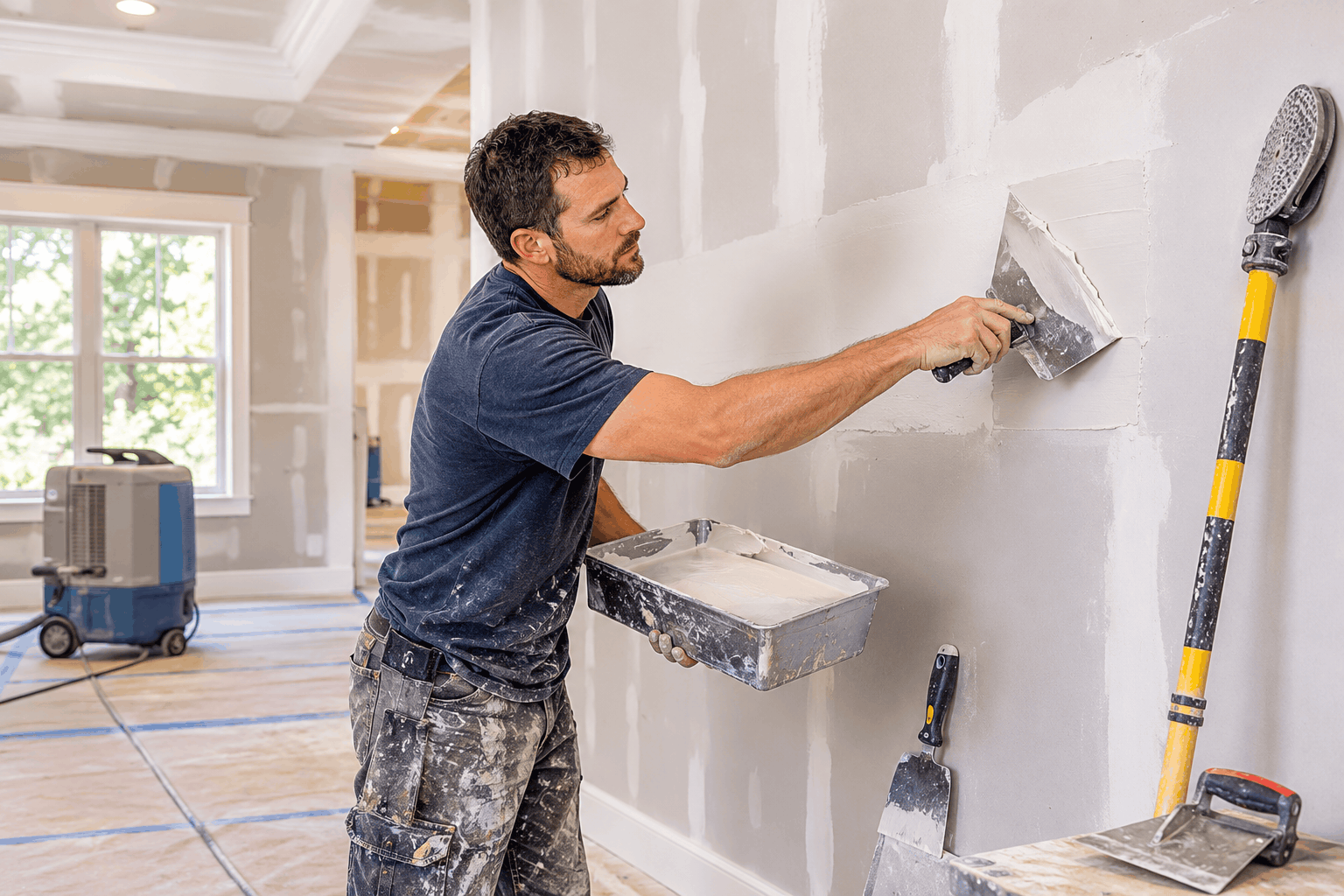
Hanging drywall gets the sheets onto the studs. Finishing hides the evidence. That includes taping the joints, applying joint compound in several coats, feathering the edges, and sanding everything until the surface looks seamless.
Small mistakes at this stage become big visual problems later. A ridge that’s barely noticeable on bare drywall can cast a clear shadow once paint goes on, especially under strong side lighting from a window.
That’s why many builders treat finishing as its own trade. Some crews only hang board, while others focus almost entirely on tape, mud, and texture.
How the Finishing Process Works
Professional finishers usually start by embedding paper or mesh tape into a first coat of joint compound along every seam. Inside corners get folded paper tape, and outside corners get metal or vinyl corner bead.
After that first coat dries, a second, wider coat goes on to build up and flatten the joint. A third coat is often added to blend the edges into the surrounding wall. Screw heads get the same treatment, with several thin passes instead of one heavy layer.
Sanding comes between coats and at the end. Experienced finishers know that less sanding is better, so they try to apply compound smoothly to start with. This approach saves time, cuts down on dust, and avoids scuffing the paper face of the drywall.
Understanding Finish Levels
The drywall industry uses a scale of finish levels, from Level 0 to Level 5. Each level describes how much taping and coating has been done.
Level 0 means no finishing at all. Level 2 is common in garages or utility areas where looks matter less. Level 4 is the typical standard for most living spaces with flat or eggshell paint.
Level 5 adds a thin skim coat over the entire surface. It’s often recommended for walls with glossy paint, ceilings under bright light, or rooms with large windows. Knowing which level fits a space helps homeowners compare quotes and set clear expectations.
Local Conditions That Affect the Work
Climate plays a bigger role in finishing than many people realize. Central North Carolina summers bring heavy humidity, which slows the drying time of joint compound. A coat that dries overnight in a cool, dry month might need much longer in July.
Rushing the next coat over damp mud can lead to cracking, shrinking, or bubbling down the road. Local finishers often adjust by using fans or dehumidifiers, or by switching to setting-type compounds that harden through a chemical reaction instead of evaporation.
Housing stock also varies across the area. Newer subdivisions tend to have large, open rooms with tall walls, while older neighborhoods may have plaster walls patched with drywall over the years. Each situation calls for a slightly different approach.
Key Benefits of Hiring a Skilled Finisher
The most obvious benefit is appearance. Smooth, consistent walls make paint look richer and rooms feel more polished. Poor finishing, on the other hand, can make even expensive paint look cheap.
Durability is another factor. Properly embedded tape and correctly applied compound resist cracking as a house settles. When taping is rushed, joints can loosen and bubble months after a project wraps up.
Time savings matter too. A seasoned finisher can work through a full room much faster than a first-time DIYer. They also tend to create far less sanding dust, which is a relief for anyone living in the home during the project.
Finally, an experienced pro can spot underlying problems early. Water stains, framing issues, or moisture in a wall cavity are easier to address before the final coat goes on.
Real-World Situations Where Finishing Comes Up
New construction and additions are the obvious examples. Once the drywall is hung, someone has to tape, coat, and sand every seam before painters arrive.
Repairs are just as common. A plumber cuts an access hole to fix a leak, an electrician opens a wall for new wiring, or a door handle punches through the drywall. Each patch needs careful blending so it disappears into the existing wall.
Many homeowners also look for drywall taping and mudding Raleigh NC services after buying an older house. Cracked seams, nail pops, and uneven past repairs are common in homes that have shifted over the decades.
Ceiling work is another frequent request. Removing an outdated popcorn texture often reveals rough joints underneath that need fresh tape and a smooth skim coat before painting.
What to Look for in a Contractor
When comparing a drywall finishing contractor Raleigh NC residents might hire, it helps to ask about the finish level included in the price. Two quotes can look very different simply because one assumes Level 4 and the other Level 5.
It’s also worth asking about dust control, drying times, and whether priming is part of the job. Photos of past work under natural light can reveal a lot about a finisher’s attention to detail.
Local repair specialists, such as Very Handy Wall and Ceiling Repairs, often note that clear communication about scope prevents most disappointments. Knowing exactly what’s included, from patching to texture matching, keeps the project on track.
DIY or Professional?
Small patches are a reasonable DIY project for patient homeowners. A few nail pops or a doorknob hole can be handled with basic tools and a bit of practice.
Larger jobs are another story. Full rooms, high ceilings, and glossy-paint walls demand a level of consistency that’s hard to achieve without experience. Many people who start with drywall taping and mudding Raleigh NC projects on their own end up calling a pro to fix uneven results.
The right choice depends on the size of the job, the room’s lighting, and how much time someone is willing to spend learning the craft.
FAQs
How long does drywall finishing take?
Most standard rooms take three to five days. That allows time for multiple coats of compound to dry, plus sanding. Humid weather can stretch the timeline.
How many coats of mud does drywall need?
Most joints need at least three coats: one to embed the tape and two to smooth and feather the seam. Higher finish levels may add a skim coat over the entire surface.
What is the difference between Level 4 and Level 5 drywall finish?
Level 4 covers joints and fasteners with three coats of compound. Level 5 adds a thin skim coat across the whole wall, creating a more uniform surface for glossy paint or strong lighting.
How much does drywall finishing cost?
Pricing usually depends on square footage, finish level, ceiling height, and repair complexity. Getting several written quotes with the finish level clearly stated makes comparisons easier.
Can drywall be finished in humid weather?
Yes, but drying times will be longer. Finishers often use dehumidifiers, fans, or setting-type compounds to keep the work on schedule and prevent cracking.