







A child who cries at drop-off, refuses to share a favourite toy or becomes frustrated when a puzzle will not fit is doing more than reacting to a difficult moment. They are learning to understand feelings, manage disappointment and navigate relationships. These lessons take time, and young children need patient guidance as they develop them.
This is why emotional intelligence deserves a place alongside language, numeracy and physical development in early education. For nursery schools in Pune, helping children recognise emotions, express their needs and respond to others can lay the groundwork for healthier relationships and more confident learning. The early years offer valuable opportunities to build these skills, often through small, everyday experiences that may appear ordinary to adults.
What Does Emotional Intelligence Mean in Early Childhood?
Emotional intelligence is the ability to recognise emotions, understand what may cause them and respond in ways that support oneself and others. For a young child, this does not mean remaining calm at all times or behaving perfectly. It means gradually learning what to do when feelings become difficult to manage.
A three-year-old may know that they are angry but have no idea how to explain why. Another child might withdraw when a classmate refuses to play. With guidance, both can learn to identify their feelings, communicate their needs and consider another person’s perspective.
Four connected abilities help build emotional intelligence:
- Emotional awareness: Recognising feelings such as happiness, sadness, anger, fear and excitement.
- Emotional regulation: Learning simple ways to manage strong reactions, with adult support.
- Empathy: Beginning to recognise that other people have feelings and needs of their own.
- Social communication: Expressing needs, listening to others and learning to resolve small disagreements.
These abilities develop gradually. Children also differ in temperament, language development and their comfort with unfamiliar situations. Effective early education respects these differences instead of expecting every child to respond in the same way.
Why the Early Years Matter
Young children learn about emotions through experience. They watch how adults respond to frustration, notice how friends behave during play and gradually connect feelings with words and actions.
A predictable, supportive environment makes this learning easier. When children feel safe enough to ask for help or admit that something upset them, they have more opportunities to practise emotional skills.
The benefits can extend across several areas of development.
Greater Readiness to Learn
A child who receives help managing frustration may find it easier to return to a challenging activity. Emotional support can help children remain engaged when learning requires patience, repetition or effort.
Healthier Social Relationships
Sharing, taking turns and negotiating during play are learned skills. Children need opportunities to practise them, along with guidance when disagreements arise.
Growing Independence
Recognising hunger, tiredness, worry or discomfort helps children communicate their needs. Over time, they can begin choosing appropriate responses, such as asking for assistance or taking a quiet break.
A Stronger Sense of Confidence
Children build confidence when adults acknowledge their efforts and help them work through mistakes. They begin to understand that struggling with a task does not mean they are incapable of completing it.
How Nursery Classrooms Can Build Emotional Intelligence
Emotional development rarely happens through a single lesson. It grows through repeated interactions, familiar routines and thoughtful teaching.
1. Teaching Children to Name Their Feelings
Young children may express emotions through behaviour before they can explain them in words. Teachers can help by naming feelings without judging the child.
For example, saying, “You seem disappointed because the game has ended,” gives a child language for an experience they may not yet understand. It also opens the door to a conversation about what happens next.
Picture books, emotion cards, puppets and simple storytelling activities can make this practice engaging. Children can discuss how a character might feel and suggest what could help.
2. Using Play to Practise Social Skills
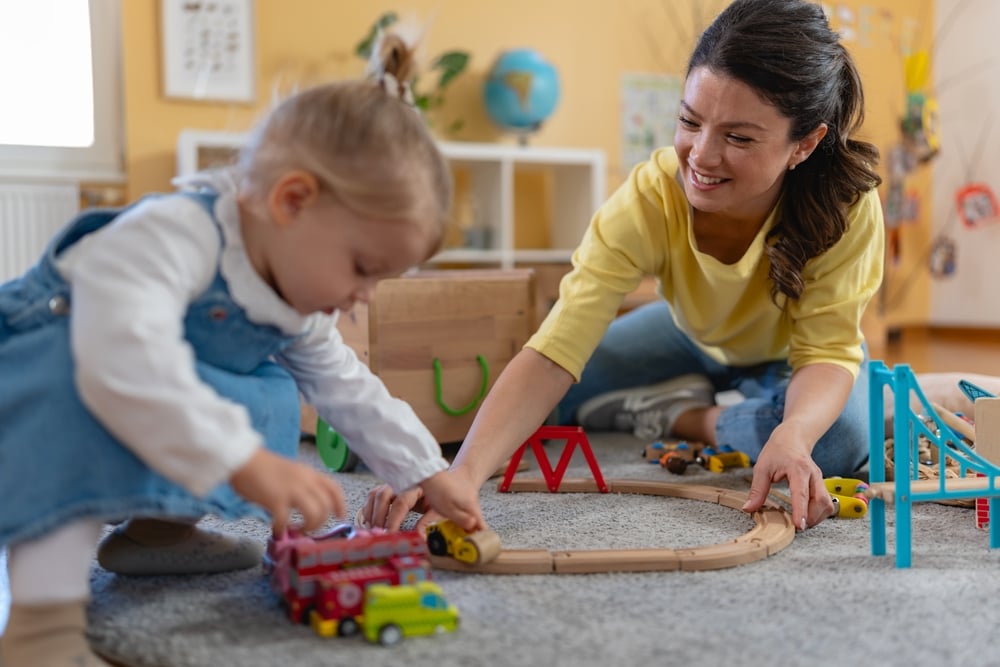
Play provides a natural setting for learning cooperation. Building a tower together, pretending to run a shop or completing a group puzzle requires children to share materials, wait for a turn and adjust when someone has a different idea.
Teachers can guide these interactions without solving every disagreement immediately. A question such as, “How could you both use the blocks?” encourages children to consider possible solutions.
3. Establishing Predictable Routines
Transitions can be difficult for young children. Moving from free play to lunch, separating from a parent or preparing to go home may bring unexpected feelings.
Visual schedules, advance reminders and familiar routines help children understand what comes next. Predictability can reduce uncertainty and give children more confidence in managing everyday changes.
4. Modelling Calm Responses
Children pay attention to how adults handle difficult moments. A teacher who listens patiently, speaks respectfully and explains a boundary demonstrates emotional regulation in practice.
This does not mean avoiding limits. If a child hits another pupil, the adult should intervene clearly, protect everyone involved and explain that hurting others is unacceptable. The child’s feelings can be acknowledged while the behaviour is corrected.
Emotional Intelligence Across Different Learning Activities
Emotional learning can be incorporated into the wider curriculum rather than treated as a separate subject.
| Activity | Emotional skill developed | Example |
| Storytelling | Empathy | Discussing why a character feels left out |
| Group art | Cooperation | Sharing materials and respecting different ideas |
| Music and movement | Emotional expression | Using rhythm and movement to express different moods |
| Outdoor play | Resilience | Trying again after a physical challenge |
| Role-play | Communication | Practising how to ask for help or join a game |
For families comparing preschools in Pune, it is useful to ask how these experiences fit into the daily programme. A well-planned activity should have a clear developmental purpose, even when children experience it as play.
The Role of Parents in Emotional Development
Children benefit when the adults around them respond to feelings with broadly consistent messages. Schools and families can support one another by sharing observations about a child’s behaviour, routines and emerging needs.
Parents can reinforce emotional learning at home through a few practical habits:
- Ask open questions about the child’s day, such as what made them happy or frustrated.
- Acknowledge feelings without immediately dismissing them or trying to fix everything.
- Demonstrate simple coping strategies, including taking slow breaths or asking for help.
- Praise considerate actions, persistence and honest communication.
- Allow children manageable opportunities to make choices and solve small problems.
It is also important to avoid labelling a child as naughty, shy or difficult based on a single behaviour. A child who refuses to join a group may need more time to feel comfortable. Another who becomes upset easily may be tired, overwhelmed or struggling to communicate.
Preschools in Pune that maintain open communication with families can help adults recognise patterns and respond more thoughtfully.
What Should Parents Look for When Choosing a Nursery School?
When assessing an early education setting, parents should observe how adults interact with children, particularly during moments of conflict or distress.
Useful questions include:
- Do teachers listen when children express discomfort or frustration?
- Are children encouraged to communicate their needs?
- How are disagreements and challenging behaviours handled?
- Do daily activities provide opportunities for cooperation and independent choices?
- Does the school maintain regular communication with parents about development?
Wellington College Pune places importance on holistic education, wellbeing and the development of personal values. These principles offer a useful framework for considering how academic foundations and personal growth can develop together from the earliest years.
Conclusion
Emotional intelligence develops through everyday moments: a shared toy, a difficult goodbye, an unsuccessful attempt at a task or a kind response to a classmate. When adults guide these experiences with patience and consistency, children begin building skills that support learning, relationships and independence.
For families evaluating nursery schools in Pune, emotional development deserves the same careful consideration as classroom activities and academic foundations. The best international schools in Pune recognise that preparing children for the future involves nurturing their ability to understand themselves, care about others and respond thoughtfully to the world around them.