





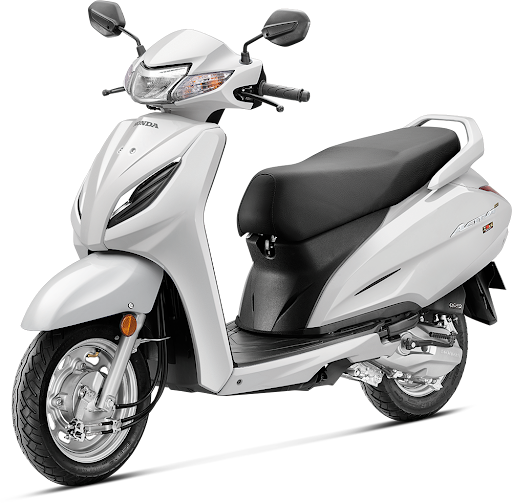
A familiar scooter can be an easy choice, but familiarity alone does not establish which model is best for your journey. The Honda Activa 6G name remains widely used for the 110 cc Activa, now listed in Honda’s current range as the Activa 110. Compare its everyday strengths with the Activa 125 and Dio scooters before choosing a Honda scooty for Indian roads.
Why the Activa remains a useful reference point
The Activa 110 follows a straightforward formula: automatic transmission, practical riding posture and an engine designed for regular urban trips. It suits riders who value predictable responses over aggressive styling. A flat, accessible floorboard area and familiar controls can help people sharing a scooter in one household. Its modest engine is generally better matched to routine commuting than sustained high-speed riding. The best comparison is not simply the engine size on paper but how easily you can carry bags, negotiate traffic and park at home.
Activa 110 and Activa 125 serve different priorities
Both scooters use the same broad automatic-scooter concept, but the Activa 125 offers a larger-displacement engine and may have a different selection of convenience features depending on the current variant. Riders travelling frequently with a pillion or using open roads may prefer its stronger response. The 110 may appeal where purchase cost, simplicity and city manoeuvrability lead the decision. Compare the exact version offered to you: instruments, lighting, starting system and braking arrangements can differ. Do not assume a feature seen on a premium brochure applies to the entry variant.
The Dio range offers a different character
The Dio 110 targets riders attracted to sharper styling and a more youthful presentation. The Dio 125 extends that choice with a larger engine. These models are still practical automatic scooters, not substitutes for motorcycles built for high-speed touring. Differences in seating shape, storage access and ride feel may matter more than a small change in advertised power. Sit on each scooter and check whether the handlebar clears your knees when turning fully. A short ride with your usual backpack can reveal comfort differences that a showroom display cannot.
What to inspect on a busy commuting day
A daily scooter should make repeated stops easy. Check how much effort the stand requires, how smoothly the throttle responds when pulling away and whether the mirrors show traffic clearly. Test the brakes without attempting an emergency manoeuvre on public roads. If your route includes rough junctions, assess the suspension at a safe speed. Rather than guessing the storage capacity, try placing your regular helmet or work bag beneath the seat. Storage capacity is useful only when the shape of the available space accommodates your belongings.
Understand fuel economy without chasing one figure
A claimed fuel-efficiency number comes from a defined test method and does not guarantee the same result in traffic. Rider weight, acceleration habits, short journeys, tyre pressure and maintenance can all change fuel use. A 125 cc scooter is not automatically inefficient, just as a 110 cc scooter does not always deliver its best mileage in stop-start conditions. Compare owner expectations conservatively and track actual refuelling over several tanks after purchase. Regular servicing and correct tyre pressure help maintain predictable performance across the year.
Compare ownership costs beyond the showroom quote
Request a city-specific ex-showroom quotation that names the exact version being offered. Then consider insurance, registration, scheduled service items and the eventual cost of tyres and batteries. Availability of nearby authorised support matters when the scooter is shared by family members. Features such as keyless operation, connected functions or special editions may add convenience but can also affect what needs repairing later. Look up the service schedule and ask the workshop to explain which maintenance items are routine and which are charged separately.
Fit the scooter to every person who will use it
If two people will share the vehicle, ask both to practise getting on, reaching the controls and balancing it when stationary. Height alone is not enough to predict comfort because seat width and body proportions matter. Assess pillion access and grab-rail position as well. A rider who regularly navigates narrow parking spaces may value low-speed control more than extra acceleration. A family travelling together should pay closer attention to suspension comfort and combined weight. Select a model that accommodates the least experienced regular rider, not merely the most confident one.
Choose the Honda scooter by the job it must do
The Activa 110 remains a sensible starting point for simple urban travel. Consider the Activa 125 when stronger response and its particular equipment appeal, or a Dio if styling and rider fit suit you better. Take comparable test rides and obtain written variant quotations. The best Honda scooty is the one that makes repeated daily journeys easy while staying within a sensible purchase and maintenance budget.