




The early years leave a lasting mark on how a child learns, plays, and sees the world. Long before formal exams begin, the habits, friendships, and curiosity built in preschool quietly shape what comes next. For parents, picking the right place can feel like a big decision. This guide offers a general overview of what to look for.
Why the Early Years Matter
Children learn faster in their first five years than at almost any other time. Language, social skills, motor control, and emotional awareness all grow rapidly, and everyday experiences feed that growth. A warm, stimulating setting helps children feel safe enough to explore. Every child develops at their own pace, so the goal is steady support rather than pressure to hit a particular milestone.
What a Great Preschool Offers
Parents often start by asking what separates one preschool from another. The best preschool in Vadodara welcomes every child with caring, well-trained teachers, bright and safe classrooms, and a joyful routine that turns curiosity into confidence, so little ones look forward to every morning. Parents gain peace of mind knowing their child is happy, secure, and learning through play.
Learning Through Play
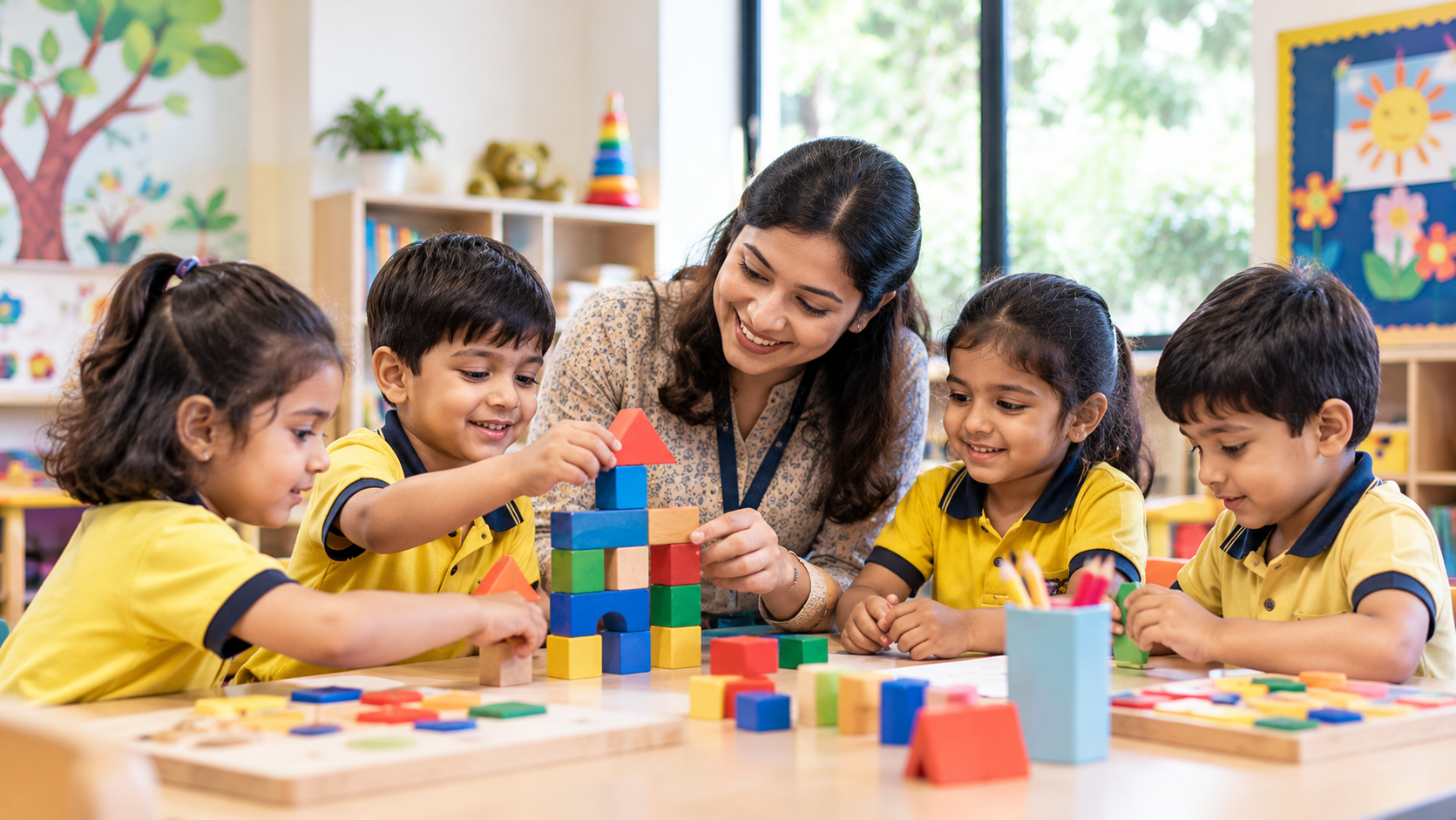
Play is how young children make sense of the world. Building blocks teach balance and planning, pretend play builds language and empathy, and sand and water games develop coordination. A good preschool blends free play with gentle structure, so children enjoy themselves while quietly practicing skills they will use in school. Look for a classroom where laughter is part of the lesson.
Building Language and Early Literacy
Songs, rhymes, picture books, and storytelling lay the foundation for reading. Teachers who talk with children, ask open questions, and listen patiently help vocabulary grow naturally. Many families in Gujarat also value exposure to more than one language, which can be introduced gently through stories and conversation. Reading aloud at home reinforces what children learn at school.
Social and Emotional Growth
Sharing, taking turns, and handling disappointment are skills that take practice. Preschool offers a safe space to learn alongside other children. Teachers who guide with kindness help little ones name their feelings and solve small conflicts on their own. These early lessons in empathy and cooperation often matter as much as letters and numbers later in life.
Early Numbers and Thinking Skills
Counting snacks, sorting colors, and matching shapes introduce math without worksheets. Puzzles and simple experiments build problem-solving and attention. Activity-based early childhood education keeps lessons hands-on and joyful, helping children develop focus and reasoning at a comfortable pace. Children respond best when learning feels like discovery instead of drills.
Safety and a Caring Environment
Safety comes first for every parent. Look for secure entry points, clean washrooms, child-friendly furniture, and attentive supervision at all times. Ask about staff training, teacher-to-child ratios, and how emergencies and minor injuries are handled. A well-run school will answer these questions openly, and visiting during a normal school day shows you far more than a brochure.
Daily Routine and Healthy Habits
Predictable routines help young children feel secure. A good day mixes play, learning, rest, snacks, and outdoor time. Cheerful play-based learning keeps energy high while teaching children to wash hands, tidy up, and follow simple steps on their own. Ask how the school handles nap time, meals, and any food allergies your child may have.
Partnering With Parents
Strong schools treat parents as partners. Regular updates, open conversations, and invitations to events help families stay connected to their child’s progress. Ask how teachers share feedback and how they handle concerns. When home and school work together, children feel supported in both places and settle in more easily, especially during the first few weeks.
Preparing for Primary School
Preschool builds the habits that make the next step easier: listening, following instructions, sitting for short activities, and getting along with classmates. Families often think about long-term plans early, including which board and curriculum they would like to follow later. Children who feel confident and curious tend to adjust to formal schooling more smoothly, though every child is different.
Planning the Road Ahead
Many parents like to look beyond preschool when making this choice. A top CBSE school in Vadodara offers a smooth path from the early years onward, with a nurturing atmosphere, dedicated teachers, and a curriculum that grows with the child, so the transition to primary classes feels natural and unhurried. Continuity helps children keep friendships and routines they already love.
Questions to Ask Before You Enroll
Come prepared with a few questions. How are teachers trained and supported? What does a typical day look like? How is safety managed? How do you communicate with parents? What is the fee structure, and what does it cover? Clear, confident answers show a school that values families. Visiting in person and speaking with other parents adds useful perspective.
Final Thoughts
The right preschool gives a child a happy start, a love of learning, and the confidence to try new things. With careful research and open conversation, parents can find a place where their child feels safe, curious, and cared for. This article offers general information only, so please confirm fees, curriculum, and admission details directly with the school.