






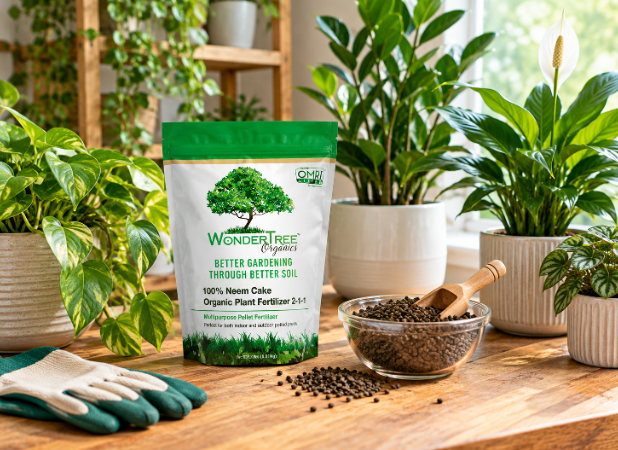
Indoor plants depend on more than sunlight and water to maintain healthy growth. Because they grow in a limited amount of potting media, nutrients can gradually become less available over time. This is where choosing an appropriate fertilizer can make a difference. An organic enriched indoor plant fertilizer can provide nutrients while supporting a more considered approach to plant care. However, fertilizer should not be treated as a cure for every plant problem. Understanding nutrient needs, application frequency, soil conditions, and plant growth stages can help gardeners use fertilizer effectively without creating unnecessary stress for their houseplants.
Why Do Indoor Plants Need Fertilizer?
Potting soil contains nutrients, but those nutrients are not unlimited. Each time a plant grows, it uses available elements to support leaves, roots, stems, and other plant processes. Regular watering can also contribute to nutrient loss as water moves through the growing medium.
Fertilization helps replenish nutrients when the existing supply becomes insufficient. Indoor plants may benefit particularly from feeding during periods of active growth, although requirements vary according to plant species, growing conditions, and the type of potting medium being used.
Before adding fertilizer, it is useful to consider whether the plant actually shows signs of nutrient deficiency rather than assuming slow growth automatically means it needs more nutrients.
What Does “Enriched” Mean in Plant Fertilizer?
Enriched fertilizers are formulated to provide a combination of nutrients rather than relying on a single element. Nitrogen, phosphorus, and potassium are commonly represented by the N-P-K numbers displayed on fertilizer packaging.
Each nutrient has different functions. Nitrogen is associated with vegetative growth, phosphorus contributes to root development and reproductive processes, and potassium supports several physiological functions within plants.
Some enriched formulas are designed around specific plant categories or growth requirements. The current indoor fertilizer collection includes formulas with targeted N-P-K ratios, illustrating how nutrient compositions can differ depending on the intended application.
How Should You Choose a Formula?
There is no single fertilizer formula that is appropriate for every indoor plant. A leafy houseplant may have different nutritional requirements from a flowering plant, for example.
Start by identifying the plant species and understanding its normal growth pattern. Then consider the fertilizer’s nutrient ratio, application instructions, and whether its ingredients are suitable for your preferred gardening approach.
An organic enriched indoor plant fertilizer can be considered when gardeners want a nutrient source that fits within an organic-oriented plant-care routine. The product formulation should still be evaluated carefully rather than choosing a fertilizer solely because it is labelled organic.
How Often Should Indoor Plants Be Fertilized?
More fertilizer does not necessarily mean faster or healthier growth. Applying excessive amounts can increase the concentration of soluble salts around the roots, potentially causing stress or damaging sensitive plants.
Follow the application directions provided for the specific fertilizer and adjust your approach according to the plant’s growth stage. Plants actively producing new growth may require more regular feeding than plants experiencing dormancy.
Environmental factors also matter. Light levels, temperature, watering habits, pot size, and growing medium can all influence how quickly a plant uses available nutrients.
Can Soil and Fertilizer Work Together?
Fertilizer works within the broader growing environment, so soil condition should not be overlooked. Healthy roots need adequate air, moisture, drainage, and access to nutrients.
If a plant is struggling because of compacted soil, poor drainage, root damage, insufficient light, or inconsistent watering, adding fertilizer alone may not solve the underlying issue.
Before feeding, check the condition of the growing medium and roots where appropriate. Addressing basic growing conditions first can create a better foundation for effective nutrient management.
Conclusion
Choosing fertilizer for houseplants requires attention to the plant’s species, growth stage, growing medium, and existing care routine. An organic enriched plant fertilizer may be worth considering for gardeners who want to incorporate organic nutrient sources into their overall indoor plant-care routine while still paying close attention to individual plant requirements.