





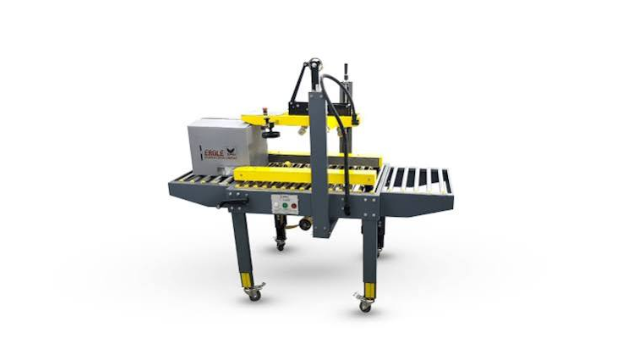
Packaging equipment plays an important role in manufacturing, warehousing, distribution, and fulfillment operations. When packaging machinery is running efficiently, products can move through wrapping, sealing, strapping, conveying, and other processes with fewer interruptions. When an individual component wears out or fails, however, even a sophisticated machine can experience downtime.
Understanding the equipment and its replacement components can therefore be an important part of maintenance planning. Eagle packaging equipment is represented across several types of industrial packaging machinery, and replacement components are available for many of these systems. The Machine Parts Toolbox catalog currently includes more than 1,000 Eagle-related listings, ranging from bearings and blades to assemblies, machine frames, electrical components, and manuals.
What Is Eagle Packaging Machinery?
Eagle Packaging Machinery refers to packaging equipment used for tasks such as stretch wrapping, strapping, sealing, conveying, and related material-handling processes.
Different machines perform different functions within a packaging line. A stretch wrapper, for example, applies stretch film around a load, while a carton sealer closes boxes using tape or another sealing method. Strapping equipment secures products or loads with bands of packaging material.
Because these machines contain many moving and electrical components, maintenance requires more than simply checking whether the equipment switches on. Individual bearings, belts, chains, sensors, blades, switches, rollers, and fasteners can all contribute to overall machine operation.
Common Eagle Equipment Categories
The exact equipment used by a facility depends on its packaging requirements, product dimensions, production volume, and automation level.
Stretch Wrappers
Stretch wrappers apply film around pallets or other loads to help secure products for handling and transportation.
Machine Parts Toolbox lists Eagle stretch-wrapper documentation for models including the Eagle 2000 Series. The associated manuals include parts lists, diagrams, preventative-maintenance information, and assembly details.
Components within these machines can include turntables, idler wheels, bearings, limit switches, chains, tensioning components, and other mechanical hardware.
Strapping Machines
Strapping equipment is designed to apply and tension packaging straps around products or loads.
Eagle listings include semi-automatic strapping equipment as well as related components such as blades, chains, tensioners, and other mechanical parts.
Regular inspection of wear components can help maintenance teams identify problems before they affect the wider packaging process.
Carton Sealers
Carton sealers automate the process of closing boxes, commonly using pressure-sensitive tape.
Machine Parts Toolbox currently lists Eagle T100, T200, and T210 carton-sealer manuals and parts documentation.
Depending on the equipment, maintenance may involve inspecting tape heads, blades, rollers, bearings, adjustment hardware, and other components involved in box sealing.
Understanding the Parts Inside Packaging Machines
Industrial packaging equipment contains many parts of machines, each serving a particular mechanical, electrical, or structural function.
Some components are relatively simple, while others are complete assemblies that combine multiple individual parts.
Bearings and Bushings
Bearings reduce friction and allow shafts, rollers, wheels, and other moving components to operate smoothly.
The Eagle catalog includes several bearing types, bearing bases, housings, brackets, bushings, and bearing seats.
Because bearings experience repeated mechanical movement, unusual noise, resistance, vibration, or visible wear can indicate that inspection is warranted.
Belts and Chains
Belts and chains transfer movement between different machine components. Their condition can affect timing, speed, and material movement.
Eagle listings include chain tensioners, chain wheels, bottom chains, clamping-arm chains, and prestretch-related chains.
Correct tension and alignment are important considerations when maintaining these components.
Blades and Cutting Components
Some packaging machines use blades or cutting tools to separate tape, film, strapping, or other materials.
The current Eagle catalog includes 2-inch and 3-inch blades among its listed components.
Cutting components are wear items, meaning their condition can influence cutting quality and machine performance.
Sensors and Switches
Automated packaging equipment relies on sensors and switches to detect positions, movement, products, and machine conditions.
Examples in the Eagle catalog include limit switches and other electrical or control-related components.
A sensor problem may sometimes appear as a larger machine malfunction because the equipment is unable to detect the expected operating condition.
Why Correct Part Identification Matters
Replacing a worn component is not simply a matter of finding something that looks similar.
Packaging machines can contain components with very similar physical appearances but different dimensions, mounting arrangements, materials, electrical specifications, or machine applications.
A proper identification process should consider:
- Machine brand
- Machine model
- Manufacturer part number
- Existing component number
- Dimensions
- Electrical specifications where applicable
- Assembly position
- Machine manual
- Parts diagram
- Equipment revision or configuration
Machine Parts Toolbox’s Eagle product pages identify manufacturer model information and part numbers for individual components. For example, its listing for an Eagle supporting cover identifies the manufacturer part number as PJ306200 and identifies the machine category as a stretch wrapper.
Using Parts Manuals During Maintenance
Parts manuals can be valuable resources when identifying components.
A detailed manual may include exploded diagrams, spare-parts lists, assembly information, maintenance recommendations, and individual component references. This can make it easier to identify a part before ordering a replacement.
The Eagle 2000 Series manuals listed by Machine Parts Toolbox include parts diagrams, spare-parts lists, general assembly information, and preventative-maintenance information.
For older machinery, having access to the correct manual can be particularly useful when the original component label is difficult to read or when several visually similar parts exist.
Signs That a Component May Need Attention
Maintenance teams can monitor equipment for changes that may indicate component wear.
Potential warning signs include:
- Unusual vibration
- Grinding or rattling sounds
- Inconsistent machine movement
- Difficulty maintaining tension
- Irregular film or strap application
- Poor cutting performance
- Repeated sensor faults
- Loose hardware
- Excessive heat
- Visible cracks or deformation
- Increased frequency of machine stoppages
Not every symptom indicates a failed component. Troubleshooting should follow the equipment manufacturer’s maintenance procedures and appropriate safety practices.
Preventive Maintenance vs. Reactive Repairs
Reactive maintenance occurs after a machine problem has already developed. Preventive maintenance attempts to identify wear and service equipment before a failure causes significant disruption.
A preventive-maintenance program may include scheduled inspection, cleaning, lubrication where specified, adjustment, replacement of wear components, and documentation.
For packaging operations, this approach can be particularly valuable because a small component failure can interrupt an entire production line.
The Eagle 2000 Series manuals listed by Machine Parts Toolbox specifically include a preventative-maintenance chart and checklist, demonstrating the importance of planned maintenance for these systems.
Keeping Replacement Parts Organized
A well-organized spare-parts system can make maintenance more efficient.
Facilities may benefit from maintaining records that include:
- Part number
- Equipment model
- Component description
- Quantity on hand
- Minimum stock level
- Storage location
- Date purchased
- Compatible machine
- Supplier information
This information can reduce the time required to identify a replacement when a machine needs attention.
It can also help maintenance teams distinguish between frequently replaced wear components and parts that are rarely needed but critical when a failure occurs.
Supporting Long-Term Packaging Equipment Reliability
Maintaining Eagle packaging equipment requires attention to the complete machine rather than a single component. Mechanical parts, electrical controls, structural components, sensors, and consumable or wear items all contribute to reliable operation.
Machine Parts Toolbox describes its inventory as covering replacement and aftermarket parts across major equipment brands and categories, with parts organized by brand and component type.
For maintenance teams, accurate part identification, access to equipment documentation, scheduled inspections, and appropriate replacement planning can all contribute to more organized machinery maintenance.
Conclusion
Industrial packaging equipment depends on numerous interconnected components, and understanding those parts of machines can make maintenance planning more systematic. Bearings, chains, belts, blades, sensors, switches, rollers, frames, and assemblies can each play a different role in the operation of packaging machinery. For facilities using Eagle packaging equipment, identifying the correct machine model and manufacturer part number is an important first step when investigating replacement components. Using equipment manuals, parts diagrams, and accurate component information can help maintenance teams make informed decisions and keep packaging systems operating as intended.