






The modern homeowner is increasingly conscious of both their environmental footprint and their rising energy costs. As renewable energy sources like solar become more accessible, the missing piece of the puzzle for many has been reliable, efficient energy storage. Enter the Powerwall Battery. This innovative technology has revolutionized how we think about residential energy, offering a pathway to energy independence, resilience against grid outages, and significant long-term savings.
In this comprehensive guide, we will delve deep into the world of the Powerwall battery, exploring what it is, how it functions, its myriad benefits, and crucial considerations for installation. Whether you are already generating solar power or simply looking to take control of your energy consumption, understanding the role of a home battery is essential.
What is a Powerwall Battery?
At its core, a Powerwall battery is a rechargeable home energy storage system that uses lithium-ion technology. It is designed to store electricity for later use. This electricity can come from a variety of sources, most commonly a residential solar panel system, but also from the electrical grid during off-peak hours when electricity rates are lower.
The primary purpose of a Powerwall is to capture excess energy generated during the day—when solar production is at its peak but household consumption might be low and save it for use in the evening, overnight, or on cloudy days. This process, often called self-consumption, maximizes the value of your solar investment by reducing or eliminating the need to purchase expensive grid power during high-demand periods.
Furthermore, a Powerwall is not just for storing solar energy. Many models are designed to provide backup power during a grid outage. This capability ensures that essential appliances, such as lights, refrigerators, and communication devices, remain operational even when the neighborhood goes dark.
How Does a Powerwall Battery Work?
The operation of a Powerwall battery is governed by sophisticated software and an integrated inverter, which converts the stored direct current (DC) electricity into the alternating current (AC) used by most home appliances. The system operates in several key modes:
Solar Self-Consumption: This is the most common mode. During the day, solar panels generate electricity. The home uses what it needs, and the excess is diverted to charge the Powerwall. Once the battery is fully charged, any remaining surplus is typically sent back to the grid (depending on local net metering policies). In the evening, when the sun sets and solar production ceases, the home draws its power from the Powerwall.
Backup Power: In the event of a grid outage, the Powerwall instantly disconnects from the grid and seamlessly transitions to supplying power to the home. This switch is so fast that most homeowners do not even notice the interruption. The duration of the backup depends on the critical loads being powered and the state of charge of the battery.
Time-Based Control (Load Shifting): For homeowners not on solar, or on utility plans with Time-of-Use (TOU) rates, the Powerwall can be programmed to charge from the grid during off-peak hours (when electricity is cheapest) and discharge during peak hours (when electricity is most expensive). This “load shifting” strategy can result in substantial savings on monthly utility bills.
The entire system is managed via a user-friendly mobile app, allowing homeowners to monitor energy production, battery levels, and grid status in real-time, and even customize the operating modes to prioritize savings or backup reserve.
Key Benefits of Installing a Powerwall Battery
The decision to install a Powerwall battery comes with a host of compelling benefits that go beyond simple convenience.
Achieving Energy Independence
The most significant advantage of a home battery is the ability to rely less on the traditional utility grid. By storing your own solar energy, you become less susceptible to rising energy costs and utility rate hikes. You are, in effect, your own micro-utility, generating and consuming your own clean power.
Enhanced Energy Resilience and Backup
Grid reliability is becoming a growing concern in many regions due to extreme weather events and aging infrastructure. A Powerwall provides a reliable and automatic source of backup power, offering peace of mind and security for your family. Unlike noisy and polluting gasoline generators, the Powerwall operates silently, requires no fuel, and can provide power for extended periods when paired with solar.
Maximizing Solar Investment
Without storage, much of the solar energy you produce during the day is exported to the grid, often at a rate lower than what you pay to import power at night. A Powerwall allows you to capture this value. By storing this energy, you avoid purchasing grid power, effectively increasing the financial return on your solar panel installation.
Environmental Impact
Using a Powerwall allows you to maximize the use of clean, renewable solar energy, reducing your reliance on fossil fuels. Even if you charge the battery from the grid during off-peak times, you are often utilizing energy from cleaner, more efficient sources than the “peaker plants” that run during high-demand times.
Scalability and Modularity
Most Powerwall systems are modular, meaning you can install more than one battery to increase your storage capacity and power output. This scalability allows the system to grow with your energy needs, whether you are adding an electric vehicle, a heat pump, or simply want more backup capacity.
Powerwall Battery: Considerations and Costs
Before investing in a Powerwall, there are several important factors to consider to ensure the system meets your expectations.
Cost and Return on Investment
The upfront cost of a Powerwall battery is significant, including both the hardware and professional installation. While costs have decreased over time, it is a major investment. However, this cost should be viewed in the context of long-term savings. The return on investment depends on several variables:
Your Electricity Rate Structure: Homeowners with high Time-of-Use rates or no net metering benefit the most financially.
Local Incentives: Many federal, state, and local governments offer tax credits, rebates, or other incentives that can significantly reduce the net cost of the battery.
Energy Consumption Patterns: The more energy you use, particularly during peak hours, the greater the potential for savings.
Energy Capacity and Power Rating
It is crucial to understand the difference between capacity and power.
Capacity (kWh): This represents the total amount of energy the battery can store. A larger capacity means you can run your home for a longer period on a single charge.
Power Rating (kW): This indicates how much electricity the battery can deliver at any given moment. A higher power rating allows you to run more appliances simultaneously (e.g., an air conditioner and an oven).
Selecting the right size requires an analysis of your daily energy usage and your goals for backup power.
Installation Requirements
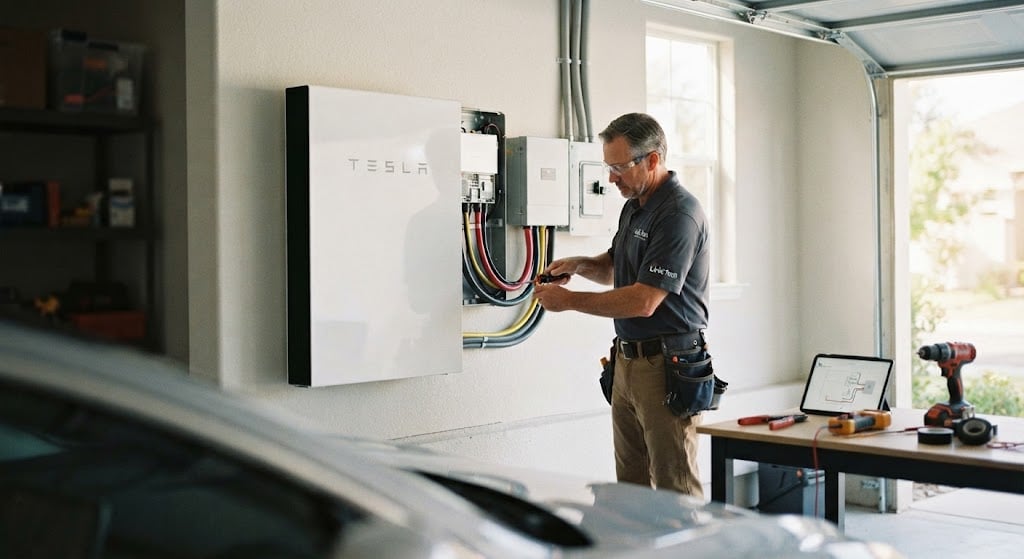
A Powerwall is not a DIY project. It requires professional installation by a certified electrician to ensure safety and compliance with electrical codes. The installation involves integrating the battery with your existing solar inverter, your home’s electrical panel, and the Internet for monitoring software.
Lifespan and Warranty
Powerwall batteries are built to last. Most manufacturers offer a robust warranty (typically 10 years) that guarantees a certain level of performance and capacity retention over the warranty period. This provides assurance that the battery will continue to be a valuable asset for years to come.
The Future of Home Energy with Linio Tech
The transition to a sustainable, decentralized energy grid is well underway. A Powerwall battery is not merely an accessory to a solar system; it is a foundational element of the modern, intelligent home. It represents control, security, and a commitment to a cleaner future.
As the technology continues to evolve, we can expect even greater integration with smart home devices and electric vehicles, further optimizing energy use and reducing costs. At Linio Tech, we are dedicated to guiding our customers through this energy transition. We believe that every home deserves to be powered by intelligent, reliable, and sustainable solutions. By choosing a Powerwall battery and partnering with Linio Tech, you are not just storing energy; you are taking a significant step toward a smarter, more independent, and resilient way of life.