



Water can cause serious damage to buildings and infrastructure. It can enter through cracks, joints, foundations, roofs, tunnels, and other exposed areas. Over time, moisture can weaken surfaces and increase maintenance costs. Therefore, a reliable Waterproofing Geomembrane can help control water movement and protect important structures.
A geomembrane creates a low-permeability barrier against water. PVC geomembranes are flexible and can suit many waterproofing applications. They can be used in tunnels, roofs, basements, foundations, reservoirs, canals, dams, ponds, and other structures.
The right membrane is only part of a successful waterproofing system. Proper surface preparation, welding, detailing, testing, and protection also play an important role.
What Is a Waterproofing Geomembrane?
A Waterproofing Geomembrane is a flexible sheet designed to control the movement of water and other liquids. It forms a barrier between the protected structure and moisture from the surrounding environment.
PVC geomembranes are commonly used for waterproofing and seepage control. They can be joined through suitable thermal welding methods. This process helps create a continuous waterproof layer.
The required membrane type depends on the application. Project designers should consider thickness, mechanical properties, exposure, substrate conditions, and applicable standards before selecting a product.
Why Use Geomembrane for Waterproofing?
Traditional waterproofing systems can face problems when structures experience movement, water pressure, or repeated weather exposure. A flexible geomembrane can provide an alternative solution for suitable applications.
The membrane can cover large areas and create a continuous barrier. In addition, welded seams can reduce weak points when installers use proper welding and testing procedures.
PVC geomembranes can also adapt to suitable surface profiles. This flexibility makes them useful for many complex infrastructure projects.
However, no waterproofing material works without proper installation. Therefore, the complete system should receive careful planning.
PVC Waterproofing Geomembrane
A PVC Geomembrane is made from flexible polymeric material. It provides a low-permeability barrier that can help control water and liquid movement.
Dr. Millars states that its PVC geomembranes are used for waterproofing and seepage control in concrete structures, building roofs, foundations, basements, tunnels, underpasses, reservoirs, water bodies, and canals. The company lists commonly supplied thicknesses of 1.5 mm and 2.00 mm.
The required thickness should always follow the project specification. Thicker does not automatically mean better for every application.
Engineers should also review tensile strength, elongation, tear resistance, puncture resistance, chemical resistance, and other relevant properties.
Waterproofing Geomembrane for Tunnels
Tunnels often face groundwater pressure and moisture from surrounding soil. Water can enter through construction joints, cracks, and other vulnerable areas.
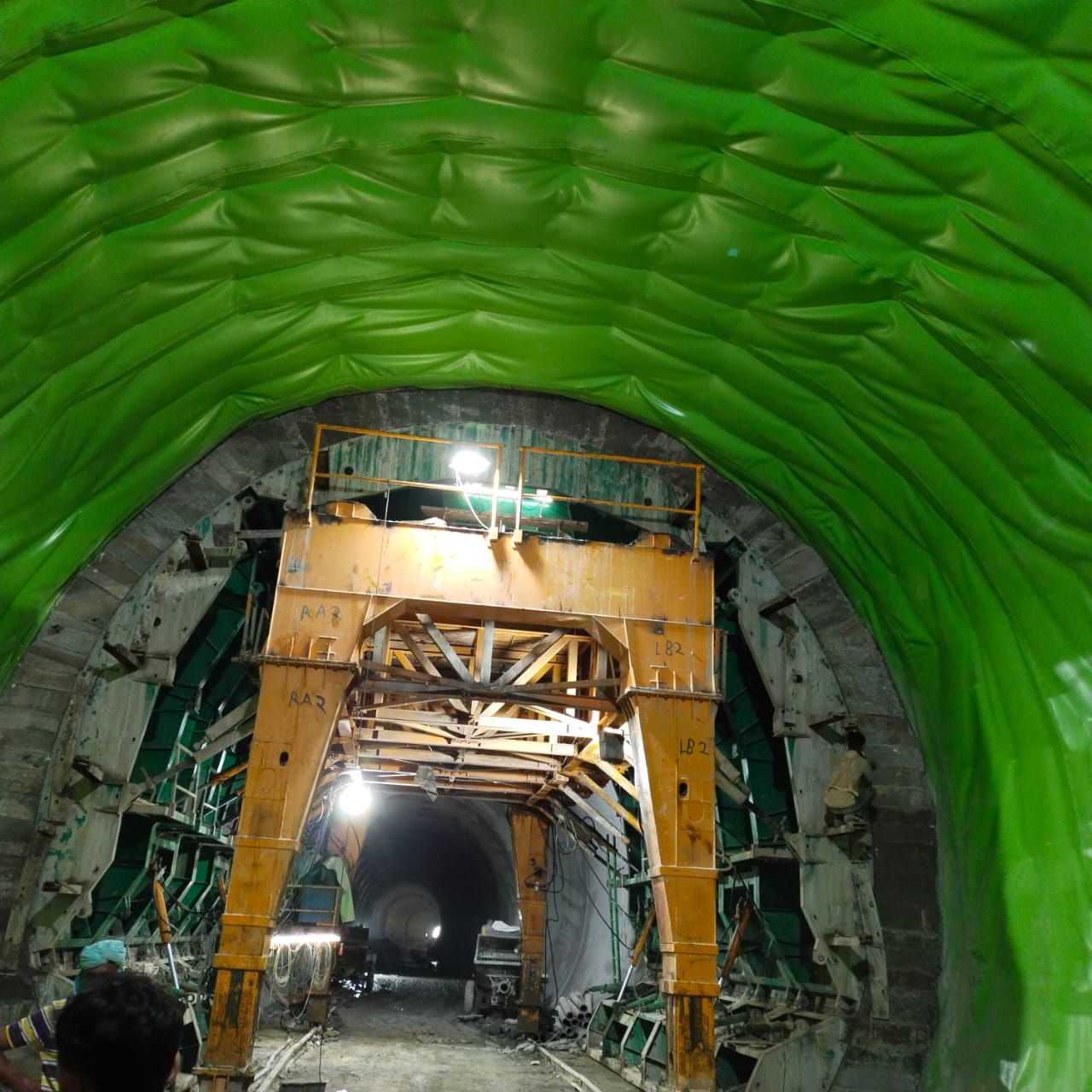
A Waterproofing Geomembrane can form part of a tunnel waterproofing system. It creates a barrier between the surrounding ground and the tunnel structure.
Tunnel systems can include geotextiles, geomembranes, water stops, injection pipes, protection layers, and concrete structures. The exact arrangement depends on the project design. Dr. Millars describes PVC geomembrane systems for tunnel floors and vaults as part of its waterproofing solutions.
Proper welding and detailing are especially important in tunnel applications. Installers must carefully treat joints, corners, penetrations, and connections.
Waterproofing Geomembrane for Roofs
Roofs remain exposed to rain, sunlight, and temperature changes. Water can collect on poorly drained areas and enter through cracks or joints.
A suitable PVC geomembrane can provide a waterproof barrier for roof and terrace applications.
IS 15909:2020 covers PVC geomembranes for lining applications. Its scope includes waterproofing for basements, roofs, and terraces, along with canals, ponds, reservoirs, landfills, tunnels, dams, and other applications.
Roof drainage remains important. The membrane should work together with suitable slopes and drainage outlets.
Waterproofing for Foundations and Basements
Foundations and basements can face moisture from surrounding soil. Groundwater can also create hydrostatic pressure against underground structures.
A geomembrane can help create a barrier around suitable foundation and basement systems.
However, underground waterproofing needs careful detailing. Construction joints, pipe penetrations, expansion joints, and connections require proper treatment.
The membrane should also receive suitable protection during backfilling and later construction work.
Waterproofing Geomembrane for Reservoirs and Water Bodies
Reservoirs and water bodies can lose water through soil seepage. A geomembrane lining can help reduce this loss.
The membrane is installed over a prepared surface. Sheets are then joined through suitable welding methods to create a continuous lining.
A geotextile may also be used where the project requires cushioning or protection. The final layer arrangement depends on soil conditions and engineering requirements.
Proper anchoring can also help keep the membrane secure around edges and slopes.
Geomembrane for Canal Waterproofing
Canal seepage can reduce water-use efficiency. Therefore, lining systems can help control water movement into the surrounding soil.
A Waterproofing Geomembrane can create a low-permeability layer along the canal bed and side slopes.
The membrane must be installed over a suitable surface. Sharp stones and other materials can damage the sheet, so surface preparation is essential.
Welded seams should also receive appropriate inspection and testing before the canal becomes operational.
Geomembrane for Dam Waterproofing
Dams and other hydraulic structures need effective seepage control. A geomembrane can form part of a suitable waterproofing system.
The membrane can help limit unwanted water movement through selected areas of the structure.
The design must consider water pressure, structural movement, exposure, substrate conditions, and installation requirements.
Therefore, engineers should select the membrane based on the complete project specification.
Waterproofing Geomembrane and Geotextile
A Geotextile can work together with a geomembrane. Each material has a different function.
The geomembrane provides the main waterproof barrier. The geotextile can provide separation, cushioning, filtration, drainage, or protection.
For example, a protective geotextile can reduce the risk of puncture from stones or uneven surfaces.
Dr. Millars states that geotextiles can be produced according to tailor-made requirements through OEM manufacturers for its projects.
The selected geotextile should match the membrane and the project design.
Important Properties of a Waterproofing Geomembrane
Material properties affect the performance of a waterproofing system.
Thickness is one important factor. However, buyers should also review tensile strength, elongation, tear resistance, puncture resistance, dimensional stability, and chemical resistance.
IS 15909:2020 specifies physical and performance requirements for PVC geomembranes. These include thickness, specific gravity, tensile strength, elongation, tear strength, puncture resistance, hydrostatic pressure resistance, dimensional stability, chemical resistance, and flammability resistance.
Therefore, technical data should be reviewed before procurement.
BIS Standard for Waterproofing Geomembrane
IS 15909:2020 is the current Indian Standard for PVC Geomembranes for Lining — Specification. BIS currently lists the standard under its Geo Textiles standards.
BIS also lists IS 15909:2020 under its Scheme-I product certification framework for PVC geomembranes.
However, buyers should distinguish between a product being tested or manufactured according to a standard and holding a current BIS certification licence.
When a project requires BIS certification, buyers should verify the current licence and its scope for the exact product.
Waterproofing Geomembrane Installation
Installation quality can directly affect waterproofing performance.
First, the surface should be clean, stable, and free from sharp objects. Installers then position the membrane according to the approved layout.
Adjacent sheets are joined using a suitable welding method. The welded seams should receive appropriate inspection and testing.
The membrane should also receive protection during subsequent construction. Heavy equipment and sharp materials can damage an exposed membrane.
Therefore, trained installation teams can improve the reliability of the completed waterproofing system.
Choosing a Waterproofing Geomembrane Manufacturer
Choosing a reliable manufacturer is important for large waterproofing projects.
First, check the manufacturer’s experience with similar applications. Then review the product specifications and available test reports.
The manufacturer should also understand the applicable standards. For large infrastructure projects, technical support and project-specific specifications can be valuable.
Installation support is another important factor. A manufacturer that can coordinate supply and installation can help simplify project execution.
Finally, make sure the supplied product matches the approved technical specification.
Dr. Millars Waterproofing Geomembrane Solutions
Dr. Millars operates under D L MILLAR AND COMPANY LIMITED, established in 1929.
The company provides PVC geomembrane solutions for waterproofing and seepage-control applications. Its stated applications include tunnels, roofs, foundations, basements, reservoirs, canals, water bodies, dams, ponds, and waste-containment systems.
Dr. Millars states that its PVC geomembranes are produced in India and that it can provide tailor-made specifications for large infrastructure projects. It also offers supply and installation support.
For projects requiring specific certification, buyers should verify the current certification status and scope before procurement.
Frequently Asked Questions
What is a Waterproofing Geomembrane?
A Waterproofing Geomembrane is a low-permeability membrane used to control water movement. It can protect suitable roofs, foundations, tunnels, basements, reservoirs, canals, and other structures.
Is PVC geomembrane suitable for waterproofing?
Yes. PVC geomembranes can be used for many waterproofing and seepage-control applications when the product meets the project requirements.
What is the BIS standard for PVC geomembrane?
IS 15909:2020 is the current Indian Standard for PVC Geomembranes for Lining. It covers various lining and waterproofing applications.
Can geomembrane be used for tunnel waterproofing?
Yes. PVC geomembranes can form part of tunnel waterproofing systems. Proper detailing, welding, testing, and protection remain essential.
Can geomembrane stop water seepage?
A properly selected and installed geomembrane can significantly reduce water seepage through the lined area. Overall performance depends on the complete waterproofing system.
Is geotextile required with a waterproofing geomembrane?
A geotextile may be used for cushioning, separation, drainage, filtration, or protection. Its use depends on the project design and site conditions.
Contact Dr. Millars
For Waterproofing Geomembrane, PVC geomembrane sheets, tunnel waterproofing, roof waterproofing, and large infrastructure requirements, contact Dr. Millars.
D L MILLAR AND COMPANY LIMITED
Flat No. 303, 3rd Floor, Elite House-36, Community Center, Zamroodpur, New Delhi-110048, India
Phone: +91 8700518400
Email: dlmillars@gmail.com
Website: https://drmillars.co.in/
Conclusion
AWaterproofing Geomembrane can provide a reliable barrier against water and liquid movement. PVC geomembranes are suitable for many applications when engineers select the correct product and installation system.
They can support waterproofing for tunnels, roofs, foundations, basements, reservoirs, canals, dams, and other structures.
However, successful waterproofing requires more than the membrane itself. Surface preparation, seam welding, detailing, testing, drainage, anchoring, and protection all matter.
Therefore, choose the geomembrane according to the project requirements. Also, work with an experienced manufacturer and installation team. With the right material and proper installation, a geomembrane can provide dependable long-term waterproofing and seepage control.