





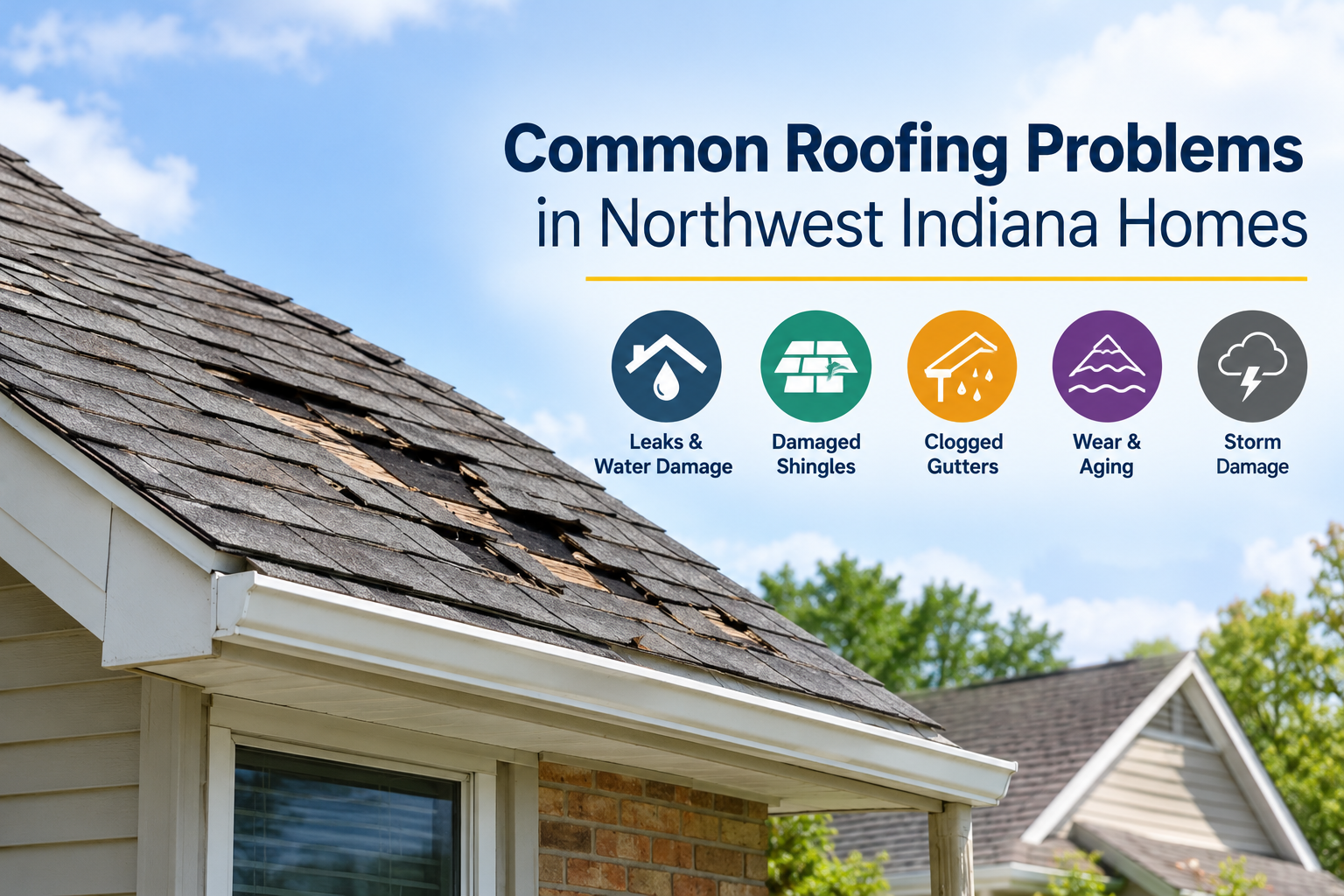
Between lake-effect snow rolling off Lake Michigan, harsh freeze-thaw cycles, and fast-moving summer storms, a roof in Northwest Indiana works harder than most. From Hammond and Gary to Valparaiso and Crown Point, homeowners regularly deal with leaks, ice dams, and storm damage that quietly shorten a roof’s life.
Knowing the most common roofing problems in northwest Indiana helps you catch trouble early, when a repair is affordable, instead of late, when a full replacement is the only choice. This guide covers seven frequent problems, the warning signs to watch for, and how to decide between repair and replacement.
Why Roofs in Northwest Indiana Wear Out Faster
Roofing materials expand in heat and contract in cold. In this region, temperatures can swing above and below freezing many times in a single winter. Each cycle lets small amounts of water work into tiny cracks, freeze, and widen them. Add heavy lake-effect snow, strong spring winds, and summer hailstorms, and even a well-installed roof takes a beating.
That is why local experience matters. Crews that specialize in northwest indiana roofing know how the area’s weather affects materials, flashing, and ventilation, and they design repairs around those conditions rather than generic national standards. It is also why many homeowners here are choosing metal, and why finding the best metal roofing company for your home is worth the research: a quality metal roof handles heavy snow, wind, and temperature swings better than most traditional materials.
1. Roof Leaks and Water Intrusion
Leaks are the number one complaint, and they rarely start where the water shows up. Water can travel along rafters and decking before dripping onto a ceiling several feet from the actual entry point.
Common causes: worn or cracked shingles, deteriorated sealant, damaged flashing, and ice dams.
Warning signs: brown or yellow ceiling stains, peeling paint, damp or compressed attic insulation, and a musty smell in upper rooms.
What to do: Don’t wait for the stain to grow. Have the roof inspected promptly, since trapped moisture can lead to rotted decking and mold.
2. Ice Dams and Snow Damage
Ice dams form when heat escaping from the house melts snow on the upper roof. The meltwater runs down, refreezes at the cold eaves, and builds a ridge of ice. Water then backs up behind the ridge and can slip under shingles into the home.
How to reduce the risk:
- Add attic insulation to keep heat from reaching the roof deck.
- Improve attic ventilation so the roof surface stays evenly cold.
- Use a roof rake to clear snow from the lower few feet of the roof after heavy snowfall. Stay on the ground and never chip at ice with sharp tools, which can damage shingles.
Heavy snow load can also stress older roofs, so watch for sagging areas or new cracks in interior ceilings after big storms.
3. Storm, Wind, and Hail Damage
Spring and summer storms bring strong gusts and hail. Wind can lift shingle edges, break their seal, or tear shingles away entirely. Hail can bruise shingles and knock off the protective granules, leaving the material exposed to sun and water.
Damage is often hard to see from the ground. After any severe storm, check your yard for shingle pieces, look for dented gutters or vents, and schedule a professional roof inspection. Catching storm damage early also helps if you need to file an insurance claim, since many policies have time limits for reporting damage.
4. Missing, Cracked, or Worn Shingles
Asphalt shingles typically last around 15 to 25 years, depending on quality, installation, and weather exposure. As they age, they curl, crack, blister, and shed granules.
Check for:
- Curling or cupping edges
- Bare patches where granules have worn away
- Excess granules collecting in your gutters
- Missing shingles or visible nail heads
A few damaged shingles can usually be replaced quickly. Widespread wear across a roof, however, signals it is nearing the end of its useful life.
5. Flashing Failure Around Chimneys, Vents, and Valleys
Flashing is the thin metal that seals joints where the roof meets chimneys, skylights, vent pipes, and walls. Because these areas move and shift with temperature changes, flashing can loosen, rust, or separate over time.
Failed flashing is one of the most common hidden leak sources. The fix is often simple and affordable if caught early, such as resealing or replacing a section of flashing. Left alone, it can lead to extensive water damage around the chimney or wall.
6. Poor Attic Ventilation and Moisture Buildup
A roof does not only protect from outside weather. It also depends on proper airflow inside the attic. Without enough ventilation, warm, humid air gets trapped in winter and heat builds up in summer.
The results can include:
- Mold and mildew on rafters and decking
- Rotting or warped roof decking
- Shingles that age faster from excess heat
- Higher heating and cooling costs
- Contributing to ice dam formation
If your attic feels stuffy, shows frost on the underside of the roof in winter, or smells damp, ventilation is worth checking.
7. Clogged Gutters and Drainage Problems
Gutters carry water away from your roof edge and foundation. When they clog with leaves and debris, water overflows or backs up under the lower shingles, damaging fascia boards, soffits, and the roof edge. In winter, clogged gutters also make ice dams worse.
Clean gutters at least twice a year, typically in late spring and late fall, and make sure downspouts direct water well away from the house.
Roof Repair or Roof Replacement: How to Decide
Not every problem means a new roof. As a general guide:
Repair may be enough when:
- Damage is limited to one area
- The roof is relatively young
- Leaks come from a specific, fixable source like flashing
Replacement is worth considering when:
- The roof is at or past its expected lifespan
- Damage is widespread
- You have repeated leaks in different areas
- The roof deck is sagging or soft
If you are planning a replacement, it is worth looking beyond standard shingles. Metal roofing sheds snow easily, stands up well to wind and hail, resists rot and pests, and can last several decades with minimal maintenance. If you are exploring that route, look for the best metal roofing company in your area by checking licensing, insurance, local references, manufacturer certifications, and written warranties on both materials and workmanship. For northwest indiana roofing projects, choose a contractor with proven experience handling lake-effect snow, freeze-thaw cycles, and storm damage, since those conditions put extra demands on any roof system.
Simple Roof Maintenance Tips for Indiana Homeowners
- Inspect your roof every spring and fall, and after major storms.
- Keep gutters and downspouts clear.
- Trim overhanging tree branches that can scrape shingles or drop debris.
- Check your attic for leaks, damp insulation, or poor airflow.
- Remove heavy snow buildup from the lower roof safely, using a roof rake from the ground.
- Keep records of repairs and inspections for warranty and insurance purposes.
Final Thoughts
Roofing problems in Northwest Indiana usually start small: a lifted shingle, a worn seal, or a clogged gutter. Regular inspections and quick repairs protect your home and your budget. When the damage is too extensive, a well-planned replacement with the right materials and a qualified local contractor gives you long-term peace of mind.
If you notice any warning signs, schedule a professional roof inspection before the next storm or winter season arrives.
Frequently Asked Questions
What are the most common roof problems in Indiana? Leaks, ice dams, storm and hail damage, worn shingles, flashing failure, and ventilation problems are the most frequent issues.
How often should I have my roof inspected? At least once a year, ideally in spring or fall, and again after any severe storm.
Can a roof be repaired in winter? Emergency repairs to stop leaks are possible in cold weather, but many permanent repairs are best done when temperatures are milder, since some sealants and shingles need warmth to bond properly.