





When a standard wire shape does not fit a particular product, assembly, or manufacturing process, a custom profile wire can provide a much more practical solution. Instead of starting with a readily available round, square, or rectangular wire and trying to modify it later, manufacturers can specify a profile that matches the functional requirements of the finished component.
This approach is especially useful when space is limited, a precise contact surface is needed, or the wire must perform a specific mechanical or electrical function. The profile can influence everything from how a component fits into an assembly to how it handles pressure, wear, bending, or heat.
The challenge is that choosing or designing a profile is not simply a matter of specifying dimensions. Material, tolerances, forming methods, application conditions, and finishing requirements all need to work together. Understanding these factors helps engineers avoid costly redesigns and production problems.
What Is Custom Profile Wire?
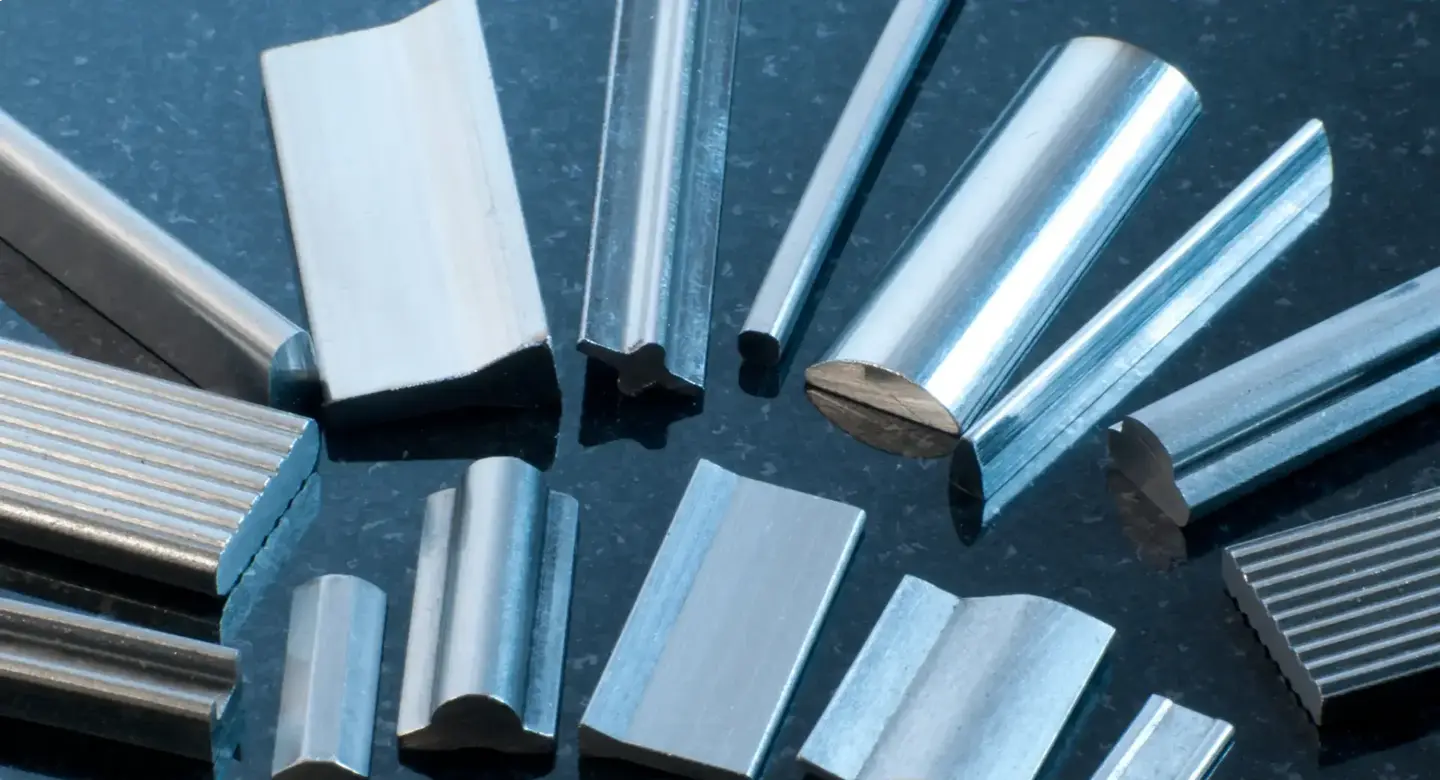
Custom profile wire is metal wire manufactured with a specific cross-sectional shape rather than a conventional round profile. The shape is engineered around the requirements of the application.
Depending on the intended use, a profile may include flat sides, grooves, angles, radiused corners, steps, or other geometric features. Common materials include stainless steel, carbon steel, spring steel, copper alloys, nickel alloys, and other metals selected according to the required properties.
Unlike ordinary round wire, which has a consistent circular cross-section, profile wire is designed to perform a particular job.
For example, a manufacturer may need wire that:
- Fits into a narrow channel
- Provides a larger contact area
- Acts as a spring or retaining element
- Supports a specific load
- Improves resistance to wear
- Creates a precise sealing or contact surface
- Reduces the amount of material required
- Maintains a specific shape during assembly
The goal is not simply to create an unusual shape. The goal is to create a wire profile that solves a specific engineering problem.
How Custom Profile Wire Is Developed
Developing a profile generally starts with the application rather than the manufacturing process.
1. Define the Application Requirements
Before discussing dimensions, identify what the wire needs to accomplish.
Consider the operating environment, expected loads, temperature, corrosion exposure, movement, contact surfaces, and installation method.
For example, a retaining component used inside an automotive assembly may experience vibration and temperature changes. A wire used in an electrical contact may have completely different requirements involving conductivity, spring characteristics, and corrosion resistance.
Defining these conditions early prevents a common mistake: designing a shape that looks correct on a drawing but does not perform properly in real-world conditions.
2. Establish the Cross-Section
The next step is defining the profile geometry.
Important measurements can include overall width, height, corner radii, angles, grooves, and other dimensional features. These measurements should be based on the available installation space and the functional requirements of the component.
It is also important to distinguish between critical and noncritical dimensions. Holding extremely tight tolerances on every feature can increase manufacturing difficulty and cost without providing a meaningful performance benefit.
3. Select the Right Material
Material selection is just as important as profile geometry.
A spring application may require a material with suitable elasticity and fatigue resistance. A component exposed to moisture or chemicals may require corrosion-resistant stainless steel. Electrical applications may require a conductive alloy with specific mechanical properties.
Material selection should consider:
- Tensile strength
- Yield strength
- Hardness
- Ductility
- Corrosion resistance
- Electrical conductivity
- Temperature resistance
- Fatigue performance
- Formability
The best material is not necessarily the strongest one. It is the material whose properties match the actual operating environment.
4. Determine Manufacturing Requirements
Profile wire can be produced using specialized forming and drawing processes. The appropriate method depends on the material, geometry, dimensions, production volume, and required tolerances.
A simple profile may be relatively straightforward to manufacture, while a complex cross-section can require carefully controlled tooling and multiple forming stages.
At this point, engineers should also consider production volume. A design that makes sense for thousands of parts may not be economical for a small prototype run.
5. Test the Finished Profile
Prototypes or initial production samples should be tested under realistic conditions.
A wire that meets dimensional specifications may still fail because of unexpected deformation, cracking, excessive springback, poor fit, or insufficient fatigue resistance.
Functional testing provides information that measurements alone cannot provide.
Where Profile Wire Is Commonly Used
Profile wire can be found in many industries because its geometry can be adapted to different mechanical and functional requirements.
Automotive Components
Automotive manufacturers use specialized wire components for retaining clips, springs, brackets, seals, sensors, and other assemblies. Profiles can help components fit into restricted spaces while maintaining the necessary mechanical characteristics.
Aerospace and Defense
Aerospace applications often require materials and components that perform reliably under demanding conditions. Specialized wire profiles may be used where weight, strength, temperature resistance, and dimensional accuracy are important.
Medical Equipment
Medical devices can require extremely precise components with controlled surfaces and dimensions. Stainless steel and other specialty alloys may be formed into profiles for instruments, mechanisms, and specialized assemblies.
Industrial Machinery
Machinery manufacturers may use profile wire for springs, guides, retaining components, screens, contact elements, and wear-resistant parts.
Electrical and Electronics
Profile geometry can provide controlled contact areas or help components fit into compact assemblies. Material selection becomes particularly important when electrical conductivity or thermal performance is involved.
Common Mistakes or Challenges
One of the biggest mistakes is designing the wire profile independently from the final assembly.
A profile may be dimensionally accurate but difficult to insert, remove, bend, or retain. Engineers should evaluate the entire installation process rather than looking only at the wire itself.
Another common problem is specifying unnecessarily tight tolerances. Precision has value when it affects performance, but excessive tolerance requirements can complicate manufacturing and increase costs.
Material selection can also create problems. Choosing a material based solely on availability or tensile strength may result in poor fatigue performance, corrosion issues, or difficulties during forming.
Ignoring Springback
When metal is formed, it can partially return toward its original shape. This phenomenon, known as springback, can affect the final dimensions of formed wire.
The effect should be considered during design and manufacturing rather than treated as an unexpected defect.
Designing Without Considering Tooling
A profile that looks simple in CAD may be difficult to produce consistently. Sharp transitions, unusual geometry, or extremely small features can introduce manufacturing challenges.
Early communication between design and manufacturing teams can prevent these issues.
Practical Tips for Better Results
Start with function, not shape. Clearly define what the wire must do before deciding what it should look like.
Use realistic tolerances. Identify the dimensions that directly affect fit and performance, then avoid unnecessary precision elsewhere.
Consider the entire lifecycle of the component. Ask how it will be manufactured, transported, installed, exposed to environmental conditions, and eventually serviced or replaced.
For new applications, prototypes are valuable. Testing a physical sample can reveal problems with flexibility, fit, deformation, or assembly that may not be obvious from drawings.
It is also worth reviewing the profile with the manufacturer before finalizing the design. Manufacturing feedback can sometimes produce a simpler geometry that performs equally well while being easier to produce consistently.
Finally, document the important requirements clearly. A useful specification should identify material, dimensions, tolerances, mechanical requirements, surface condition, testing requirements, and any relevant finishing processes.
Conclusion
Custom profile wire provides engineers with a way to move beyond the limitations of standard wire shapes and design a component around a specific application. The right profile can improve fit, performance, durability, and manufacturing efficiency.
The most successful designs start by understanding the application, selecting an appropriate material, defining only necessary tolerances, considering manufacturing constraints, and validating the finished component through testing. When these factors are considered together, specialized wire becomes more than an unusual shape—it becomes a purpose-built engineering solution.