


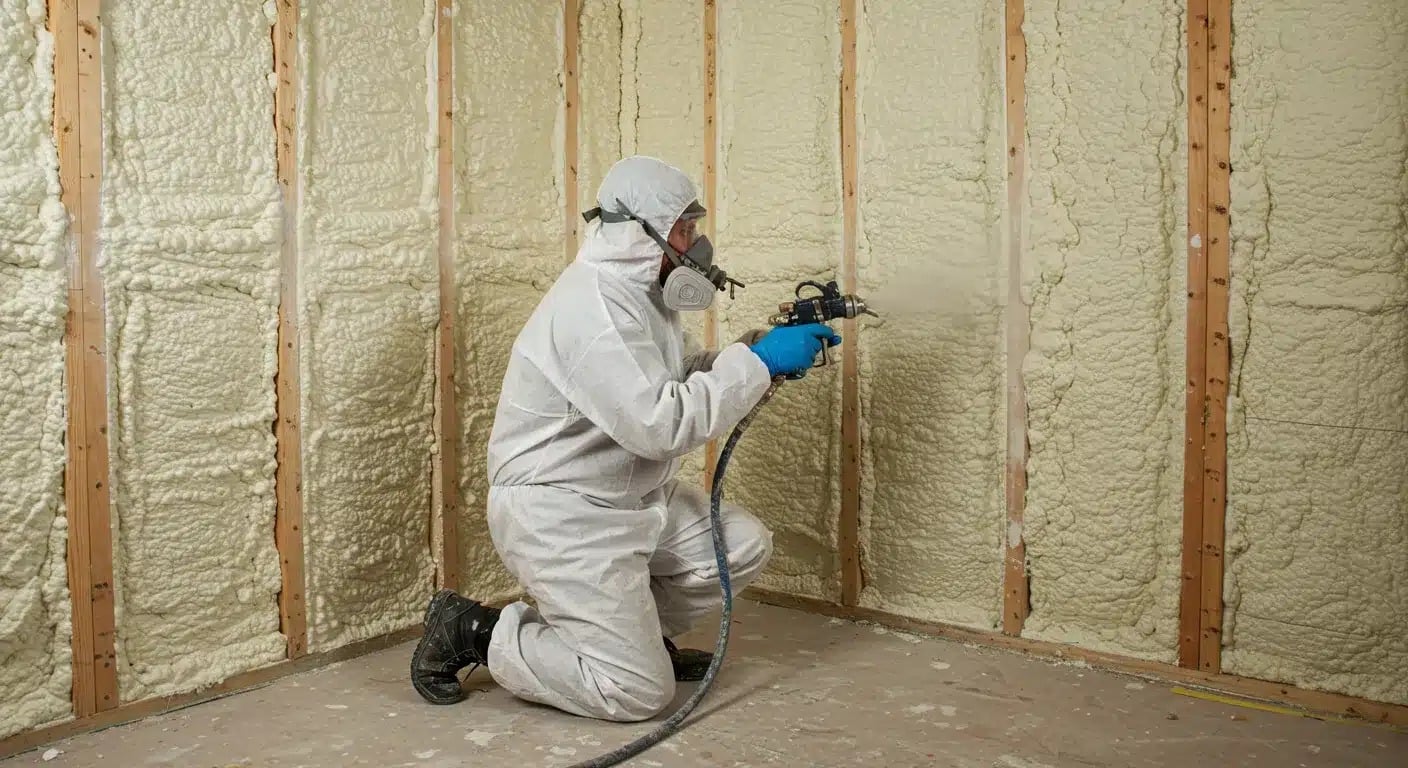
A spray foam insulation contractor in Raleigh, NC, can help residential and commercial buildings control air leakage, improve insulation performance, seal difficult gaps, and manage comfort problems linked to the building envelope. Professional spray foam installation can be used in attics, walls, crawl spaces, rim joists, floors, and other areas where insulation and air sealing are needed.
For Raleigh property owners, the right approach depends on the building design, moisture exposure, existing insulation, HVAC layout, and applicable code requirements. This guide explains where spray foam can help, the difference between open-cell and closed-cell foam, local weather considerations, R-value, common building problems, and what owners should look for in a Raleigh, NC, insulation contractor.
Why Spray Foam Is Useful For Raleigh Buildings
Raleigh has hot, humid summers and cooler winter periods. That puts regular demands on a building’s thermal envelope. Gaps around wiring, plumbing, framing, ducts, recessed fixtures, and other penetrations can allow unwanted air movement.
The 2024 North Carolina Residential Code requires the building thermal envelope to limit air leakage and specifically addresses sealing penetrations for plumbing, electrical wiring, ductwork, and other building services.
A qualified contractor can assess these areas before deciding where spray foam makes practical sense.
Common Areas for Spray Foam Installation
Spray foam insulation may be considered for:
- Attics and roof assemblies: Foam can help create a continuous insulation and air-control layer when the assembly is designed and installed correctly.
- Crawl spaces and rim joists: Foam can seal cracks and penetrations around the floor system while helping separate conditioned areas from unconditioned spaces.
- Exterior walls: Spray foam can fill wall cavities and reduce air movement through gaps around framing and penetrations.
- Floors over crawl spaces: Foam can be used where the floor assembly is intended to remain part of the thermal boundary.
- Commercial building areas: Warehouses, offices, retail spaces, and other structures may use spray foam in roofs, walls, ceilings, and difficult-to-insulate areas.
The Department of Energy notes that spray foam can provide both insulation and air-sealing functions, while the specific performance depends on the foam type and assembly.
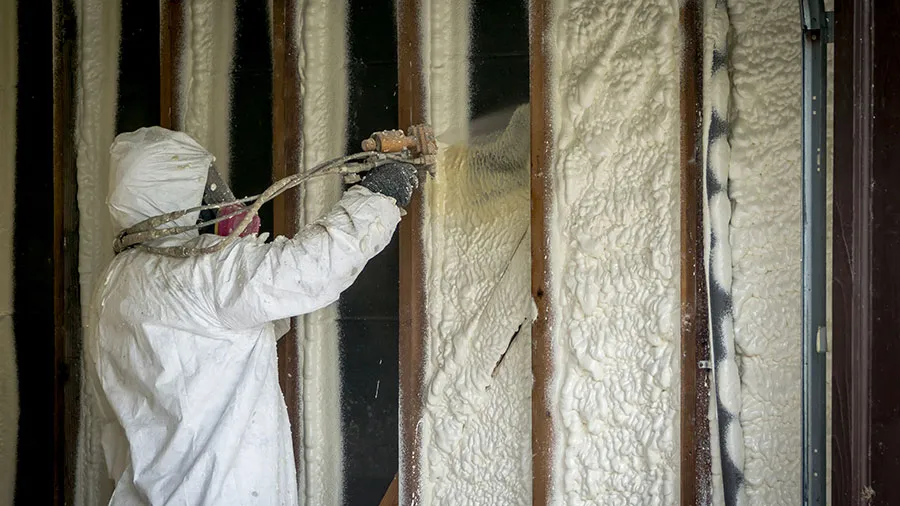
How A Raleigh Contractor Can Address Common Building Problems
Spray foam is most useful when it solves a specific building-envelope problem rather than simply being added because it is a popular insulation product.
For example, a Raleigh home may have an attic with insulation but still experience hot upstairs rooms. The cause could involve air leakage, gaps around penetrations, duct losses, insufficient insulation, or an attic assembly that was not designed correctly.
A contractor can inspect the area and determine which problems need attention.
Air Leaks Around Building Penetrations
Plumbing pipes, electrical wires, HVAC components, and framing joints can leave openings through the building envelope. North Carolina’s current residential energy provisions specifically require these penetrations to be sealed.
Spray foam can be one method for sealing suitable gaps, provided the product and installation method meet the requirements for that application.
Crawl Space and Floor Problems
Floors above unconditioned crawl spaces can contribute to uncomfortable indoor temperatures. The Department of Energy recommends connecting the thermal and air-control layers correctly and sealing openings around plumbing and wiring before insulation is installed.
A contractor may recommend floor insulation, crawl-space wall insulation, air sealing, or another assembly based on the building.
Attic Heat and Air Leakage
An attic can have several problem areas, including top-plate penetrations, duct connections, recessed fixtures, knee walls, and access openings.
Spray foam can help seal selected areas, but roof leaks and moisture problems should be corrected first. Spray foam should not be used to hide an unresolved roof or water problem.
Open-Cell vs. Closed-Cell Spray Foam
The two major spray foam categories have different properties. The better choice depends on the location and building assembly.
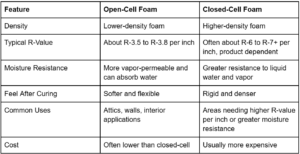
DOE Building America materials identify open-cell foam around R-3.6 per inch and describe closed-cell foam as having higher thermal resistance and greater moisture resistance. Actual values depend on the product and installation thickness.
A contractor should select foam based on the assembly, not simply the advertised R-value.
Pros And Cons Of Spray Foam Insulation
Spray foam can solve problems that are difficult to address with loose or batt insulation, but it is not the right answer for every building.
Advantages
- Air sealing: Properly installed spray foam can fill gaps and help create a continuous air-control layer.
- High R-value per inch: Closed-cell products can provide substantial thermal resistance where available space is limited.
- Hard-to-reach areas: Foam can conform to irregular surfaces, penetrations, and framing cavities.
- Moisture resistance: Closed-cell foam has lower water vapor permeance and greater resistance to liquid water than open-cell foam.
Limitations
- Higher initial cost: Spray foam generally costs more than many traditional insulation options.
- Installation quality matters: Poor application, incorrect thickness, or unsuitable substrate conditions can reduce expected performance.
- Moisture problems still need attention: Foam should not be used as a substitute for fixing roof leaks, drainage problems, or other water sources.
- Code requirements still apply: Foam installations may require specific thicknesses, coverings, ignition or thermal protection, and assembly details.
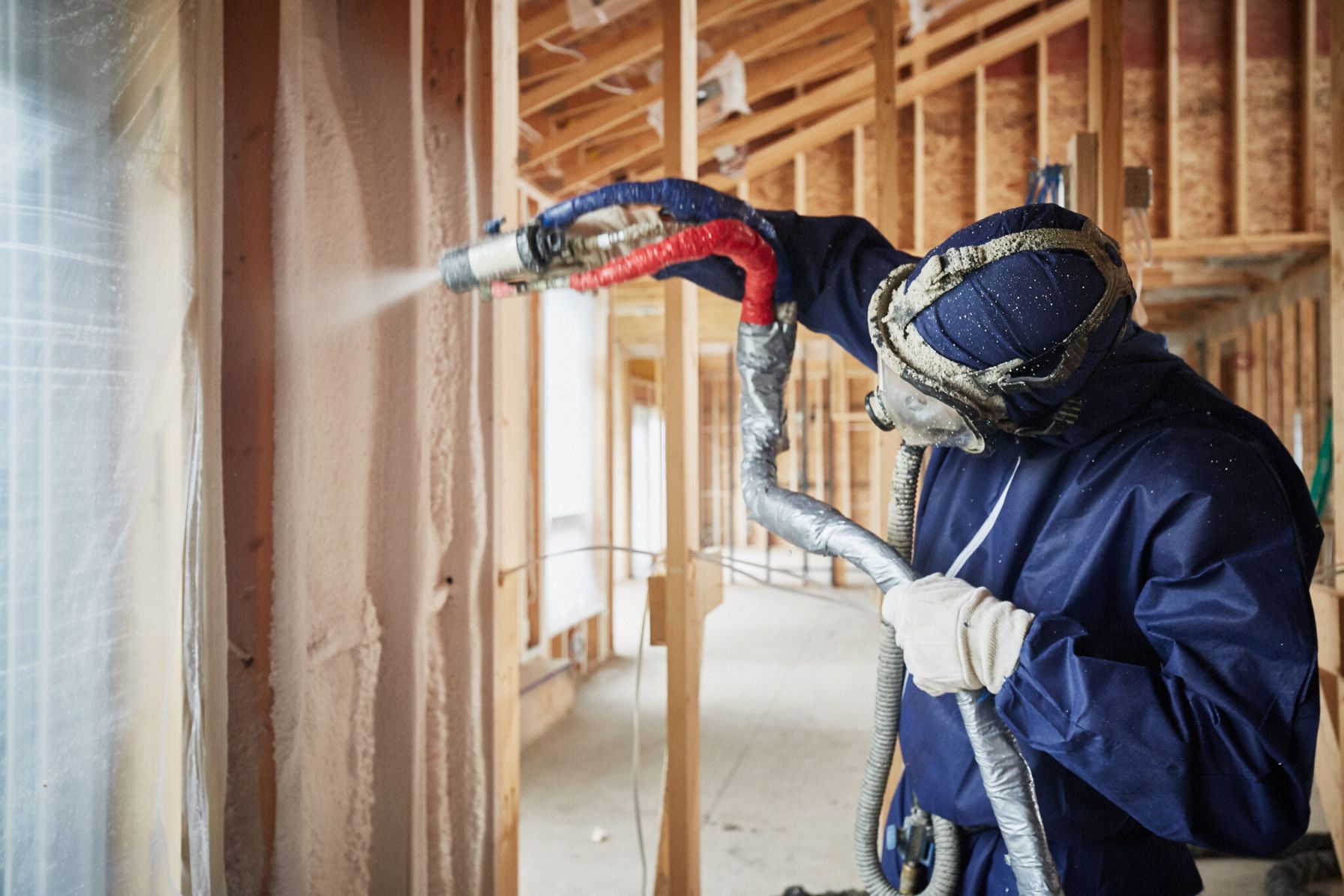
How Raleigh Weather Affects Spray Foam Work
Raleigh’s humid summers make moisture control an important part of building-envelope planning. Summer cooling loads can also make attic and wall performance important for indoor comfort.
Winter brings a different concern. Air leakage can allow conditioned indoor air to move into colder building cavities, where moisture can create condensation risks under certain conditions.
The correct foam type and thickness depend on the assembly and climate. Building science research shows that spray foam roof assemblies require careful attention to moisture, condensation, and roof leakage conditions.
Best Conditions For Installation
Professional installers generally need suitable substrate conditions and must follow the product manufacturer’s application requirements. Temperature, surface condition, ventilation, and product specifications can affect application quality.
A contractor should evaluate the site before installation instead of assuming that one application method fits every Raleigh building.
What R-Value Means For Raleigh Property Owners
R-value measures resistance to heat flow. A higher R-value generally means greater resistance to heat transfer, but the number alone does not determine how well an entire building performs.
Air leakage, thermal bridging, moisture, gaps, compression, and installation quality also affect the building envelope.
The 2024 North Carolina Residential Code sets minimum insulation requirements by building component and climate zone. For example, its prescriptive table lists minimum ceiling, wall, floor, basement-wall, and crawl-space-wall insulation values.
Property owners can review the 2024 North Carolina Residential Code energy-efficiency requirements before discussing an insulation project with a contractor.
What A Professional Contractor Should Check Before Installation
A good spray foam project starts with an inspection rather than immediately spraying foam.
The contractor may review:
- Existing insulation and its condition.
- Roof leaks, drainage, and visible moisture.
- Attic ventilation and roof assembly design.
- Crawl-space moisture conditions.
- Electrical and plumbing penetrations.
- HVAC ducts and equipment located in unconditioned areas.
- Available cavity depth and required foam thickness.
- Manufacturer installation requirements.
- Applicable North Carolina building-code provisions.
The 2024 North Carolina code also requires insulation and building systems to be installed according to manufacturer instructions and applicable code requirements.
Why Choose Raleigh Excel Spray Foam Insulation?
Raleigh Excel Spray Foam Insulation provides spray foam insulation in Raleigh, NC, for residential and commercial applications. Its service focus includes building-envelope insulation, air sealing, attic applications, crawl spaces, walls, and other areas where foam insulation may provide a practical solution.
The company is led by Daniel Harper, who has more than 10 years of insulation-industry experience and specializes in spray foam work. His focus is on reliable installation, building comfort, energy performance, and long-term insulation results.
A professional spray foam insulation contractor in Raleigh, NC, should understand that insulation is only one part of a building system. The location of the air barrier, moisture control layer, HVAC equipment, ducts, and insulation all affect the final result.
Conclusion
Spray foam can serve Raleigh buildings by addressing two major parts of building-envelope performance: insulation and air control. It can be useful in attics, walls, crawl spaces, rim joists, floors, and commercial building assemblies when the application fits the structure.
The right foam type, thickness, and installation method depend on the building design and site conditions. Raleigh property owners should also account for humidity, moisture exposure, air leakage, existing insulation, and North Carolina code requirements before starting work.
Get A Spray Foam Insulation Assessment In Raleigh
Raleigh Excel Spray Foam Insulation can evaluate residential and commercial buildings and recommend appropriate foam insulation services based on the building’s needs.
Property owners can contact Raleigh Excel Spray Foam Insulation at (919) 301-9435 or info@raleighexcelsprayfoam.com to discuss a spray foam insulation project in the Raleigh area.
FAQs About Spray Foam Insulation In Raleigh, NC
Is Spray Foam Insulation Good For Homes In Raleigh?
Spray foam can be useful in Raleigh homes for air sealing and insulation, particularly in areas such as attics, walls, crawl spaces, rim joists, and floors over unconditioned areas. The correct product and installation method depend on the building assembly.
Is Open-Cell or Closed-Cell Foam Better in Raleigh?
Neither is automatically better for every application. Open-cell foam generally has a lower R-value per inch and higher vapor permeance, while closed-cell foam provides a higher R-value per inch and greater moisture resistance. The building location and assembly should guide the choice.
Can Spray Foam Help With Air Leaks?
Yes. Properly installed spray foam can reduce air movement through suitable gaps and penetrations. North Carolina’s residential code requires many building-envelope penetrations to be sealed as part of air-leakage control.
Can Spray Foam Be Used In A Crawl Space?
Spray foam can be used in crawl-space applications, but the proper location and product depend on the moisture conditions and thermal boundary. DOE guidance notes that crawl spaces and floors above unconditioned spaces require careful air-sealing and insulation details.
Does Spray Foam Stop Roof Leaks?
Spray foam should not be treated as a replacement for roof repair. Roof leaks and other bulk-water problems should be corrected before insulation work. Building science research identifies roof leakage and moisture control as important considerations in spray-foam roof assemblies.
What R-Value Does Spray Foam Have?
R-value varies by product and thickness. DOE sources report typical open-cell values around R-3.5 to R-3.8 per inch, while many closed-cell products provide substantially higher R-values per inch. The product’s technical data should be used for the actual project.
Does North Carolina Have Specific Insulation Requirements?
Yes. The North Carolina State Building Code includes requirements for insulation, air sealing, building-envelope performance, and related construction details. The applicable requirements depend on the building type, climate zone, assembly, and compliance path.
Can Spray Foam Be Used In Commercial Buildings?
Yes. Spray foam is used in various commercial building assemblies, including roofs, walls, ceilings, and other areas requiring insulation and air control. The appropriate system depends on the building design, occupancy, code requirements, and product specifications.
Author And Reviewer
Author: Daniel Harper
I’m Daniel Harper, owner of Raleigh Excel Spray Foam Insulation, with over 10 years of experience in the insulation industry. I specialize in spray foam insulation and am dedicated to providing reliable, high-quality solutions that improve comfort, energy efficiency, and long-term performance for both residential and commercial projects. That same dedication to reliability and quality shapes every project I take on, because delivering lasting comfort and genuine energy efficiency is what this work is about. My focus stays on providing high-quality, dependable spray foam insulation results for every client I serve.
Reviewer: William Harris
With nearly a decade in the spray foam insulation field, William Harris reviewed this post and provided guidance that reflects both technical understanding and real-world marketing experience.