






What makes a customer remember a brand long after seeing its advertisement? It is sometimes not a flashy campaign or an expensive promotional gift. A small and thoughtfully designed badge can leave a lasting impression. Businesses are constantly looking for affordable ways to increase brand recognition, connect with their audiences and stand out in competitive markets.
Custom designed badges offer a practical solution by turning everyday accessories into miniature brand ambassadors. These small items can help businesses to build stronger relationships with consumers and also create memorable brand experiences, whether used at corporate events, employee gatherings, product launches or promotional campaigns. You will understand how you can use custom patches to improve your marketing strategies.
Why Are Badges An Effective Marketing Tool?
Successful marketing is about creating recognition and building trust over time. Badges can help businesses to achieve both goals by combining visual branding with a physical product that people can wear, collect or share.
-
Increase Brand Visibility
A well-designed badge can put your logo, slogan or brand symbol in front of people wherever the wearer goes. Unlike a digital advertisement that disappears after a few seconds, A physical badge can remain visible for weeks or even months, not like a digital advertisement that disappear after a few seconds.
For example, a coffee shop can distribute branded badges during a new product launch. Customers who are attaching them to their backpacks or jackets can introduce the business to people who have never visited the shop. This can create opportunities for organic exposure without paying for every impression.
-
Build A Stronger Brand Identity
Consistency can make a brand easier to recognise. If you are using the same colours, typography and visual elements across promotional materials, it can help customers to connect individual marketing activities with your business.
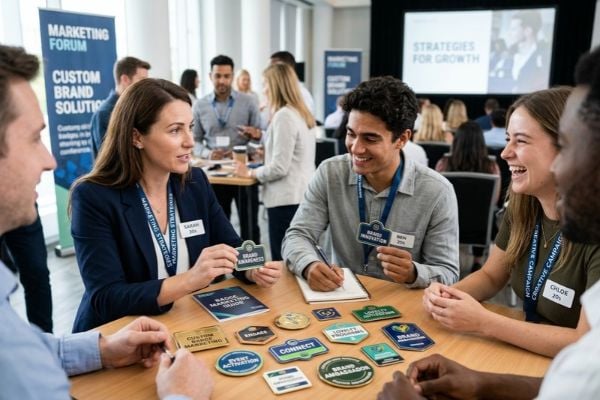
Custom badges can reinforce this identity at trade shows, retail stores, conferences and community events. When employees and customers wear matching designs, they can create a unified visual impression. A distinctive shape or memorable slogan can also make the badge recognisable even when the company name is not immediately visible.
-
Encourage Customer Loyalty
People appreciate feeling that they are included in a community. Exclusive badges can reward loyal customers, celebrate milestones or recognise participation in brand activities.
You can consider a fitness studio that offers limited edition badges to members who complete a training challenge. The badge can remind them of their achievement and encourage other members to participate. Small rewards like these can support repeat engagement when they are paired with genuine customer appreciation and valuable experiences.
How To Improve Marketing Strategies With Badges: Step-By-Step Guide
A badge campaign works best when it has a clear purpose, not just a company logo. If you plan the audience, distribution, design and measurement beforehand, it makes the investment more useful.
-
Define Your Marketing Goals
You should start by deciding what the campaign should achieve. Are you trying to attract new customers, promote an upcoming event, improve employee engagement or reward existing buyers?
Each objective needs a different approach. A business that is launching a new product may distribute badges to encourage social sharing, and a professional services firm can use them to make staff identifiable at industry events. If you have clear goals, this will also help you to determine how many badges to order and which results to measure.
-
Understand Your Target Audience
You must think about who will receive the badges and what they would genuinely want to wear. Younger audiences may prefer colourful and playful artwork, whereas corporate customers may respond better to clean designs and subtle branding.
You should research customer interests, preferred styles and likely uses before choosing a design. A badge that suits someone’s personal style is more likely to be worn regularly, and increase its promotional value. It is best to ask a small group of customers for feedback before placing a large order.
-
Create An Attractive And Memorable Design
Ensure you keep the design simple enough to recognise at a glance. You should use your brand colours, a readable logo and a short message if one is necessary. When you overcrowd the design with text, it can make the badge difficult to understand, especially from a distance.
You should choose materials and finishes that suit the intended audience. Custom embroidery badges can give uniforms, workwear, and team merchandise texture and a professional look. Printed designs may offer more flexibility for detailed artwork, gradients or colourful illustrations for other campaigns.
-
Choose The Right Attachment Method
Practicality is just as important as appearance. You can consider where recipients will wear the badge and whether they need to remove it frequently.
Iron-on badges may suit uniforms, jackets and promotional apparel that needs a convenient attachment option. Pin-back designs suit bags and casual clothing, and other attachment styles may be ideal for specialist fabrics. You should always check the application instructions of the manufacturer and material compatibility before distributing products.
-
Distribute Badges Through The Right Channels
Even an excellent design needs the right distribution strategy. You can give badges to attendees at exhibitions, include them with selected purchases or offer them as rewards for participating in a campaign.
Retailers can include a badge with orders above a certain value, and educational organisations may distribute them during orientation events. If you are partnering with relevant community groups, you can also introduce your brand to new audiences. Must choose channels that reach potential customers naturally instead of distributing products indiscriminately.
-
Measure Campaign Performance
You should track the performance whether the campaign contributes to your marketing objectives. Useful indicators include event participation, redemption of promotional offers, website visits through a QR code, social media mentions, and customer feedback.
For example, a badge that is distributed with a discount code can help to identify purchases associated with the promotion. You can compare the total cost of the campaign with the results it generates and use those findings to improve future designs, distribution methods and targeting.
Creative Ways To Use Badges In Marketing Campaigns
Badges can support your brand more than traditional promotional activities. Businesses with a little planning can use them to encourage participation, strengthen relationships and make campaigns feel more personal.
-
Launch Limited Edition Collections
You should release designs tied to seasonal events, anniversaries or launches of a new product. Scarcity can drive interest, especially when the design offers genuine creative value instead of relying on artificial urgency. A collection can also give customers a reason to return for future releases.
-
Reward Referrals And Repeat Purchases
You can include a badge in a referral programme or offer special designs to repeat buyers. Pair up the reward with a meaningful benefit, such as early access to a product or a loyalty discount. The custom iron on badges can become a part of a broader relationship building strategy instead of an isolated giveaway.
-
Support Employee Engagement
You can use badges to recognise achievements, celebrate work anniversaries or identify teams during conferences. Employees may take pride in to display the badge when recognition feels sincere. This can help you strengthen internal culture and create a consistent brand presence at external events.
Frequently Asked Questions
Can I use badges for small businesses with limited marketing budgets?
Yes, you can order a manageable quantity and distribute badges at targeted events or with selected purchases. When you are starting with a limited campaign, it can help you to control costs and test customer interest. Once the business understands well performed design, it can help you invest more confidently in future promotional activities.
How can badges help a business stand out at trade shows?
Distinctive badges can help staff look coordinated and make a company easier to recognise among competing exhibitors. An attractive design can also spark conversation. If you are combining badges with product demonstrations, useful information or a relevant giveaway, it can make the overall exhibition experience more engaging.
Should I include a website address in promotional badges?
It is not necessary to add a website in promotional patches. You can use a short logo or memorable design to work better on a small surface. If it is important to track online engagement, you should consider a QR code only when it remains easy to scan and leads you to a useful destination. You must test readability before production to avoid overcrowded artwork.
How many badges should a company order for a campaign?
Estimate attendance, staff requirements, expected customer participation and a modest reserve for replacements. It is generally more sensible to order enough for the intended audience than purchasing a large quantity immediately for a small pilot. You should review distribution and engagement results before deciding the size of your next order.
How can a business make its badge campaign more sustainable?
You can choose durable products that recipients are likely to keep, avoid unnecessary packaging and order quantities based on realistic demand. The best approach is to ask suppliers about material sourcing and production waste and to consider whether reusable designs can support several campaigns. A useful and long-lasting badge is often a better choice than a disposable promotional item.
Conclusion
Badges can turn a simple promotional item into a practical part of a wider marketing strategy. Their value often comes from thoughtful design, relevant distribution and a clear understanding of the audience. Businesses can improve brand recognition and encourage meaningful customer engagement by setting measurable goals, choosing suitable materials and tracking campaign results. The key is to offer something people genuinely want to keep and wear. You should start with one focused campaign, learn from the results and consider how a small branded item can make your next marketing effort more memorable.