




A comfortable bed is one of the most important elements of a positive hotel experience. Guests expect clean, soft, and well-maintained bedding that helps them relax after a long day of travel or work. For hotel owners and hospitality managers, choosing the right bedsheets involves balancing comfort, durability, maintenance requirements, and cost. One specification that often influences purchasing decisions is hotel bedsheet thread count.
Thread count is frequently associated with softness and luxury, but it does not tell the entire story of bedding quality. The type of cotton, fabric weave, yarn construction, and laundry practices also affect how bedsheets feel and how long they last. Understanding these factors can help hospitality businesses make informed purchasing decisions and provide guests with a consistently comfortable sleeping environment.
What Is Hotel Bedsheet Thread Count?
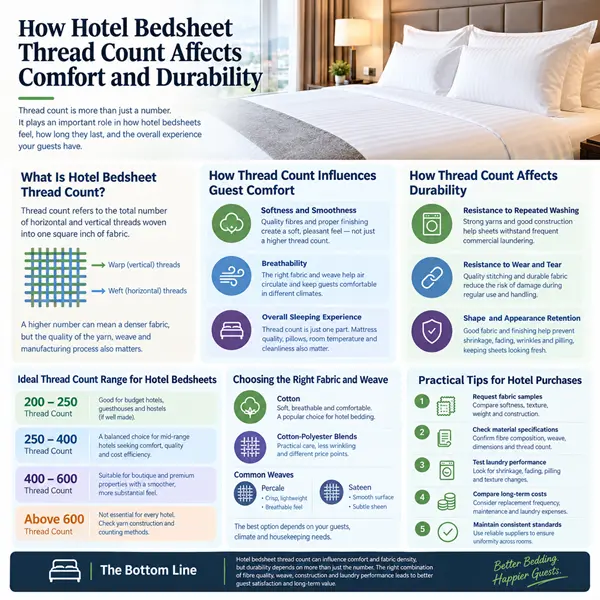
Thread count refers to the total number of horizontal and vertical threads woven into one square inch of fabric. Horizontal threads are called weft threads, while vertical threads are known as warp threads. Their combined number determines the stated thread count.
For example, a bedsheet labeled as 300 thread count generally contains 300 threads per square inch. However, the actual quality of the fabric depends on more than this measurement. Two sheets with identical thread counts can have different textures, strengths, and levels of breathability because of differences in their materials and manufacturing processes.
For hotels, understanding thread count is useful when comparing products, but it should be considered alongside other specifications. Commercial bedding must maintain its appearance and performance despite frequent use, washing, drying, and ironing.
How Thread Count Influences Guest Comfort
The feel of hotel bedding can influence how guests perceive the cleanliness and quality of their accommodation. Although thread count can contribute to the fabric’s texture, the relationship between a higher number and greater comfort is not always straightforward.
Softness and Smoothness
A well-made bedsheet can feel smooth and pleasant against the skin. Increasing thread count may contribute to a denser fabric, depending on the yarn and weave used. However, the quality of the fibres and the finishing process are equally important.
High-quality cotton yarn can produce a comfortable sheet at a moderate thread count. In contrast, a sheet made with inferior fibres may feel rough or lose its softness after repeated washing, even when its advertised thread count is high.
Hotels should evaluate fabric samples before purchasing bedding in bulk. Touching the material, examining its construction, and washing a sample can provide a more realistic indication of its comfort than relying on the label alone.
Breathability and Temperature Regulation
Breathability is another important consideration when selecting hotel bedsheets. Guests need bedding that feels comfortable across different seasons and room temperatures.
Lightweight cotton sheets with a suitable weave can allow air to circulate and help manage moisture. A denser fabric is not necessarily uncomfortable, but its performance depends on fibre composition, weave, and finishing.
For properties in warmer climates, breathable bedding may be particularly valuable. Hotels should consider their local weather, air-conditioning arrangements, and typical guest preferences when selecting suitable materials.
The Overall Sleeping Experience
Thread count is only one component of a comfortable bed. Mattress quality, pillows, blankets, room temperature, and bedding cleanliness all contribute to the guest experience.
Even premium bedsheets may disappoint guests if they are poorly fitted, stained, or visibly worn. Maintaining consistent housekeeping standards is therefore just as important as purchasing quality fabric.
How Thread Count Affects Bedsheet Durability
Hotels generally wash their bedding much more frequently than households. As a result, durability is a major consideration when choosing sheets for commercial use.
Resistance to Repeated Washing
Frequent laundering exposes bedsheets to detergents, heat, mechanical movement, and drying processes. Over time, these conditions can affect fibre strength, colour, surface texture, and overall fabric integrity.
A higher thread count does not automatically make a sheet more durable. Long-staple cotton fibres, strong yarns, reliable weaving, and appropriate finishing can all contribute to better performance.
Hotels should ask suppliers about recommended washing temperatures, drying methods, and expected care requirements. Testing samples through several laundry cycles can also reveal whether the material retains its feel and appearance.
Resistance to Wear and Tear
Bedsheets experience regular pulling, stretching, bed-making, and handling by housekeeping staff. Weak seams, inconsistent stitching, and poor-quality yarns can lead to premature damage.
When evaluating hotel bedding, purchasing teams should inspect the fabric closely and examine the stitching around hems and edges. Product specifications and supplier quality standards can help buyers compare different options more accurately.
A well-constructed sheet with a moderate thread count may offer better service life than a poorly manufactured sheet with a higher number.
Shape and Appearance Retention
Guests expect bedsheets to look fresh and professionally presented. Shrinkage, excessive wrinkling, fading, and pilling can affect the appearance of a hotel room.
Fabric composition and finishing influence how well sheets retain their shape and texture. Hotels should confirm that the finished dimensions match their mattresses and that the material is compatible with their laundry equipment.
Selecting bedding that maintains a neat appearance can also reduce maintenance demands and support consistent room presentation.
What Is the Ideal Thread Count for Hotel Bedsheets?
The most suitable thread count depends on the hotel’s budget, service level, and operational requirements. The following ranges can serve as a starting point when comparing products.
- 200 to 250 thread count: A practical option for budget hotels, guesthouses, and hostels when the fabric is well made.
- 250 to 400 thread count: A useful range for many mid-range hotels seeking a balance between comfort, quality, and cost.
- 400 to 600 thread count: An option for boutique and premium properties that prefer a smoother, more substantial fabric.
- Above 600 thread count: Not essential for every property. Buyers should examine yarn construction and counting methods before paying a premium.
These ranges are general guidelines rather than strict quality standards. Fabric composition, weave, manufacturing quality, and laundry performance should determine the final choice.
Choosing the Right Fabric and Weave
Cotton is a popular bedding material because it can offer softness, breathability, and a comfortable feel. Cotton-polyester blends may also appeal to hotels looking for practical care requirements, reduced wrinkling, or different price points.
The weave affects how a sheet feels. Percale usually has a crisp, lightweight texture and is often chosen for its breathable feel. Sateen typically offers a smoother surface with a subtle sheen, making it suitable for hotels seeking a more polished bedding presentation.
Neither weave is automatically better for every property. The right option depends on guest expectations, climate, housekeeping routines, and the hotel’s preferred appearance.
Practical Tips for Hotel Bedding Purchases
Before placing a large order, hospitality managers should evaluate bedsheets using a consistent checklist:
- Request fabric samples: Compare softness, texture, weight, and overall construction.
- Check material specifications: Confirm fibre composition, weave, finished dimensions, and thread count.
- Test laundry performance: Observe shrinkage, fading, pilling, and texture changes after washing.
- Compare long-term costs: Consider replacement frequency, maintenance requirements, and laundry expenses.
- Maintain consistent standards: Purchase products with reliable specifications to ensure uniformity across guest rooms.
These steps can help hotels avoid choosing bedding based on marketing claims alone.
Conclusion
Hotel bedsheet thread count can influence fabric texture and density, but it should never be the only measure of comfort or durability. Fibre quality, weave, stitching, finishing, and resistance to commercial laundering all play important roles in determining how bedding performs over time.
For many hotels, a thread count between 200 and 400 is a sensible starting point, provided the fabric is well constructed and suitable for the property’s needs. Premium accommodations may explore higher counts when the material offers meaningful benefits.
By comparing samples, reviewing supplier specifications, and testing bedding under real operating conditions, hotels can find products that balance guest comfort, professional presentation, and long-term value.