




Marine seating operates in an environment where upholstery materials face conditions that are considerably different from conventional indoor furniture. Boats and other marine applications can expose seating surfaces to moisture, sunlight, salt water, repeated passenger contact, cleaning, and abrasion. As a result, material selection needs to consider more than appearance. The construction of the upholstery material, surface characteristics, backing fabric, thickness, and application-specific performance all influence its suitability.
For manufacturers, boat builders, marine upholstery specialists, and procurement teams, PVC artificial leather boat marine applications require a material developed with the operating environment in mind. PVC artificial leather can provide a practical coated-material option for marine seating because its surface and backing construction can be developed according to different requirements.
The right material, however, is not simply the thickest or most visually appealing option. Buyers need to evaluate the complete construction and confirm that the selected specification matches the intended marine application.
Why PVC Artificial Leather Is Considered for Marine Seating
Marine upholstery has to balance appearance, comfort, durability, and practical maintenance. Seating surfaces are repeatedly handled by passengers and may be exposed to water, humidity, sunlight, and contaminants associated with outdoor environments.
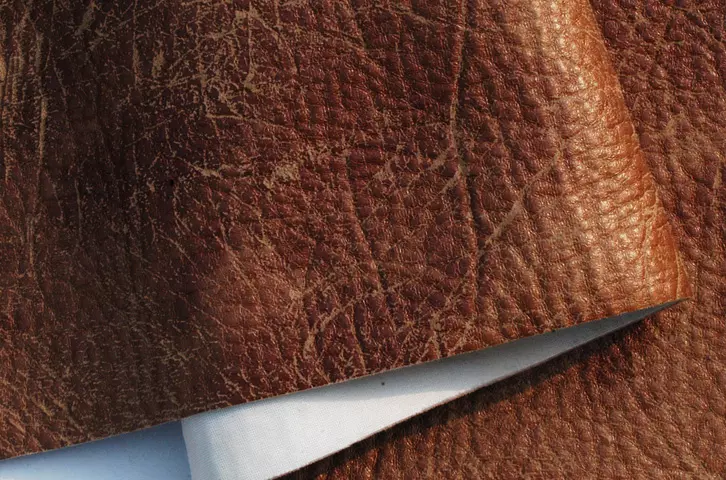
PVC artificial leather consists of a PVC-coated surface supported by a textile backing. Depending on the specification, the backing can be manufactured from materials such as polyester, nylon, cotton, woven, or knitted fabrics. This construction gives manufacturers flexibility when developing materials for different upholstery applications.
Another advantage is the ability to control the surface appearance through processes such as embossing, lamination, and printing. PolyFabs describes these processes among its PVC manufacturing capabilities, alongside coating, calendering, fabric manufacturing, and in-house testing.
For marine manufacturers, this means the material can be evaluated as a complete engineered construction rather than simply as a leather-look surface.
Marine Applications Demand a Different Material Approach
One of the most important points when purchasing artificial leather is that products designed for different industries should not automatically be treated as interchangeable.
A material developed for indoor upholstery may not provide the same characteristics required for a boat seating application. Similarly, an automotive seating material should not automatically be selected for marine use without evaluating its specifications against the marine environment.
PolyFabs’ product portfolio separates artificial leather into application-specific ranges, including automotive, buses, railways, boat and marine, two-wheeler seating, and commercial seating.
This application-oriented approach is useful for procurement teams because the material can be evaluated according to its intended service conditions.
Key Characteristics for Boat and Marine Upholstery
Marine seating materials may need to address several practical requirements simultaneously. Weather resistance is relevant where seating is exposed to changing outdoor conditions. Salt-water resistance can be particularly important in marine environments. Anti-mold and anti-fungal characteristics may also be considered where moisture and humidity are present.
PolyFabs’ published marine artificial leather information identifies characteristics including weather resistance, anti-fogging, anti-mold, anti-bacterial and anti-fungal properties, high abrasion resistance, salt-water resistance, anti-stain characteristics, and fire retardancy. The catalogue also identifies marine materials as part of its artificial leather range.
These characteristics should not be interpreted as requirements for every boat or marine project. Instead, buyers should identify the conditions of the specific application and confirm the exact properties of the selected material before procurement.
Marine PVC Leather Specifications
Specification is an important part of marine material selection because the upholstery has to work with the physical construction of the seat.
PolyFabs’ marine artificial leather range includes products identified as Marine Dollar, Marine Colorado, and Marine Oceanic. The published specification includes a thickness of 1.00 mm, 100% PVC coating, a stated weight of 750 GSM, and a standard width of 1370 mm with availability up to 1500 mm according to specifications.
The fabric layer can be selected from polyester, nylon, cotton, woven, and knitted constructions depending on the requirement.
These parameters provide a starting point for material evaluation, but the final choice should be based on the boat design, upholstery method, expected usage, environmental exposure, and buyer specification.
Why Abrasion Resistance Matters on Boat Seats
Marine seating can experience repeated friction from passengers getting in and out of seats, movement across the surface, and regular cleaning. Abrasion resistance therefore becomes an important consideration when evaluating an upholstery material.
A material with an appropriate surface construction can help support consistent appearance under repeated use. However, abrasion performance should always be assessed using the actual product specification and relevant test requirements rather than relying on the material category alone.
The same principle applies to color fastness. Marine interiors and exterior seating can be visually important components of a boat, and buyers may want the material to maintain a consistent appearance under the conditions specified for the project.
For a marine manufacturer, these considerations should be addressed during sample evaluation rather than after full-scale production begins.
Moisture, Salt Water and Marine Environment
Moisture is one of the defining considerations for marine upholstery. Boat seating may encounter splashes, humidity, cleaning water, and in some applications salt water.
PolyFabs lists salt-water resistance among the features of its marine artificial leather range, together with weather resistance, anti-mold, anti-fungal, and anti-bacterial characteristics.
The significance of these characteristics depends on where and how the material is used. Interior cabin seating, exposed deck seating, recreational boats, commercial vessels, and other marine environments can have different requirements.
Therefore, procurement teams should provide the supplier with information about the intended location of the upholstery and expected exposure conditions. This helps ensure that the selected construction is appropriate rather than relying solely on a generic marine label.
The Role of Backing Fabric
The visible PVC surface is only one part of artificial leather. The backing fabric also contributes to the overall construction and handling characteristics.
PolyFabs’ marine specification provides choices including polyester, nylon, cotton, woven, and knitted fabrics depending on requirements. The appropriate backing can influence how the material behaves during cutting, stitching, upholstery, and installation.
For boat manufacturers, backing selection should therefore be discussed alongside thickness and surface finish. A material that looks correct but does not work effectively with the intended upholstery process can create manufacturing difficulties.
This is one reason why an experienced PVC leather manufacturer should be involved early in the material selection process.
Manufacturing Processes Behind PVC Artificial Leather
Manufacturing consistency is particularly important when artificial leather is supplied for OEM or repeat marine production.
PolyFabs describes capabilities covering coating, calendering, printing, lamination, embossing, fabric manufacturing, and complete in-house testing.
The manufacturing process begins with the formulation and preparation of the PVC material. PolyFabs’ own published explanation describes a release-paper manufacturing method in which the PVC mixture is prepared, coated onto release paper, dried, bonded to backing fabric, and then finished through processes such as embossing, laminating, or printing.
From an OEM perspective, understanding the process matters because surface appearance, backing construction, thickness, and finishing all contribute to the final material.
Selecting a PVC Artificial Leather Supplier for Marine Projects
A PVC artificial leather supplier should be evaluated on more than price and catalog appearance.
The first step is technical compatibility. Buyers should provide information about the intended application, whether the seating is indoor or outdoor, expected exposure to moisture or salt water, preferred thickness, color, texture, backing, and upholstery process.
The next step is sample approval. Physical samples allow the boat manufacturer or upholstery specialist to examine surface feel, appearance, flexibility, handling, stitching behavior, and compatibility with the seat construction.
Quality documentation should then be reviewed against the requirements of the project. If specific fire, abrasion, environmental, or other performance requirements apply, the buyer should confirm the applicable test documentation for the exact product being purchased.
This approach helps separate genuine application suitability from broad marketing descriptions.
PVC Artificial Leather Exporter India for Marine Buyers
International buyers looking for a PVC artificial leather exporter India may also evaluate the manufacturer’s experience with different application segments and overseas supply.
PolyFabs states that it serves automotive and transport industry customers in India and overseas. The company was incorporated in 1992 and states that it has more than 30 years of experience in PVC product manufacturing. Its website also identifies more than 5,000 clients served.
For an overseas marine buyer, however, export capability should be considered alongside the actual requirements of the order. Buyers should confirm specifications, packaging, documentation, shipment requirements, and any destination-specific expectations before finalizing procurement.
The phrase “export quality” should therefore be connected to clearly agreed product requirements rather than treated as a substitute for technical documentation.
What Railway and Marine Materials Have in Common
Marine and railway applications have different operating environments, but both illustrate why application-specific PVC leather matters.
Railway seating can involve high passenger traffic, repeated abrasion, cleaning, and transportation-related requirements. PolyFabs provides a dedicated transport range for bus and railway applications, with published thickness options of 0.75 mm, 0.95 mm, and 1.10 mm, along with multiple backing choices.
Marine seating, by contrast, places greater emphasis on environmental exposure, moisture, weather resistance, and salt-water conditions.
The important procurement lesson is that PVC artificial leather should be selected according to the application. A supplier experienced across both categories can understand the distinction and recommend material based on the actual end use.
Why PolyFabs Is Relevant to Marine PVC Leather Buyers
PolyFabs, the brand of Premier Polyfilms Limited, manufactures PVC artificial leather and other PVC-based materials for transportation and related applications. Its product portfolio specifically includes artificial leather for the boat and marine segment.
The company states that it has been producing PVC products since 1992, with more than 30 years of experience. Its capabilities include coating, calendering, printing, lamination, embossing, complete in-house testing, and fabric manufacturing.
For marine buyers, the relevant point is not simply the breadth of the product range. It is the ability to discuss PVC artificial leather as a material construction that needs to match the final application.
Its marine range includes Marine Dollar, Marine Colorado, and Marine Oceanic, with published specifications covering thickness, coating, weight, width, and backing-fabric options.
What Buyers Should Confirm Before Ordering
Before placing an order for marine PVC artificial leather, procurement teams should establish the exact material specification. This should include thickness, width, color, grain or embossing, backing fabric, weight where relevant, and any required surface characteristics.
The operating environment should also be clearly explained. Buyers should specify whether the seating will be exposed to direct weather, water, salt water, high humidity, or frequent cleaning.
The upholstery process should be discussed as well. Cutting, stitching, bonding, stretching, and installation can influence the most appropriate material construction.
Finally, buyers should agree on sample approval and quality requirements before moving to regular production. This provides a reference point for subsequent orders and helps minimize ambiguity between the OEM, upholstery manufacturer, and material supplier.
Conclusion
PVC artificial leather boat marine applications require a material approach that considers the complete environment rather than surface appearance alone. Moisture, salt water, weather exposure, abrasion, cleaning, comfort, and appearance can all influence the appropriate upholstery specification.
A reliable PVC leather manufacturer should therefore be able to provide application-focused material options, explain the construction, and support buyers through sample evaluation and specification development.
PolyFabs offers a dedicated marine artificial leather range alongside PVC materials for automotive, railway, bus, two-wheeler, and commercial seating applications. Its published marine specifications include a 1.00 mm thickness, 100% PVC coating, 750 GSM weight, standard 1370 mm width with availability up to 1500 mm, and multiple backing-fabric choices.
For boat builders, marine upholstery manufacturers, OEMs, and international procurement teams, the best supplier decision begins with a clear understanding of the final application. When the material construction is matched carefully to the marine environment, PVC artificial leather can provide a practical option for durable and visually consistent seating.
Frequently Asked Questions
What is PVC artificial leather used for in boats?
PVC artificial leather can be used for boat and marine seating upholstery and related interior applications. The specific material should be selected according to moisture exposure, salt-water conditions, weather exposure, abrasion, and the requirements of the final seat construction.
What PVC artificial leather specifications are available for marine applications?
PolyFabs’ published marine range includes 1.00 mm thickness, 100% PVC coating, 750 GSM weight, standard 1370 mm width with availability up to 1500 mm, and polyester, nylon, cotton, woven, or knitted backing options depending on specifications.
Is marine PVC leather resistant to salt water?
PolyFabs lists salt-water resistance as a feature of its marine artificial leather range. Buyers should confirm the exact performance requirements and applicable specifications for the particular product and marine application.
Why is backing fabric important in marine artificial leather?
Backing fabric contributes to the overall construction and handling characteristics of artificial leather. Different fabric choices can be considered depending on the upholstery process and application requirements.
Can PVC artificial leather be used for both marine and railway seating?
PVC artificial leather is available in application-specific constructions. Marine and railway materials have different environmental and performance considerations, so buyers should select the appropriate range rather than assuming that one specification suits both applications.
How should I choose a PVC artificial leather supplier?
Evaluate the supplier’s manufacturing capabilities, application experience, material specifications, quality assurance, sample process, technical support, and ability to maintain consistent production. For marine applications, also confirm the material’s suitability for the project’s moisture, weather, salt-water, and cleaning conditions.