




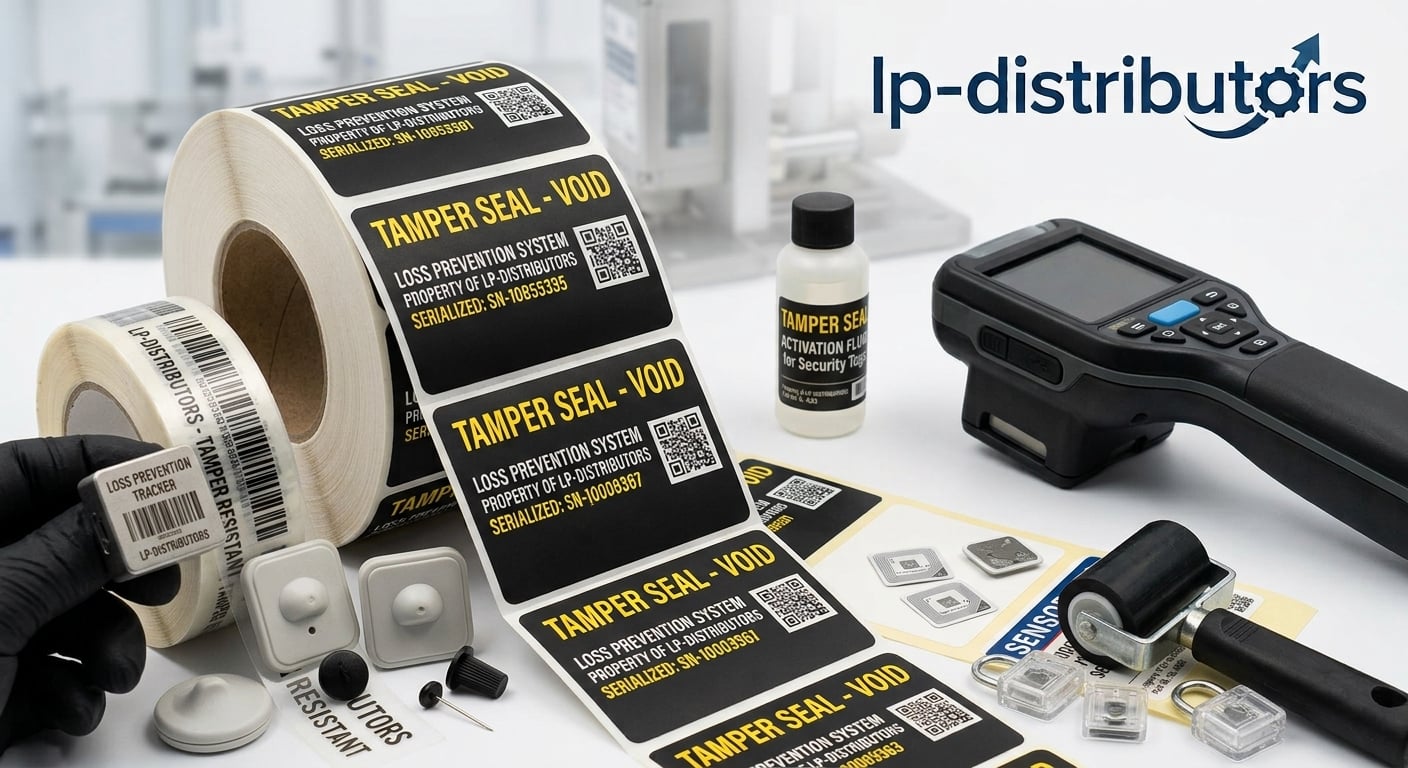
Retailers manage a wide range of products, customer interactions, inventory movements, and daily transactions. Keeping merchandise secure is therefore an important part of store operations. Retail loss prevention involves the strategies, technologies, and procedures used to reduce merchandise loss, improve inventory control, and identify potential security risks. Electronic article surveillance, security tags, labels, alarms, cameras, inventory procedures, and trained staff can all contribute to a broader loss prevention approach.
What Is Retail Loss Prevention?
Retail loss prevention refers to the processes used by retailers to reduce losses caused by shoplifting, internal theft, administrative errors, damaged merchandise, and other forms of inventory shrinkage.
One common technology is Electronic Article Surveillance (EAS). EAS systems typically use security tags or labels attached to merchandise and detection equipment positioned near store exits. Depending on the system, technologies such as radio frequency (RF) or acousto-magnetic (AM) can be used.
Main Components of a Loss Prevention System
A retail security setup can include several interconnected components.
Security Tags
Hard security tags can be attached to clothing, accessories, sporting goods, and other merchandise. Many are designed to be removed at checkout using a compatible detacher.
Security Labels
Soft labels can be applied to products where a traditional hard tag may not be practical. They are commonly used with packaged goods, electronics, cosmetics, and other merchandise.
Detection Systems
Detection pedestals or antennas are generally positioned near store entrances and exits. When an active compatible tag passes through the detection area, the system can trigger an alarm.
Deactivators and Detachers
At checkout, compatible soft labels may be deactivated while reusable hard tags can be removed using appropriate detaching equipment. These components need to match the security technology being used by the retailer.
AM and RF Technologies
Two commonly encountered EAS technologies are AM and RF.
AM systems commonly operate around 58 kHz, while many RF systems operate around 8.2 MHz. Tags and labels are designed to work with their corresponding detection technology, so compatibility is an important consideration when selecting security products.
Retailers should identify the technology already installed in their store before purchasing replacement tags, labels, or related components.
Choosing Security Tags for Different Merchandise
Different products may require different types of security tags.
Clothing and Apparel
Hard tags and specialized clothing tags can be attached to garments while allowing customers to examine the merchandise normally.
Electronics
Higher-value electronics may require specialized tags, lanyards, cable locks, or protective devices depending on the product’s size and display method.
Sporting Goods
Sporting equipment can require security lanyards or other attachment methods because conventional clothing tags may not be suitable for larger products.
Packaged Merchandise
Soft security labels can be useful for boxed or packaged products where an external hard tag may interfere with packaging or presentation.
The Role of LP Distributors
LP-Distributors offers retail security products covering categories such as AM and RF tags, labels, deactivators, detachers, lanyards, and related loss prevention equipment. Its product listings include both 58 kHz AM-compatible and 8.2 MHz RF-compatible security products.
When evaluating products from any supplier, retailers should first identify their existing EAS system and then verify that replacement tags, labels, and equipment are compatible with it.
Inventory Control and Loss Prevention
Technology is only one part of an effective loss prevention strategy. Inventory procedures can also help identify discrepancies and reduce avoidable losses.
Regular stock counts, accurate receiving procedures, controlled access to inventory areas, proper product labeling, and point-of-sale checks can provide additional layers of control. Combining operational procedures with appropriate security technology can provide a more comprehensive approach.
Maintenance and System Compatibility
EAS equipment should be maintained according to the manufacturer’s specifications. Detection equipment, deactivation units, tags, and labels should work together as part of the same compatible system.
Before replacing components, retailers should check the frequency, system type, product specifications, and compatibility requirements. For example, an RF label intended for an 8.2 MHz system should not automatically be assumed to work with a 58 kHz AM system.
Building a Practical Loss Prevention Strategy
Effective retail loss prevention usually involves multiple layers rather than relying on one device. A retailer may combine EAS technology with inventory controls, surveillance, staff procedures, secure displays, and appropriate store layout.
The right combination depends on factors such as merchandise type, store size, number of entrances, product value, customer traffic, and existing security infrastructure.
Conclusion
Retail loss prevention combines technology, inventory procedures, and operational practices to help retailers reduce merchandise loss and improve control over their stores. EAS tags, labels, detection systems, deactivators, and detachers can form an important part of this approach when properly matched and installed.
Understanding the difference between AM and RF technologies, selecting compatible components, and combining security equipment with sound inventory procedures can help retailers build a more structured security strategy. LP Distributors’ range of tags, labels, lanyards, and related products provides examples of the different components used within modern retail security systems.