




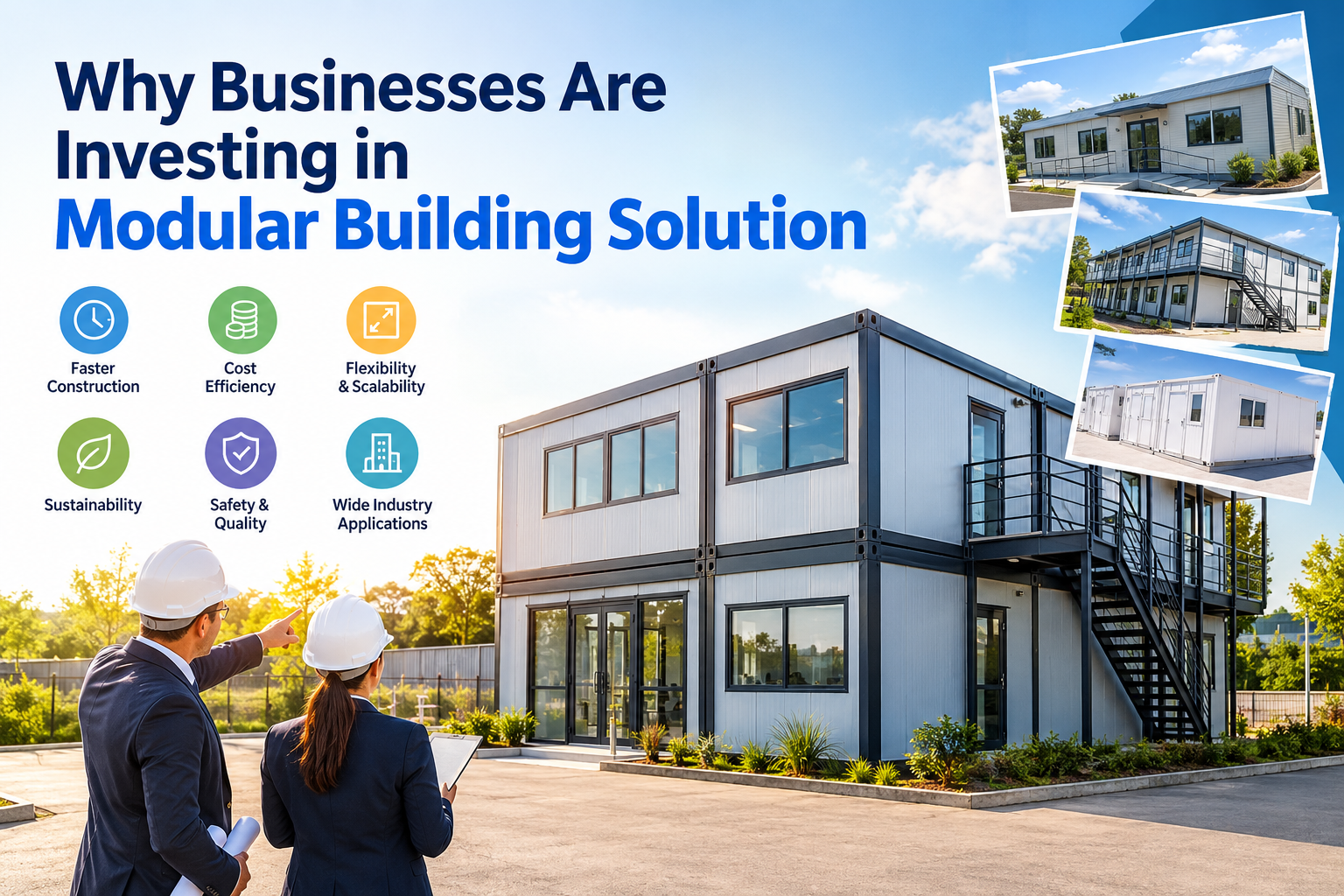
Businesses across industries are constantly looking for smarter ways to expand operations, reduce construction costs, and improve efficiency. Traditional construction methods can involve lengthy timelines, complex project management, and unexpected expenses. As a result, many organizations are exploring modern alternatives that offer greater flexibility and predictable project delivery. One approach gaining attention is modular building solutions , which provide an efficient way to develop functional spaces while meeting changing business requirements.
From commercial offices and industrial facilities to healthcare buildings and temporary workspaces, modular construction offers opportunities to streamline the building process. Companies such as TSSC Group operate in the broader building solutions sector, where modern construction technologies and adaptable building systems are increasingly important for meeting business needs.
1. Faster Construction and Project Completion
Time is a critical factor for businesses planning new facilities or expanding existing operations. Delays in construction can affect staffing, production schedules, customer service, and overall profitability. Modular construction can help address these challenges by allowing components to be manufactured off-site while site preparation takes place simultaneously.
Unlike conventional construction, which often depends on completing one phase before starting another, modular projects can coordinate several activities at once. Building modules are prepared in a controlled manufacturing environment and transported to the project location for installation.
This coordinated approach can shorten overall project schedules, depending on the building design, site conditions, and approval requirements. Businesses may therefore be able to occupy new facilities sooner and begin operations with less disruption.
2. Better Control Over Construction Costs
Budget management is another major reason organizations consider modular construction. Traditional projects may experience cost increases because of weather delays, labor shortages, material waste, or unexpected site conditions.
Modular building solutions can offer improved cost predictability through standardized processes, controlled manufacturing, and more efficient material planning. Repeating proven designs across multiple projects can also reduce design complexity and help businesses plan expenses more accurately.
For organizations developing several facilities, standardized modules may provide additional economies of scale. However, the final cost depends on factors such as transportation, site preparation, installation, building specifications, and local regulations.
By evaluating these costs early, businesses can determine whether modular construction aligns with their financial objectives and long-term investment plans.
3. Flexibility for Changing Business Requirements
Business needs rarely remain the same for long. A growing company may require additional office space, a manufacturer may need more operational capacity, and a construction company may need temporary facilities for a new project.
Modular construction can provide flexibility by allowing buildings to be designed around specific operational requirements. Depending on the system, modules can be combined, reconfigured, relocated, or expanded to accommodate changing needs.
This adaptability is particularly valuable for organizations experiencing rapid growth or managing projects across multiple locations. Instead of starting every expansion from the beginning, businesses may be able to incorporate compatible modular units into an existing development.
Careful planning is essential to ensure that future additions remain compatible with the original building’s structure, utilities, and regulatory requirements.
4. Consistent Quality and Manufacturing Standards
Maintaining consistent construction quality is important for safety, reliability, and long-term performance. Traditional construction takes place primarily on-site, where weather conditions, workforce availability, and environmental factors can influence the process.
Modular buildings are manufactured in controlled facilities, allowing production teams to follow standardized procedures and conduct inspections at different stages. This environment can improve consistency in component dimensions, assembly, and finishing.
Quality assurance remains essential throughout the entire project. Materials, structural connections, transportation, installation, and final inspections must all meet applicable standards.
For businesses, a well-managed modular project can help reduce avoidable defects and support more predictable building performance. Selecting an experienced provider and establishing clear quality requirements are important steps toward achieving these benefits.
5. Improved Sustainability and Material Efficiency
Sustainability has become an important consideration for businesses planning new construction projects. Organizations are increasingly interested in reducing waste, improving resource efficiency, and selecting materials that support their environmental objectives.
Modular construction can contribute to these goals through more accurate material planning, controlled production, and the potential reuse of building components. Manufacturing in a dedicated facility can also make it easier to collect and manage certain material offcuts.
Additionally, buildings can incorporate energy-efficient insulation, efficient lighting, and appropriately designed heating, ventilation, and air-conditioning systems.
The environmental benefits are not automatic. Transportation distances, material choices, building energy consumption, and the ability to reuse modules all influence a project’s overall impact. Businesses should evaluate these factors when comparing construction methods and selecting suitable building systems.
6. Greater Safety and Less On-Site Disruption
Construction safety is a priority for developers, contractors, and business owners. Modular manufacturing shifts some activities away from the project site, potentially reducing the amount of work performed in busy or difficult site conditions.
A controlled manufacturing environment can support organized workflows, consistent equipment use, and dedicated quality and safety procedures. Meanwhile, reduced on-site construction activity may help limit disruption to neighboring businesses or ongoing operations.
However, modular projects still involve transportation, lifting operations, installation work, and coordination between contractors. These activities require suitable risk assessments, trained personnel, and compliance with applicable safety regulations.
When properly managed, modular construction can help businesses coordinate project activities more efficiently while maintaining appropriate safety standards.
7. Suitable for Multiple Industries
One of the main advantages of modular construction is its versatility. Different industries can use modular systems to develop spaces that support their operational requirements.
Common applications include:
- Commercial offices: Flexible workspaces, meeting rooms, and administrative facilities.
- Industrial facilities: Site offices, worker accommodation, and selected operational support buildings.
- Healthcare: Certain clinical, administrative, and support spaces designed to meet relevant healthcare requirements.
- Education: Classrooms, training centers, and additional learning facilities.
- Retail and hospitality: Selected commercial spaces, service units, and customer-facing facilities.
- Construction projects: Temporary offices, workforce facilities, and site support buildings.
The suitability of modular construction depends on building codes, occupancy requirements, structural design, accessibility, and the intended use of the facility. Businesses should assess these factors before choosing a particular system.
8. Supporting Business Growth With Scalable Infrastructure
As organizations expand into new markets, infrastructure must keep pace with their changing needs. Building facilities through conventional methods at every location can create logistical and scheduling challenges.
Modular construction offers a potential strategy for businesses that need repeatable building designs across multiple sites. Standardized layouts and components can simplify planning, procurement, and installation when projects share similar requirements.
For example, a company opening several regional offices may benefit from a consistent design that can be adapted to local site conditions. An industrial business may also explore modular facilities to support temporary or phased capacity expansion.
This approach can help organizations plan growth more systematically while maintaining flexibility for future changes.
9. Choosing the Right Modular Building Partner
The success of a modular construction project depends on more than selecting a building system. Businesses must also consider the experience, technical capabilities, and project coordination offered by their chosen provider.
Before making a decision, organizations should evaluate the following factors:
- Previous experience with comparable projects and building types.
- Available design options and customization capabilities.
- Material specifications, manufacturing standards, and quality controls.
- Transportation, installation, and project management arrangements.
- Compliance with local building regulations and safety requirements.
- Maintenance needs, warranty terms, and opportunities for future expansion.
Companies exploring modern construction approaches can consider industry participants such as TSSC Group when researching potential building solutions and project requirements. Businesses should review the provider’s current product range, relevant project experience, and technical documentation to determine whether its offerings match their needs.
Obtaining detailed quotations and comparing the full project lifecycle costs can also help decision-makers make informed investments.
Conclusion
The growing interest in modular building solutions reflects the need for construction methods that support efficiency, flexibility, cost planning, and consistent quality. By manufacturing components in controlled environments and coordinating site work with off-site production, modular construction can offer practical advantages for businesses across a wide range of industries.
From faster project delivery to adaptable infrastructure and potentially improved material efficiency, the approach provides several benefits worth evaluating. Nevertheless, every project requires careful consideration of design, regulations, logistics, and long-term operating costs.
Businesses that assess their requirements and work with suitable construction partners can make better-informed decisions about modular development. As construction technologies continue to evolve, modular methods are likely to remain an important option for organizations seeking practical and scalable infrastructure for future growth.