




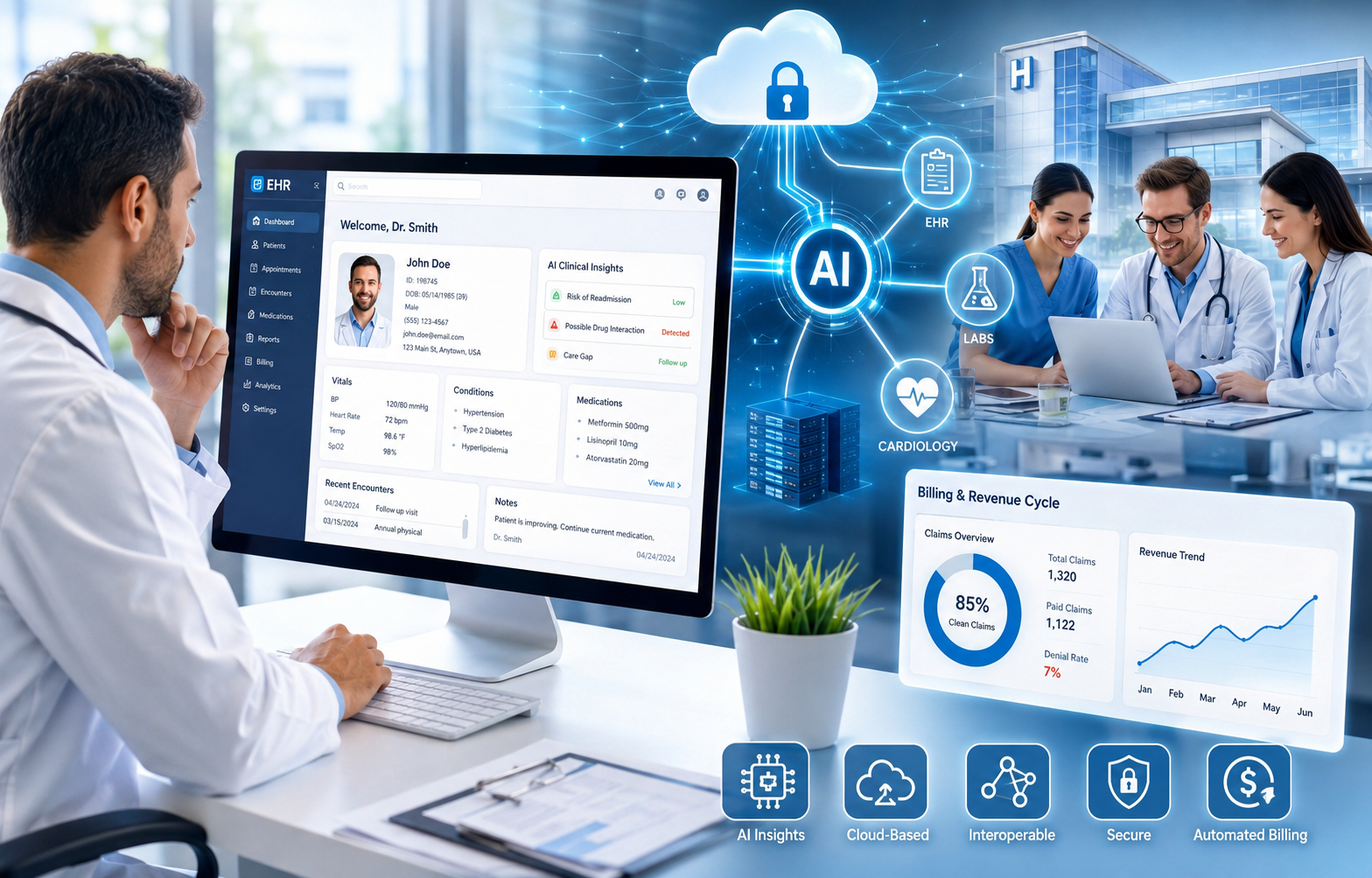
Choosing the best electronic health records software is one of the most important technology decisions a medical practice can make. As more providers move away from paper charts and on-premise servers, cloud-based systems have become the preferred option for practices of every size. They offer flexibility, stronger security, and lower upfront costs, all while making patient data easier to access and manage.
This guide explains how cloud-based EHR platforms work, why they are gaining popularity, and what practices should consider before making the switch.
What Is Cloud-Based EHR Software?
Cloud-based EHR software stores patient records on secure remote servers instead of a local computer or in-house server. Providers access the system through a web browser or mobile app using a secure login. The software vendor handles hosting, maintenance, and updates, which means your practice does not need to manage the technical side.
This setup removes many of the burdens that come with traditional systems, such as hardware upgrades, manual backups, and IT troubleshooting.
Key Benefits of Cloud-Based EHR Systems
1. Access Patient Data From Anywhere
Providers are no longer tied to a single office computer. With a cloud-based system, doctors can review charts, update notes, and approve prescriptions from any location with internet access.
This is especially helpful for:
- Providers who work across multiple clinic locations
- Physicians who offer telehealth appointments
- Doctors who need to check records after hours or while on call
2. Lower Upfront and Ongoing Costs
Traditional EHR systems often require expensive servers, software licenses, and dedicated IT staff. Cloud-based platforms typically use a subscription model, which spreads the cost over time and reduces the initial investment.
Practices also save on:
- Hardware purchases and replacements
- Server maintenance and cooling
- IT support and emergency repairs
- Software upgrade fees
3. Stronger Data Security and Backup
Many practice owners worry about storing sensitive patient information online, but reputable cloud vendors invest heavily in security. Features like data encryption, multi-factor authentication, and continuous monitoring are standard on most professional platforms.
Cloud systems also back up data automatically. If a computer fails or an office is affected by a natural disaster, patient records remain safe and recoverable.
4. Automatic Updates and Compliance Support
Healthcare regulations change often, and keeping software compliant can be a challenge. Cloud-based vendors roll out updates automatically, so your practice always runs the latest version without scheduling downtime or paying for upgrades.
Updates often include new features, security patches, and changes needed to stay aligned with HIPAA and other industry requirements.
5. Easier Scalability as Your Practice Grows
Adding a new provider or opening a second location is much simpler with a cloud-based system. Instead of installing new servers, you simply add user accounts and adjust your subscription.
This flexibility makes cloud EHR platforms a strong fit for growing practices that want technology that scales with them.
Better Collaboration Across Care Teams
Patient care often involves multiple providers, specialists, labs, and pharmacies. Cloud-based systems make it easier to share information securely and in real time.
When everyone works from the same up-to-date record, practices see:
- Fewer communication gaps between providers
- Faster referrals and lab result sharing
- Reduced duplicate tests and paperwork
- Better continuity of care for patients
Improved Patient Experience
Cloud-based EHR platforms often include patient portals, giving individuals direct access to their health information. Patients can view test results, request prescription refills, complete intake forms, and message their provider without calling the office.
This convenience reduces front desk workload and helps patients feel more involved in their own care. It also leads to fewer missed appointments, since many systems send automatic reminders by text or email.
What to Look for When Choosing a Cloud EHR Platform
Not every system offers the same value, so it helps to evaluate options carefully. When comparing vendors, consider the following:
- Ease of use: The interface should be simple enough for staff to learn quickly
- Security features: Look for encryption, access controls, and audit trails
- Integration options: The system should connect smoothly with scheduling, labs, and billing tools
- Customer support: Responsive support matters when issues come up during patient hours
- Customization: Templates and workflows should fit your specialty
Pairing EHR With Billing Tools
A strong clinical system works best when it connects with your financial tools. Small practices in particular benefit from combining their records platform with the best medical billing software for small business needs, since this reduces duplicate data entry and helps claims go out accurately the first time. When clinical documentation flows directly into billing, coding errors drop and reimbursements tend to arrive faster.
Common Concerns About Moving to the Cloud
Some practices hesitate to switch because of a few common worries. Here is how they usually play out in reality:
- Internet dependence: Reliable internet is needed, but most vendors offer strong uptime guarantees and some include offline access options
- Data migration: Experienced vendors help transfer existing records, though planning ahead is important
- Staff training: Modern cloud systems are designed to be intuitive, and many vendors provide onboarding support
With proper preparation, most practices find the transition smoother than expected.
Final Thoughts
Cloud-based technology has changed how medical practices manage patient information. From lower costs and better security to easier access and smoother collaboration, the advantages are clear for practices of all sizes.
Taking time to compare vendors and understand your practice’s needs will help you choose a system that supports both patient care and long term growth. The right platform becomes a foundation for efficiency, accuracy, and a better experience for everyone involved.
Frequently Asked Questions
1. Is cloud-based EHR software secure enough for patient data?
Yes. Reputable vendors use encryption, multi-factor authentication, and continuous monitoring to protect patient information, often exceeding the security of a small in-house server.
2. How much does cloud-based EHR software cost?
Pricing varies by vendor and practice size, but most platforms use a monthly per-provider subscription, which removes the need for large upfront hardware investments.
3. Can cloud-based EHR systems work during internet outages?
Some platforms offer limited offline access, while others require a stable connection. It is worth asking vendors about uptime guarantees and backup options before signing up.
4. How long does it take to switch to a cloud-based EHR system?
Most practices complete the transition in a few weeks to a few months, depending on practice size, data migration needs, and staff training.
5. What features should the best electronic health records software include?
Look for secure access, easy documentation tools, patient portals, billing integration, strong reporting, and responsive customer support to ensure the system fits your daily workflow.