





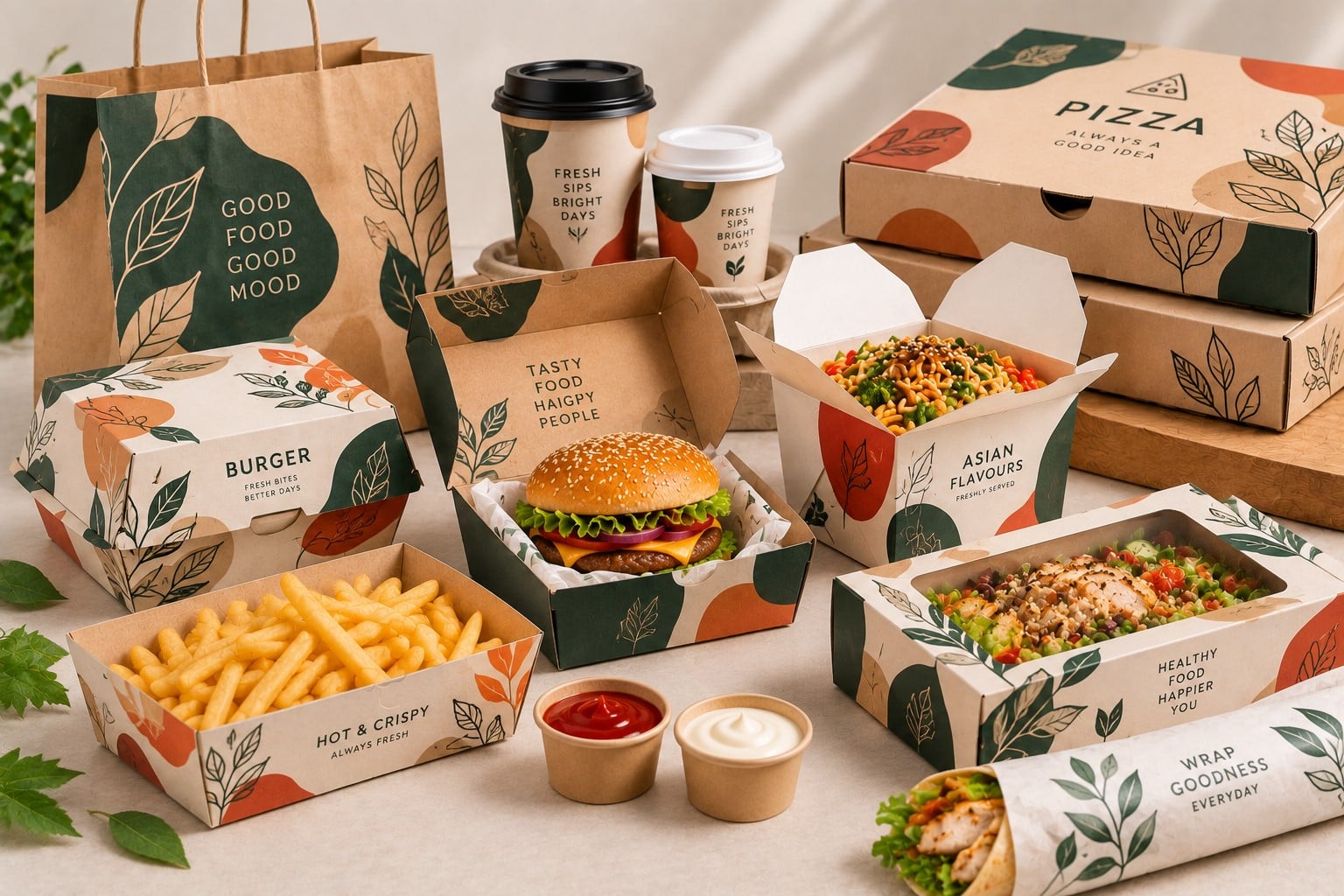
For UK food businesses, choosing the right food boxes can have a direct impact on food presentation, delivery performance and customer satisfaction. Restaurants, cafés, takeaways, street-food operators and delivery kitchens all have different packaging needs. A box that works well for a dry meal may not be suitable for food containing sauces, grease or steam.
Good packaging should protect the meal while making it easy for staff to pack and customers to carry. It should also suit the business’s menu, portion sizes, delivery method and budget. This guide explains the practical factors UK food businesses should consider before choosing their packaging.
Why Food Boxes Matter for Takeaway Businesses
Food can go through several stages before reaching the customer. It may be prepared in the kitchen, packed by staff, placed in a delivery bag and transported by car, bicycle or another delivery method.
During this process, unsuitable packaging can cause problems such as:
- Food movement
- Sauce leakage
- Crushed products
- Grease marks
- Excessive steam
- Poor presentation
Suitable food boxes can help reduce these problems by providing a stable space for the meal. However, packaging should always be considered alongside proper food hygiene, preparation and handling procedures.
Choose Food Boxes Based on Your Menu
The best packaging starts with the food itself. Businesses should not select a box simply because it looks attractive or has a low price.
Consider:
- Food type
- Portion size
- Product weight
- Moisture level
- Grease content
- Temperature
- Delivery time
A burger may need a different structure from a noodle dish, while pastries and fried foods can have their own requirements.
For example, crispy foods may need appropriate ventilation to manage steam, while meals with sauces may require packaging that provides better moisture and leak management.
Testing packaging with actual menu items is one of the most reliable ways to assess its performance.
Consider Material and Construction
Material plays an important role in the strength and performance of packaging. Cardboard and paper-based materials are commonly used for many takeaway applications because they can provide a practical balance between weight and structure.
Businesses should consider:
- Material thickness
- Structural strength
- Grease resistance
- Moisture management
- Food-contact suitability
- Storage conditions
The packaging material should be appropriate for the intended food. A lightweight snack may not need the same construction as a heavier meal.
Businesses should also make sure packaging is stored in a clean and dry environment before use.
Custom Takeaway Packaging for Different Requirements
Every food business has its own menu and service style. Custom takeaway packaging can help businesses choose packaging around specific products rather than trying to make one standard size work for everything.
Custom solutions can be considered when a business needs:
- Specific dimensions
- Different portion sizes
- A particular opening style
- Additional internal support
- Brand printing
- Better packing efficiency
Customisation should solve a genuine business requirement. Adding unnecessary features can increase cost and material use without improving the customer experience.
Custom Fast Food Packaging for Busy Kitchens
Fast-food businesses often need to prepare large numbers of orders quickly. Packaging therefore needs to support both protection and efficient kitchen operations.
Custom fast food packaging can be developed around products such as burgers, fries, wraps, chicken meals and other suitable takeaway foods.
A practical package should be:
- Easy to assemble
- Quick to close
- Easy to stack
- Convenient to store
- Simple for staff to handle
Businesses should test packaging during a busy service period rather than only during quiet hours. This can show whether staff can use it quickly and consistently.
Choosing a Chinese Takeaway Box
Chinese food businesses may serve noodles, rice, stir-fries, vegetables and meals containing sauces. These foods can create heat, moisture and grease, so packaging needs to match the characteristics of the meal.
A Chinese takeaway box should provide enough capacity for the intended portion without leaving excessive space.
Businesses should check:
- Internal dimensions
- Closure security
- Material strength
- Moisture management
- Grease resistance
- Ease of carrying
A noodle dish and a saucy rice meal may behave differently during delivery. Testing popular menu items can therefore help businesses determine which packaging works best.
When Cardboard Trays Are Useful
Cardboard trays can be suitable for takeaway products that benefit from a stable serving base. They may be useful for burgers, fries, snacks, pastries and other suitable foods.
The tray should be correctly sized. A tray that is too large can allow food to move, while one that is too small can affect presentation.
Businesses should also consider the amount of grease or moisture produced by the food. The material should be suitable for the intended application.
Think About Heat and Moisture
Heat and moisture are two common challenges in takeaway packaging. Hot food can release steam after being packed, and trapped moisture may affect the texture of some foods.
This is particularly important for:
- Fries
- Fried chicken
- Crispy snacks
- Toasted foods
- Fried appetisers
At the same time, some meals need packaging that helps maintain their temperature and prevents spills.
There is no universal solution. Businesses should consider the characteristics of each menu item and test the packaging under normal delivery conditions.
Improve Food Presentation
Packaging is often the first thing customers see when their order arrives. A clean, correctly sized box can make the meal appear more organised and professional.
Good presentation can involve:
- Secure closures
- Correct portion fit
- Clean packaging
- Neat food placement
- Consistent branding
Branding can be added through logos, colours, QR codes or short messages. However, packaging should not become overcrowded with information.
The main objective should remain protecting and presenting the food effectively.
Make Food Packaging Practical for Customers
Customers should be able to carry and open their orders without unnecessary difficulty. Packaging that is difficult to open can create frustration, particularly when customers are eating at home, work or while travelling.
Businesses should consider whether the packaging:
- Opens easily
- Remains secure during carrying
- Prevents unnecessary movement
- Can be disposed of appropriately
- Provides enough space for the food
Small improvements in convenience can make a noticeable difference to the overall takeaway experience.
Consider Sustainability
Many UK food businesses are reviewing how they can reduce packaging waste. Choosing correctly sized packaging is one practical step because oversized boxes can use more material than necessary.
Businesses can also consider suitable paper-based or recyclable materials where appropriate.
However, reducing packaging should not compromise food protection. If a meal arrives damaged, the business may need to replace it, creating additional food waste and delivery requirements.
Environmental claims should also be accurate and based on the actual material and disposal options.
Control Packaging Costs
Packaging is a regular business expense, so businesses need to balance quality with cost.
The cheapest packaging may not always offer the best value. Weak or unsuitable packaging can contribute to:
- Damaged meals
- Refunds
- Replacements
- Customer complaints
- Food waste
When comparing food boxes, businesses should look at material quality, size, quantity, storage and delivery costs rather than focusing only on the unit price.
Ordering samples first can help businesses make a better purchasing decision.
Test Before Ordering in Bulk
Testing provides useful real-world evidence before a large packaging order is placed.
Businesses should pack actual menu items and check:
- Does the food fit correctly?
- Does the box close securely?
- Does the meal move during transport?
- Does grease affect the material?
- Does steam affect the food?
- Does the package remain presentable?
- Can staff pack orders quickly?
This process can identify problems before they become expensive.
Frequently Asked Questions
What should UK food businesses consider when choosing food boxes?
Businesses should consider food type, portion size, material strength, grease, moisture, temperature, delivery conditions, storage and cost.
Are cardboard trays suitable for takeaway food?
They can be suitable for foods such as burgers, fries, snacks and pastries, depending on the food’s moisture, grease and weight.
Why should takeaway packaging be tested?
Testing allows businesses to see how packaging performs with their actual food during normal preparation and delivery.
Is custom takeaway packaging necessary?
Not always. Standard packaging can work well for many businesses, but custom options can be useful when specific sizes, structures or branding requirements are needed.
How can packaging improve customer satisfaction?
Suitable packaging can help food arrive securely, look presentable and remain easier for customers to carry and open.
Final Thoughts
Choosing the right food boxes is an important decision for UK food businesses because packaging affects protection, presentation, convenience and daily operations. The right choice should be based on the actual food rather than appearance or price alone.
Businesses can consider custom takeaway packaging when they need packaging designed around specific menu requirements, while custom fast food packaging can support busy food-service environments. A suitable Chinese takeaway box can help protect meals containing noodles, rice and sauces, while cardboard trays can provide a practical base for suitable takeaway products.
The most reliable approach is to test packaging with real food before ordering in bulk. By considering material, size, heat, moisture, delivery conditions, sustainability and staff efficiency, UK food businesses can choose packaging that supports a safer, more consistent and convenient customer experience.