





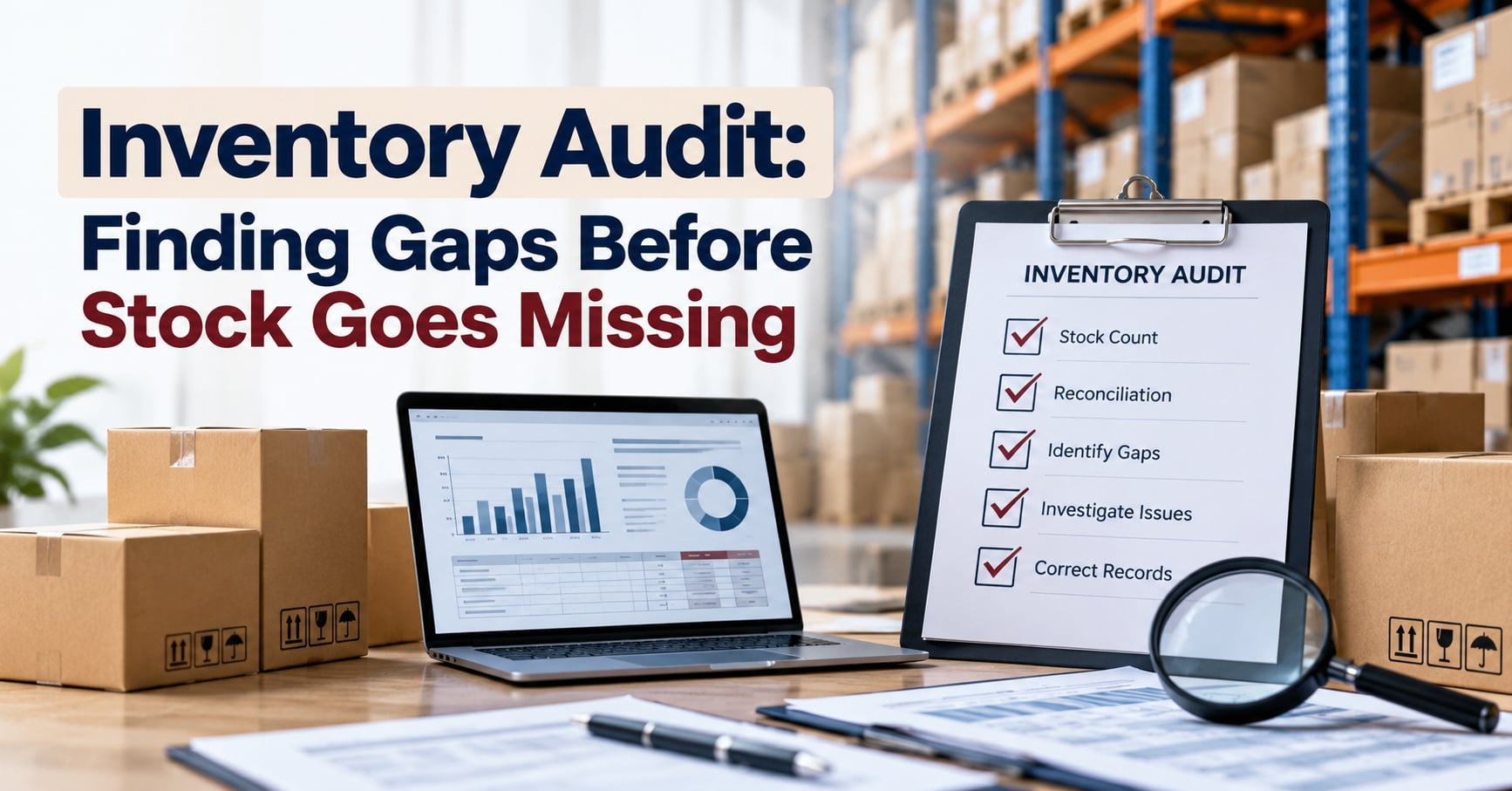
A stock report may show that a product is available, while the warehouse team cannot locate it. Another item may occupy valuable shelf space for months without attracting a sale. Both situations point to a gap between inventory records and what is happening on the ground.
An inventory audit helps businesses examine these gaps. It checks stock quantities, supporting records and inventory controls to identify differences and understand their causes. For retailers, combining this work with a retail audit provides a broader view of how goods move through warehouses, distribution centres and stores.
What Is an Inventory Audit?
An inventory audit examines whether inventory records reliably reflect the goods a business holds. Depending on its scope, it can cover physical quantities, stock condition, ownership, valuation and the controls governing inventory movements.
A physical stock count is one part of this process. The wider review considers whether receipts, sales, returns, transfers and adjustments have been recorded correctly.
For financial statement audits, ICAI’s SA 501 addresses evidence about inventory existence and condition. Where inventory is material, it requires attendance at physical counting unless impracticable, alongside procedures over final inventory records.
Why Inventory Differences Deserve Attention
Incorrect stock information affects everyday decisions. Purchasing teams may reorder goods already available elsewhere, while sales teams may accept orders for products that cannot be supplied.
Common issues worth investigating include:
- Unrecorded receipts or dispatches.
- Incorrect product codes or units of measurement.
- Transfers recorded at only one location.
- Customer returns awaiting inspection.
- Damaged goods mixed with saleable stock.
- Adjustments entered without adequate approval.
A shortage does not automatically indicate theft. Counting mistakes, delayed entries and misplaced goods can produce similar results. The purpose of the review is to establish what happened before deciding how to respond.
How the Inventory Audit Process Works
1. Define the Scope and Prepare Records
Start by identifying the locations, product categories and period under review. Include relevant storage areas, shop floors, return zones and goods held by outside warehouses.
Prepare stock reports, purchase records, dispatch documents, transfer notes and previous reconciliation statements. Teams should use a consistent reporting time so that quantities remain comparable.
High-value items, frequently adjusted products and categories with repeated discrepancies may need closer attention.
2. Organise Physical Verification
Clear counting instructions help teams avoid missed shelves, duplicate counts and confusion between similar products. Separate damaged, expired and returned goods before counting where practical.
Inventory movements during the count should be controlled and documented. Otherwise, goods moving between locations can be counted twice or omitted.
Auditors may test selected entries from count records against physical goods and trace selected physical goods back to records. These checks help assess the accuracy and completeness of count information.
3. Reconcile Differences
Compare verified quantities with system balances and investigate exceptions. Check transaction timing, product identification, transfer status and supporting documents before approving an adjustment.
For example, a warehouse may dispatch 50 units to a store, but the receiving entry may remain pending. The resulting difference requires a review of the transfer trail.
Simply changing the balance would leave the underlying delay unresolved.
4. Review Stock Condition and Supporting Values
Goods can be physically present yet unsuitable for normal sale. Review damaged packaging, expiry dates, outdated models and products with little recent movement.
Such findings should be referred for an appropriate valuation assessment under the applicable accounting framework. A physical count alone cannot establish whether every item’s recorded value remains appropriate.
Ownership also needs separate evidence. Goods stored on the premises may belong to a supplier or another party.
5. Report Findings and Assign Actions
A useful report explains each significant difference, the evidence reviewed and the likely cause. It should also identify the responsible team and a completion date for corrective action.
ICAI’s implementation guidance highlights the need to record inventory discrepancies and assess weaknesses identified during verification. This makes follow-up an essential part of resolving findings.
How a Retail Audit Supports Inventory Accuracy
A retail audit can examine store activities that influence stock records. Its scope may include receiving practices, billing, returns, stock transfers, display availability and compliance with operating procedures.
Consider a customer return accepted at the billing counter. If the refund is processed but the item is never classified as saleable, damaged or pending inspection, the system and physical stock may diverge.
Reviewing that transaction from refund to final storage helps identify the missing step. Together, inventory and store-level reviews connect stock differences with the processes that produced them.
Preparing for a More Useful Review
Businesses can improve preparation by keeping product codes consistent, labelling storage locations and clearing pending transaction entries.
Useful preparations include:
- Assigning responsibility for each counting area.
- Separating goods with different ownership or condition.
- Making transaction documents readily available.
- Recording stock movements during verification.
- Reviewing unresolved findings from earlier counts.
Barcode scanners and inventory software can support these activities, but their usefulness depends on accurate product data and disciplined transaction recording.
Turning Findings into Better Stock Control
The value of an inventory audit continues after reconciliation. Repeated differences should lead to changes in the receiving, storage, dispatch or adjustment process responsible.
Track whether corrective actions reduce recurring exceptions. If the same location repeatedly reports shortages, review access controls, handover practices and transaction timing.
Reliable stock information develops through consistent daily recording, supported by independent checks. Businesses should begin with their most persistent inventory differences and build a documented process for resolving them.
FAQs
Q: What is an inventory audit?
An inventory audit checks stock quantities, records, condition and related controls to assess inventory accuracy.
Q: What is the difference between an inventory audit and stocktaking?
Stocktaking counts goods; an inventory audit also examines records, discrepancies and controls.
Q: How is an inventory audit conducted?
It involves planning, physical verification, record reconciliation, investigation and reporting.
Q: Which documents are needed for an inventory audit?
Key documents include stock reports, purchase invoices, goods receipt notes, dispatch records and transfer notes.
Q: What causes inventory discrepancies?
Common causes include counting errors, delayed entries, incorrect codes, unrecorded transfers and stock losses.
Q: How does a retail audit support inventory control?
A retail audit reviews store processes such as receiving, billing, returns and transfers that affect stock accuracy.
Q: How often should businesses review inventory?
Review frequency should reflect stock value, movement, loss risk and previous discrepancies.
Q: Can inventory software replace physical verification?
Software maintains records, but physical verification checks whether those records match actual goods.
Q: What should an inventory audit report include?
It should include findings, supporting evidence, causes, corrective actions, responsible teams and deadlines.
Q: Does an inventory shortage always mean theft?
No. Shortages may also result from recording errors, misplaced goods, counting mistakes or pending transactions.