




Fruit-flavoured wines have expanded the traditional idea of what a wine-based drink can taste and look like. Rather than concentrating exclusively on familiar grape characteristics, these products use distinctive fruit flavours, vivid colours, and alternative serving styles to create a different drinking experience. They are often intended for casual occasions rather than formal wine tasting.
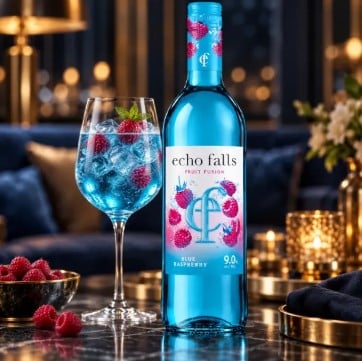
A particularly distinctive example is blue raspberry echo falls, a fruit fusion wine combining a sweet raspberry profile with a tangy edge and an unmistakable bright-blue appearance. The 75cl drink is currently listed at 9% alcohol by volume (ABV), putting it below the strength of many conventional table wines. Its unusual flavour and colour also raise several useful questions: what exactly is it, how strong is it, and how should it be served?
What Is Blue Raspberry Echo Falls?
Blue raspberry echo falls is categorised as a fruit fusion wine rather than a conventional grape-focused table wine. Its defining flavour is blue raspberry, and its profile is described as sweet, fruity, tangy, and relatively light-bodied.
The drink comes in a 75cl bottle and has a vivid blue appearance. That immediately distinguishes it visually from conventional red, white, and rosé wines.
Its flavour profile is similarly unconventional. Sweet raspberry leads the taste, followed by a zesty tang that provides contrast. The finish retains lighter berry characteristics as the sweetness fades.
This combination makes the drink more focused on an immediately recognisable fruit flavour than on the complex grape, tannin, oak, mineral, or regional characteristics commonly discussed when tasting traditional wines.
What Does Blue Raspberry Wine Taste Like?
The dominant characteristic of blue raspberry echo falls is sweetness.
Raspberry appears prominently in both the aroma and flavour. However, the drink is not described as purely sugary. A tangy element develops underneath the initial sweetness, giving the flavour a sharper contrast. The body is comparatively light, while the finish leaves a subtle berry note.
Temperature can also influence how those characteristics are perceived. Chilling a sweet drink can make it seem fresher and more refreshing, whereas serving it warmer may make its sweetness appear more pronounced.
For that reason, the current serving guidance recommends chilling the bottle before consumption.
How Much Alcohol Does It Contain?
Alcohol strength is an important consideration with fruit-flavoured drinks because their sweetness can sometimes make their strength less obvious from taste alone.
The current product specification gives blue raspberry echo falls an ABV of 9%.
ABV represents the percentage of the beverage’s total volume that consists of alcohol. A 75cl bottle contains 750ml of liquid, so at 9% ABV it contains approximately 67.5ml of pure alcohol by volume.
For comparison, the same wine category currently includes examples ranging from 8.5% ABV for a White Zinfandel to 13.5% for a Merlot. This illustrates why the word “wine” alone does not provide enough information to determine a beverage’s strength.
The label and stated ABV should always be checked individually.
How Should Blue Raspberry Echo Falls Be Served?
There is no need to approach blue raspberry echo falls in exactly the same way as a traditional table wine.
The current product guidance suggests serving it well chilled or directly over ice. It can also be incorporated into a spritz, where carbonation can complement its fruit-forward profile.
Serving over ice provides a particularly straightforward option for informal gatherings. As the ice melts, however, it will gradually dilute both the flavour and alcohol concentration in the glass.
A spritz provides another approach. Adding a suitable carbonated mixer can introduce fizz and increase the overall volume of the drink. It is worth remembering that adding a non-alcoholic mixer does not remove the alcohol already contained in the wine; it simply dilutes it across a larger finished drink.
Clear glassware can also highlight the wine’s distinctive blue colour.
What Foods Work With Blue Raspberry Flavours?
Pairing a strongly fruit-flavoured wine with food requires a slightly different approach from traditional wine pairing.
The product information specifically suggests salted pretzels, which create a sweet-and-salty contrast, and vanilla ice cream, where the creamy flavour provides a softer counterpart to the tangy raspberry profile.
These examples demonstrate two useful pairing strategies.
The first is contrast. Salty foods can counterbalance pronounced sweetness and prevent a pairing from becoming excessively sugary.
The second is complementing the fruit with neutral or creamy flavours. Vanilla-based desserts can provide this effect because vanilla generally does not compete heavily with berry flavours.
Very delicate savoury foods may be less suitable because a bold blue-raspberry profile can easily dominate subtle flavours.
Is Fruit Fusion Wine Different From Traditional Wine?
Yes, particularly in terms of its intended sensory experience.
Traditional wine discussions often centre on grape varieties, growing regions, vintage, fermentation, acidity, tannins, ageing, and terroir. Fruit fusion drinks generally prioritise immediately recognisable flavours and approachable serving styles instead.
Someone browsing a wine selection through R&V Drinks, for example, can encounter traditional reds and rosés alongside fruit fusion products, illustrating how broad the modern wine category has become.
Neither approach needs to be considered a substitute for the other. A conventional Merlot and a blue raspberry fruit fusion are designed to provide substantially different drinking experiences.
Understanding that distinction can help set realistic expectations before tasting.
When Does This Style of Wine Work Best?
The bright appearance and sweet flavour of blue raspberry echo falls naturally lend themselves to informal settings.
The current product guidance identifies parties, casual gatherings, and relaxed evenings as suitable occasions. Its serving flexibility also contributes to this positioning because it can be chilled, poured over ice, or incorporated into a spritz.
Its vivid colour can additionally make it useful when the visual presentation of drinks is part of an occasion.
However, the playful appearance should not distract from the fact that it remains an alcoholic beverage at 9% ABV. Serving sizes and total consumption therefore remain relevant even when the drink is mixed or served over ice.
Conclusion
Blue raspberry echo falls offers an unconventional take on fruit fusion wine, combining a vivid blue appearance with sweet raspberry flavour, a tangy counterpoint, and a relatively light-bodied profile. Its 9% ABV places it below many standard table wines, although it still contains alcohol and should be treated accordingly. For anyone trying to understand Echo Falls Fruit Fusion Blue Raspberry, the most useful factors to consider are its fruit-forward taste, alcohol strength, serving temperature, and intended informal drinking style rather than evaluating it according to the expectations associated with a traditional dry wine. Ultimately, its distinctive character comes from combining sweetness, berry flavour, noticeable colour, and flexible serving options into a wine-based drink designed to offer a very different experience from conventional red, white, or rosé wine.