





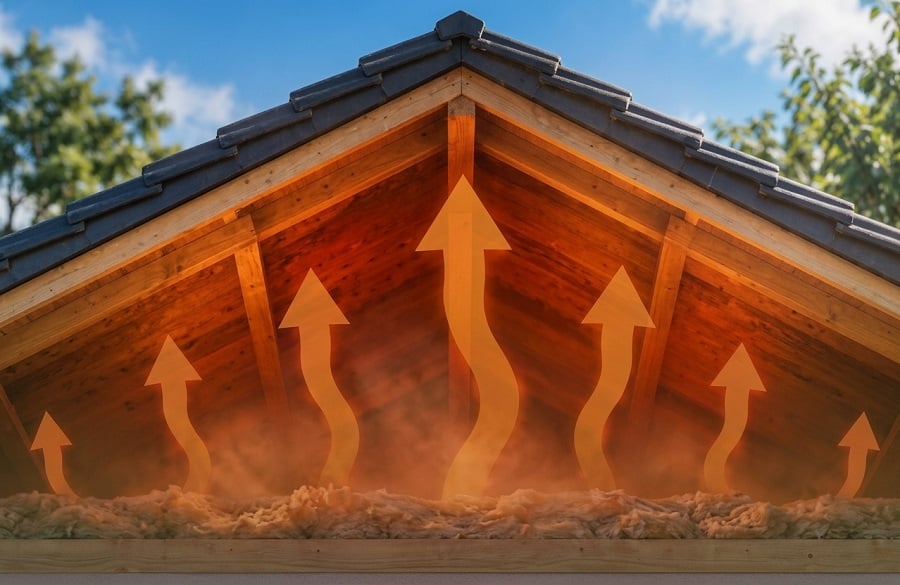
A roof does more than protect a house from rain, wind, and sunlight. It also plays a role in controlling the movement of heat and moisture inside the building. During sunny weather, roofing materials absorb solar energy, causing the roof surface and the space beneath it to become hot.
When this trapped heat cannot escape properly, the attic can remain hot long after the strongest sunlight has passed. That warmth may affect indoor comfort, cooling costs, roofing materials, and the condition of the attic over time.
The problem is not simply that a roof becomes hot. Roofs naturally absorb heat, especially during summer. The concern begins when heat and moisture cannot move out of the roof space at a suitable rate.
Why Does Heat Become Trapped Beneath a Roof?
Sunlight warms roofing materials throughout the day. Some of that heat travels through the roof structure and raises the temperature of the attic.
In a properly designed system, air movement helps carry excess heat outside. Intake vents near the lower roof edges and exhaust vents near the upper roof area can support this movement when they are correctly sized and arranged.
Problems may develop when vents are blocked, the ventilation system is poorly designed, or the attic lacks a suitable path for air to move.
Dark roofing materials, limited shade, and long periods of direct sunlight can also increase the amount of heat absorbed by the roof.
Insulation plays a different role. It slows heat transfer between the attic and living spaces, while ventilation helps manage air movement and moisture. Neither function completely replaces the other.
What Happens When Trapped Heat Keeps Building?
A hot attic can affect different parts of a home, depending on the roof design, insulation, climate, and building condition.
1. The Attic Stays Hot for Longer
An attic with poor air movement may remain extremely warm during the afternoon and early evening. Roof materials continue to release stored heat even after direct sunlight fades.
This can leave the upper part of a home feeling uncomfortable, particularly when the ceiling insulation is inadequate or has gaps.
2. Cooling Systems May Work Harder
Heat can move from the attic into the rooms below through ceilings, gaps, and poorly insulated areas.
When more heat enters the living space, an air conditioner may need to run longer to maintain the selected temperature. The actual effect on energy use depends on the home’s insulation, air sealing, cooling equipment, and outdoor conditions.
Improving attic conditions can help, but ventilation alone will not solve every cooling problem.
3. Roofing Materials May Experience Greater Heat Stress
Roofing materials expand in heat and contract as temperatures drop. Repeated temperature changes place stress on materials and their connections.
Poor ventilation can contribute to higher attic temperatures, but it is not the only cause of roof deterioration. Material quality, installation, sun exposure, moisture, and weather conditions also affect service life.
4. Moisture Problems May Develop
Heat and moisture often interact inside roof spaces. Warm indoor air can carry water vapor into an attic through gaps around ceiling fixtures, access panels, ducts, and other openings.
When moist air reaches a cooler surface, condensation may form. Repeated condensation can contribute to damp insulation, staining, wood damage, and mold growth.
Proper air sealing, suitable ventilation, and moisture control work together to reduce these risks.
How Does Roof Ventilation Help Release Trapped Heat?
Roof ventilation supports air movement through the attic or roof assembly. A common arrangement allows outside air to enter through lower vents and warmer air to leave through higher vents.
As warm air rises, upper exhaust openings can help it escape. Replacement air can then enter through suitable intake openings, supporting a continuous flow when conditions and system design allow it.
Common ventilation components include soffit vents, ridge vents, gable vents, and roof-mounted exhaust vents.
Each option has a specific role. For example, soffit vents often act as intake openings, while ridge vents can allow warm air to escape near the roof peak.
Simply adding more vents does not guarantee better performance. Intake and exhaust capacity must work together, and insulation should not block the intended airflow channels.
Can Trapped Heat Damage Insulation and Wooden Roof Parts?
Yes, heat can contribute to uncomfortable attic conditions, but moisture is often the more direct threat to insulation and wood.
Insulation works by slowing heat transfer. If insulation becomes wet, compressed, displaced, or covered with dust and debris, its performance may decline.
Wooden roof components can also suffer when moisture remains present for long periods. Persistent dampness may encourage decay and create conditions that support mold growth.
A hot attic should not automatically be treated as proof of structural damage. The important step is to look for related warning signs, such as wet insulation, musty odors, dark stains, or visible deterioration.
A professional inspection can help determine whether the issue comes from poor airflow, roof leaks, indoor humidity, or a combination of problems.
What Signs Suggest That Heat Is Not Escaping Properly?
Some clues appear inside the home, while others can be noticed during an attic inspection.
Watch for these signs:
- Upper rooms become noticeably hotter than lower rooms during sunny weather.
- The attic remains unusually hot into the evening.
- Cooling equipment runs for long periods during warm weather.
- Attic vents appear blocked by insulation, debris, paint, or nesting material.
- Musty smells or damp patches appear in the attic.
- Condensation develops on nails, metal fittings, or other cooler surfaces.
- Insulation looks wet, compressed, or discolored.
These signs do not all point to a ventilation problem. A roof leak, insufficient insulation, poor air sealing, or an undersized cooling system may create similar symptoms.
Avoid entering an unsafe attic or walking on a roof to investigate. A qualified professional can examine the space and identify the likely cause.
Why Is Ventilation Not the Only Answer to an Overheated Roof?
A common mistake is to assume that every hot attic needs additional vents. In reality, several parts of the building envelope affect heat movement.
Insulation limits the transfer of heat into living spaces. Air sealing reduces unwanted movement of indoor air into the attic. Roof color, shading, and material choice influence how much solar energy the roof absorbs.
Ventilation supports the removal of heat and moisture, but it cannot make a roof remain cool under every condition.
For example, a house with excellent ventilation but thin attic insulation may still experience high indoor temperatures. Another home may have sufficient ventilation but lose cooling through gaps around ceiling fixtures.
The best solution depends on how the roof, attic, insulation, and living space work together.
How Can Homeowners Reduce Trapped Heat?
A few practical checks can help homeowners understand the condition of their roof system before choosing repairs.
Keep Intake and Exhaust Paths Clear
Soffit vents may become blocked when insulation pushes against the openings. Debris, broken screens, and other obstacles can limit airflow.
Ventilation channels and vent openings should remain clear according to the roof system’s design.
Check Attic Insulation and Air Leaks
Insulation should cover the intended areas evenly without blocking ventilation paths. Gaps around ceiling fixtures, attic hatches, pipes, and ducts may allow warm, humid indoor air to enter the attic.
Sealing appropriate air leaks and correcting insulation problems can improve overall performance.
Inspect for Moisture
Look for damp insulation, water stains, rusty fasteners, or signs of condensation. These clues may indicate a moisture issue that requires more than a ventilation adjustment.
Roof leaks and indoor humidity sources should be addressed rather than relying on airflow alone.
Assess the Complete Ventilation System
A professional can check the balance between intake and exhaust openings, identify obstructions, and determine whether the current system suits the roof design.
Homeowners seeking an assessment can contact roofing companies in Columbia SC to discuss attic conditions, roof concerns, and suitable inspection options.
Does Every Roof Need the Same Ventilation Setup?
No. Roof ventilation requirements depend on the building’s design, attic configuration, local climate, and applicable building standards.
A traditional vented attic is different from an unvented roof assembly designed with specific insulation and moisture-control methods. Adding vents to an unvented assembly without understanding its design may not be appropriate.
The roof’s shape also affects ventilation choices. A simple gable roof may allow one arrangement, while a roof with several valleys, additions, or separated attic spaces may need a different plan.
Vent placement matters as much as vent quantity. Poorly arranged openings can allow air to short-circuit between nearby vents instead of moving through the intended attic space.
A suitable assessment should examine the whole system rather than treating each vent as an isolated component.
When Should a Roof Be Professionally Inspected?
Arrange an inspection when an attic remains unusually hot, ventilation openings appear damaged, moisture becomes visible, or roof materials show signs of deterioration.
An inspection is also useful when planning a roof replacement, improving attic insulation, or changing the home’s ventilation arrangement.
A professional can review the roof surface, flashing, ventilation openings, insulation, and signs of moisture. This helps separate normal summer heat from problems that require corrective work.
For homeowners interested in sharing practical renovation advice, “write for us” home improvement is a useful topic for contributing articles about roof care, energy efficiency, interior comfort, and home maintenance.
Final Thoughts
When a roof cannot release trapped heat effectively, the attic may remain hot, indoor rooms may become harder to cool, and moisture problems may develop if humid air reaches cooler surfaces.
The solution is not always a larger vent or a complete roof replacement. Proper ventilation, effective insulation, careful air sealing, and moisture control need to work as a coordinated system.
Understanding how these parts interact helps homeowners respond to the real cause of an overheated attic. With suitable maintenance and a well-planned roof system, a house can manage heat more effectively while protecting the materials beneath its roof.
Visit for new updates at boostupblog