




When actor Ameer Gilani married Mawra Hocane in February 2025, his wedding outfit showed how much difference a well-chosen shawl can make. He wore a traditional shalwar kameez with a matching waistcoat and shawl. Tan Peshawari chappals completed the look without making it overly decorative.
Dawn Images, which covered the wedding on February 6, 2025, described his outfit as dark green. What made the combination interesting was how naturally everything worked together. The shawl complemented his clothes rather than hiding them.
You can use the same idea with outfits already in your wardrobe.
Perhaps you have a white shalwar kameez that feels too simple for a family dinner. Maybe your black kurta needs something extra for a winter wedding. The right shawl can make either outfit look more refined without requiring expensive accessories.
The important part is choosing colours that work together, selecting fabric suitable for the occasion, and knowing how to drape it comfortably.
Here are 7 men’s shawl outfit combinations that make traditional and casual dressing easier.
1. White Shalwar Kameez With a Dark Wool Shawl
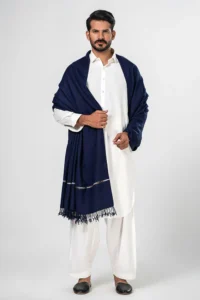
A white shalwar kameez is one of the easiest outfits to pair with a shawl. Since white is neutral, you can experiment with several colours without worrying too much about matching.
However, dark brown, charcoal grey, and black are especially useful because they create a clear contrast.
Imagine wearing a freshly pressed white shalwar kameez with a chocolate brown wool shawl. Add brown leather Peshawari chappals and a simple wristwatch. The outfit looks complete without needing a waistcoat.
How to wear this combination
Start with a shalwar kameez that fits comfortably around the shoulders. The fabric should fall naturally rather than gathering around your chest.
Place the shawl over one shoulder and bring the longer end loosely across your upper body. Leave the remaining fabric behind your back.
If the shawl feels too wide, fold it lengthwise before arranging it. This makes the drape neater and prevents unnecessary bulk.
For colder outdoor gatherings, bring the loose end around your chest for additional coverage.
The Woolmark Company explains that wool fibres have a natural crimp that traps pockets of air. This provides insulation and helps wool keep the wearer warm in cold conditions.
The combination is suitable for Friday prayers, winter lunches, and daytime family gatherings.
One mistake worth avoiding is wearing a very thick shawl over an oversized kameez. Both pieces may feel comfortable separately, but together they can make the upper body appear unnecessarily bulky.
2. Black Kurta Pajama With a Camel or Tan Shawl
Black kurta pajama is a reliable choice for evening occasions. It looks neat on its own, but adding a camel or tan shawl can make the outfit more interesting.
The contrast works because black provides a dark base while camel introduces a warmer shade.
You do not need embroidery or bright accessories to make the combination stand out.
Keep the colours and accessories balanced
Choose a plain black kurta with matching pajama trousers. A straight-cut kurta works particularly well because its shape remains visible underneath the shawl.
Add a camel wool shawl with a smooth finish and a narrow border.
Instead of covering the entire front of your kurta, rest the shawl across both shoulders. Let the ends hang naturally so the neckline and buttons remain visible.
Brown leather chappals complement the warmer shawl colour. If you prefer tailored trousers, dark brown loafers are another suitable option.
This combination works well for evening dinners, engagement functions, and winter gatherings.
If camel feels too light, try chocolate brown or warm grey. Both create contrast without making the outfit overly colourful.
Avoid adding a brightly embroidered waistcoat unless the occasion calls for a more decorative outfit.
The black kurta and contrasting shawl already provide enough visual interest. Keeping the remaining pieces simple allows the colours to work together.
3. Cream Shalwar Kameez With a Brown Pashmina Shawl
Not every refined outfit needs strong contrast. Sometimes colours from the same family look more natural together.
Cream and brown are a good example.
A cream shalwar kameez with a medium-brown pashmina shawl creates a softer appearance than white and black. This makes it suitable for daytime occasions where you want to look well-dressed without wearing strong colours.
Choose the right shades and fabric
Start with a light cream shalwar kameez and pair it with a walnut or chocolate brown shawl.
The shades should be different enough to remain visible. If both are almost identical, the shawl may blend into the clothing.
For the drape, fold the shawl once lengthwise and place it over your right shoulder. Let the longer end fall down the front while keeping the neckline uncovered.
Tan Peshawari chappals or brown leather khussas complete the outfit naturally.
Fabric quality matters here because the shawl is the main accessory.
The word pashmina is sometimes used broadly in product descriptions. Not every shawl sold under this label has the same fibre composition. Some contain fine cashmere, while others use wool blends.
Check the material details before buying, particularly if you want a specific level of softness or warmth.
For indoor engagements and family lunches, a lightweight shawl can be more comfortable than a heavy winter wrap.
You will be able to move around, greet guests, and sit comfortably without constantly rearranging the fabric.
4. Shalwar Kameez With a Waistcoat and Matching Shawl
A waistcoat adds structure to traditional clothing. Pairing it with a shawl creates a more formal outfit, but the layers need to be arranged carefully.
The main challenge is keeping the waistcoat visible rather than covering it completely.
You can follow the same coordinated styling approach seen in Ameer Gilani’s wedding outfit without wearing every piece in an identical colour.
Make all three pieces work together
Try a cream shalwar kameez with a dark brown waistcoat and a beige wool shawl.
The cream creates a clean background while the waistcoat gives the upper body definition. The beige shawl adds another layer without introducing a completely different colour.
Place the shawl over one shoulder so the waistcoat’s buttons and front panels remain visible.
If your waistcoat has detailed embroidery, select a plain shawl. A simple waistcoat gives you more freedom to wear a decorative border.
The fit of the waistcoat also matters. It should sit comfortably when buttoned without pulling tightly across your chest.
This combination is especially suitable for engagement ceremonies, formal dinners, and winter wedding celebrations.
It is also practical when moving between outdoor and indoor spaces.
Once you enter a warm room, you can remove the shawl while keeping the waistcoat on. The outfit will still look complete because the waistcoat provides its own structure and detail.
5. Sherwani or Formal Kurta With a Traditional Dhussa Shawl
Formal celebrations are an excellent opportunity to wear a traditional dhussa shawl.
Many dhussa styles feature substantial woollen fabric and woven borders. These details can complement a sherwani or formal kurta, especially when the clothing underneath has a simple finish.
A real example of festive shawl styling came from actor Gohar Rasheed’s mehndi celebration with Kubra Khan in February 2025.
The Express Tribune, reporting on February 21, 2025, noted that he wore a white kurta with a golden shawl.
The outfit showed how a simple traditional garment can look suitable for a celebration when paired with the right accessory.
Match the shawl with the level of embroidery
If you are wearing an ivory sherwani with detailed gold embroidery, choose a plain cream or muted gold shawl.
For a simpler beige sherwani, a maroon or chocolate brown dhussa with a decorative border can provide contrast.
The idea is to let one piece carry most of the detail.
Fold a wide shawl lengthwise and place it neatly over one shoulder. Arrange the decorative edge so it remains visible without hiding the front of the sherwani.
Check the length before leaving home. A shawl that hangs too low may get in the way when walking or sitting.
If the fabric keeps slipping, adjust the fold to distribute its weight more evenly. Avoid fastening delicate wool with ordinary safety pins because they can damage the weave.
Traditional leather khussas are a suitable footwear choice.
This combination works particularly well for weddings, engagement celebrations, and formal evening gatherings.
6. Dark Jeans and a Plain Shirt With a Lightweight Shawl
A men’s shawl does not always need to be worn with traditional clothing.
You can also pair a lightweight shawl with jeans and a plain shirt, especially during casual winter outings.
The important thing is choosing a simpler fabric and a more relaxed draping style.
Keep the outfit comfortable and casual
Start with dark blue jeans and a plain white button-down shirt. Add a charcoal grey or camel shawl with minimal decoration.
A lightweight wool stole or narrow shawl is easier to manage with casual clothing than a large, heavy dhussa.
Fold it lengthwise and drape it loosely around your neck. Allow both ends to hang at the front rather than wrapping the fabric several times.
This keeps the shirt visible and prevents the shawl from creating unnecessary bulk around your neck.
Brown leather boots work well with dark denim. Clean sneakers are another option for informal gatherings.
Avoid choosing a heavily embroidered wedding shawl for this combination. Its decorative details may look out of place against simple jeans and a shirt.
This outfit is suitable for casual dinners, weekend outings, and relaxed social gatherings.
It also gives you flexibility. If you move into a warmer indoor space, you can remove the shawl without changing the appearance of the rest of your outfit.
7. Plain Kurta With a Patterned Shawl and Peshawari Chappals
A patterned shawl is useful when you want to make a familiar kurta look different without buying another complete outfit.
The trick is keeping the clothing underneath simple enough for the pattern to stand out.
A white kurta with a brown checked shawl is a reliable choice. An olive green kurta paired with a cream shawl featuring dark woven borders is another attractive combination.
Let the shawl become the main detail
Wear a plain kurta with matching trousers or shalwar.
Choose a shawl with checks, subtle stripes, or a traditional woven border. Rest it over one shoulder and arrange the patterned edge so it remains visible along the front.
Avoid combining large patterns with a heavily embroidered kurta. Both pieces may look attractive individually, but together they can make the outfit appear crowded.
For footwear, brown leather Peshawari chappals complement earthy colours such as beige, olive, and cream. Black footwear works better with darker outfits.
Traditional woven textiles also provide inspiration for colour and pattern combinations.
Ajrak, for example, is recognised for its distinctive printed designs and cultural significance. Although Ajrak and woollen shawls belong to different textile traditions, both show how patterned shoulder coverings can add character to traditional clothing.
Choose the fabric according to the weather and the formality of the occasion.
This outfit is particularly suitable for cultural gatherings, traditional celebrations, and daytime family events.
How to Choose a Men’s Shawl That Matches Your Wardrobe
Before buying a shawl, look at the clothes you already wear most often.
If your wardrobe contains several white or cream shalwar kameez outfits, a brown or charcoal shawl will give you more styling options. If you prefer black kurtas, camel and warm grey are useful alternatives.
Consider the occasion and weather as well.
A thicker wool shawl is more suitable for cold outdoor gatherings, while a lightweight option may be easier to wear during indoor events.
According to The Woolmark Company, wool can absorb up to 35% of its own weight in moisture vapour before feeling wet. Along with its natural insulating properties, this helps explain why wool remains useful for winter clothing.
Size also matters. A wider shawl provides more coverage, but it may require folding when worn with fitted waistcoats or formal kurtas.
When comparing shawls men, check the fabric composition, dimensions, weight, and border design rather than choosing only by colour.
You could spend hours of research comparing different shawls, but the easiest starting point is your existing wardrobe. Choose a fabric and colour that work with at least two or three outfits you already own.
Frequently Asked Questions About Men’s Shawl Outfits
1- Which shawl colour looks best with white shalwar kameez?
Black, charcoal grey, navy blue, and chocolate brown create attractive contrasts with white shalwar kameez. Cream and beige are better choices if you prefer a softer appearance for daytime occasions.
2- Can men wear a shawl with jeans?
Yes. A lightweight wool shawl works well with dark jeans and a plain shirt. Neutral colours and simple borders usually suit casual outfits better than heavy embroidery.
3- How should men drape a shawl for a wedding?
Place the shawl neatly over one shoulder so the sherwani, waistcoat, or formal kurta remains visible. Choose a plain shawl with embroidered clothing and a decorative shawl with a simpler outfit.
Choosing the Best Men’s Shawl Outfit for Every Occasion
A refined outfit does not depend on expensive accessories or complicated styling. Often, choosing the right shawl colour and draping it comfortably is enough.
White shalwar kameez with dark wool works well for everyday traditional dressing. Black kurta pajama with camel creates a stronger evening look, while a dhussa can complement formal wedding clothing.
For casual outings, a lightweight shawl can even work with jeans and a plain shirt.
Focus on how the colours, fabric, and fit work together. When each piece complements the others, even a simple outfit can look polished without feeling overdressed.